Handbook For Sound Engineers, Third Edition
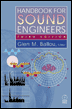
by Ray Rayburn
Sound systems are made of three primary components:
Input transducers
Signal processing
Output transducers
Transducers are devices which convert energy from one form into another.
The primary type of input transducer used in sound systems is the microphone. It converts the form of acoustic energy we call sound, into electrical energy carrying the same information. Other common audio input transducers include the magnetic tape head, the optical sensor, the radio receiver, and the phonograph pickup cartridge. Tape recorders, floppy and hard drives use magnetic heads to transform analog or digital magnetic patterns on the magnetic media into electrical signals. Optical free-space links, optical fiber receivers, CD and DVD players all use optical sensors to turn optical energy into electrical energy. Radio receivers turn carefully selected portions of radio frequency energy into electrical energy. Phonograph cartridges turn the mechanical motion of the grooves in a record into electrical energy.
Similarly, the most common type of output transducer used in sound systems is the loudspeaker. It converts electrical energy back into the form of acoustical energy we call sound. Other common output transducers include headphones, magnetic tape heads, lasers, radio transmitters, and cutting heads. Headphones are specialized electrical to acoustic transducers, which are intended to produce sound for one person only. Tape recorders, floppy and hard drives use magnetic heads to transform electrical signals into magnetic patterns on the magnetic media. Optical free-space links, optical fiber transmitters, CDR, CDRW, and...