Handbook For Sound Engineers, Third Edition
Part 2: Electronic Components

Chapter List

Chapter 10: Resistors, Capacitors, and Inductors
Chapter 11: Audio Transformer Basics
Chapter 12: Tubes, Discrete Solid State Devices, and Integrated Circuits
Chapter 13: Heatsinks and Relays
Chapter 14: Transmission Techniques - Wire and Cable
Chapter 15: Transmission Techniques - Fiber Optics

by Glen Ballou

10.1 Resistors

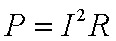
Resistance 1-3 is associated with the phenomenon of energy dissipation. In its simplest form, it is a measure of the opposition to the flow of current by a piece of electric material. Resistance dissipates energy in the form of heat; the best conductors have low resistance and produce little heat, whereas the poorest conductors have high resistance and produce the most heat. For instance, if a current of 10 A flowed through a resistance of 1 ?, the heat would be 100 W. If the same current flowed through 100 ?, the heat would be 10,000 W, which is determined by the equation

(10-1)

where,

  • P is the power in watts,

  • I is the current in amperes,

  • R is the resistance in ohms.

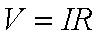
In a pure resistance, the voltage and current relationship remains the same; therefore, the voltage drop across the resistor is

(10-2)

where,

  • V is the voltage in volts,

  • I is the current in amperes,

  • R is the resistance in ohms.

Resistors are fixed or variable and can have tolerances from 0.5% to 20% and power ranges from 0.1W to hundreds of watts

10.1.1 Resistor Characteristics

Resistors will change value as a result of applied voltage, power,...

UNLIMITED FREE
ACCESS
TO THE WORLD'S BEST IDEAS

SUBMIT
Already a GlobalSpec user? Log in.

This is embarrasing...

An error occurred while processing the form. Please try again in a few minutes.

Customize Your GlobalSpec Experience

Category: Resistors
Finish!
Privacy Policy

This is embarrasing...

An error occurred while processing the form. Please try again in a few minutes.