ARBURG Practical Guide to Injection Moulding

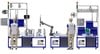
Chapter 1, the basic parts of an injection moulding machine were identified as:
Injection unit
Machine base with hydraulics
Control unit and control cabinet
Clamping unit with mould
This chapter begins with a breakdown of the purpose and the components of an injection unit. A glossary of common injection moulding machinery terms can be seen below.
| Clamping unit | The part of the machine in which the mould is mounted. It provides both force and movement |
| Daylight | The maximum distance between the stationary and moving platens |
| Ejector | Ejects the moulded parts from the tool. The mechanism is activated through the clamping unit. The ejection force may be hydraulic, pneumatic or mechanical. |
| Fixed platen (stationary platen) | The inner face of the clamping unit that does not move during mould closing. It contains mould mounting holes. |
| (Full) hydraulic clamp | A clamping unit triggered by a hydraulic cylinder which is directly connected to the moving platen. The mould is opened and closed by application of direct hydraulic fluid pressure. This also provides the clamping force required to keep the mould closed during injection |
| Injection cylinder | Part of the injection unit which includes the screw, nozzle, hopper, heaters. |
| Injection screw | Transports, mixes, plasticises and injects the material from the hopper to the machine nozzle. |
| Injection unit | The part of the machine which feeds, melts and injects the material into the mould. |
| Mould (tool) | Contains the cavity to inject into. Consists of two halves, a stationary and moving half which attach onto the platens. |