River Dredging Sludge Treatment Solution
Featured Product from KINTEP NEW POWER
Process Description
The system is designed for high throughput, operational stability, and high automation - capable of unattended operation. Key features include:
• High processing capacity (3 x that of conventional equipment)
• Automated control for reliable operation
• Water recirculation from thickening and pressing stages
• Low capital and operating costs
• Adaptability to diverse river sludge types
Step-by-Step Process
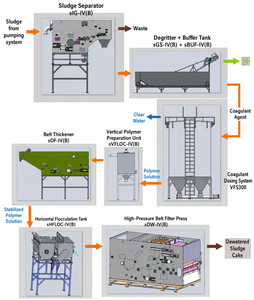
- Receiving and Storage - Sludge is delivered by tanker or conveyor to a receiving tank.
- Dilution and Homogenization - High-pressure water flushes sludge into a dilution tank and then a buffer tank to stabilize solids concentration. Coarse screens remove large particles.
- Grit and Debris Removal - A waste sorting machine removes particles >3 mm. Sand-laden sludge is then directed to a grit removal system.
- First Flocculation - Sludge enters a flocculation tank with a small dose of chemical conditioner.
- Thickening - Flocculated sludge passes through a belt thickener, reducing water content to approximately 75% solids.
- Second Flocculation - Thickened sludge is mixed with a micro-dose of polymer solution before entering the main dewatering unit.
- High-Pressure Dewatering - A high-pressure belt press using felt-type filter technology reduces sludge water content to 30-60%.
- Disposal or Reuse - The dewatered cake is suitable for transport and final disposal or beneficial reuse.
Key Equipment and Operating Principles
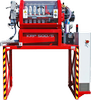
1. Waste Sorting Machine
Removes solid particles in the 3-30 mm range. Features a simple structure, high throughput, and rapid water drainage.
2. Belt Thickener
Uses imported double-layer felt-type filter fabric to reduce sludge to ~75% solids while minimizing polymer consumption. High dewatering efficiency.
3. High-Pressure Belt Press
The final dewatering stage achieves 30–60% solids content. Offers high cake solids and large processing capacity.
4. On-Site Installations
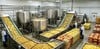
Field installations demonstrate reliable performance across various river conditions, producing stable, transportable filter cakes.