
Automotive Digital LED Displays
Last Updated: April 1, 2025
Description
Automotive Digital LED Displays are electronic devices used in vehicles to present information visually. These displays can show numeric or alphanumeric data, providing drivers with essential information such as speed, fuel levels, and other vehicle diagnostics. They are designed to be highly visible and reliable, ensuring that critical information is easily accessible to the driver.
Working Principle
Digital LED displays operate by using light-emitting diodes (LEDs), which are semiconductor devices that emit light when an electric current passes through them. The intensity of the light is proportional to the current flowing through the LED. These displays can be configured in various formats, such as seven-segment or dot matrix, to represent numbers and letters. LEDs are solid-state devices that require little power and generate minimal heat, making them efficient and durable for automotive applications. Their long operating lifetimes and reliability make them a preferred choice over other light sources like incandescent or neon lamps.
Applications
Automotive Digital LED Displays are used in various parts of a vehicle, including the dashboard for speedometers and fuel gauges, center stacks for infotainment systems, and head-up displays (HUDs) for projecting information onto the windshield. They are also integrated into passenger entertainment systems and camera mirror systems (CMS) to enhance the driving experience and safety.
Advantages over other Digital LED Displays
Compared to other display technologies, Digital LED Displays offer several advantages. They consume less power and generate less heat, which contributes to their long lifespan and reliability. Unlike incandescent bulbs that rely on a filament that deteriorates over time, LEDs do not rely on a deteriorating material to generate light. This makes them more stable and efficient, especially in the varying temperature conditions found in automotive environments.
Limitations
One limitation of Digital LED Displays is their initial cost, which can be higher than traditional display technologies. Additionally, while they are highly reliable, the complexity of integrating them into automotive systems can lead to increased design and manufacturing costs. Their performance can also be affected by extreme environmental conditions, although they generally perform well across a wide range of temperatures.
Considerations
When considering the implementation of Digital LED Displays in automotive applications, several factors should be taken into account. The initial cost of these displays can be significant, but their long-term operating expenses are generally lower due to their energy efficiency and durability. Maintenance and replacement costs are also reduced because of their long lifespan. However, ensuring accuracy and reliability in displaying critical information is crucial, as any failure could impact vehicle safety. Durability in harsh automotive environments is another important consideration, as displays must withstand vibrations, temperature fluctuations, and potential exposure to moisture.
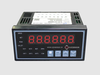
from XJCSENSOR Technology Co., Ltd.
Multiple working modes available. High stability. Bidirectional isolation serial port function, with RS232/RS485, easy to communication with the Host. Calibration function without weights [See More]
- Applications: Automotive Applications
- Operating Temperature: 14 to 122
- Display Type: Segmented
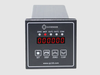
from XJCSENSOR Technology Co., Ltd.
Multiple working modes available. High stability. Bidirectional isolation serial port function, with RS232/RS485, easy to communication with the Host. Weight calibration, sensitivity calibration, Intelligence calibration [See More]
- Applications: Automotive Applications
- Operating Temperature: 14 to 122
- Display Type: Segmented
from Avery Weigh-Tronix
Display allows clear, comfortable viewing of scale information [See More]
- Applications: Automotive Applications
- Character Type: Numeric
- Display Type: Segmented
- Number of Rows: 1