
Computer Digital LED Displays
Last Updated: April 1, 2025
Description
Computer Digital LED Displays are devices that utilize light-emitting diodes (LEDs) to present visual information. These displays can show numeric, alphanumeric, or graphical data, depending on their configuration. They are commonly used in various electronic devices to convey information to users through illuminated segments or pixels.
Working Principle
LED displays operate by passing an electrical current through a semiconductor material, which emits light as a result. The intensity of the light is proportional to the current flowing through the LED. These displays can be configured in various formats, such as seven-segment displays for numeric data or dot matrix displays for more complex graphics. LEDs are solid-state devices, meaning they require little power and generate minimal heat, contributing to their long operating lifetimes .
Applications
LED displays are used in a wide range of applications. For example, they are integral to digital readouts in devices like calculators and digital clocks. They are also used in more complex systems such as automotive dashboards, where they provide critical information to drivers. In industrial settings, LED displays are used for control panels and instrumentation, offering clear and reliable data presentation .
Advantages over other Digital LED Displays
LED displays have several advantages over other types of digital displays, such as incandescent and neon lamps. They consume less power and generate less heat, which contributes to their longevity and reliability. Unlike incandescent bulbs, which rely on a filament that deteriorates over time, LEDs do not rely on a deteriorating material to generate light, making them more durable and cost-effective in the long run .
Limitations
One limitation of LED displays is their viewing angle, which can be narrower compared to other display technologies like LCDs. This can affect visibility in certain applications where the display needs to be viewed from various angles. Additionally, while LEDs are efficient, the initial cost of LED displays can be higher than some alternative technologies .
Considerations
When considering LED displays, it is important to evaluate factors such as initial costs, operating expenses, and maintenance requirements. Although the initial investment may be higher, the long lifespan and low power consumption of LEDs can lead to lower operating expenses over time. Durability is another key consideration, as LEDs are less prone to failure compared to other light sources. However, the accuracy of the display and the potential need for replacement or maintenance should also be assessed, particularly in environments where displays are subject to harsh conditions .
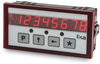
from Lika Electronic
Universal display with high performance. Very compact housing. SSI, quadrature and Sine-Cosine input in 1 unit. Large display range with 8 digits. Easy setup. 500 kHz high speed counter. Linear & angular display functions. Easy connection by screw terminals. [See More]
- Applications: Computer Applications
- Character Type: Numeric
- Display Type: Segmented
- Number of Rows: 1
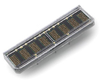
from Broadcom Inc.
This product is a high performance, easy to use dot matrix display driven by on-board CMOS IC. Each display can be directly interfaced with a microprocessor, thus eliminating the need for cumbersome interface components. The serial IC interface allows higher character count information displays with... [See More]
- Applications: Computer Applications; Avionic / Military Applications
- Character Type: Alphanumeric
- Display Type: Dot Matrix
- Common: Common Anode