
Analog Analog Panel Meters
Description
Analog panel meters are devices used to measure and display electrical parameters such as voltage, current, and power. They are available with one or more channels and can measure variables in different units, including DC and AC volts, millivolts, and radio frequency (RF) signals. These meters typically feature a range of measurements, such as 0 – 4 mA or 0 – 10 VDC, and come in various face types, including round, rectangular, and standard designs .
Working Principle
Analog panel meters operate by using a needle to indicate the measurement on a scale. The needle movement provides a visual representation of the magnitude and trend of the measured parameter. This type of meter does not require an external power supply beyond the test current source, making it simple and efficient for certain applications. The analog needle movement is particularly useful for observing trends and changes over time, offering a more intuitive understanding of the data compared to digital readouts .
Applications
Analog panel meters are used in various niche applications where digital meters may not be suitable. For example, they are commonly used as battery indicators in marine or naval craft, where their simplicity and reliability are advantageous .
Advantages over other Inspection - Electrical and Electronic Test Equipment
Analog panel meters have several advantages over digital meters. They provide a better sense of order of magnitude and trends due to the continuous movement of the needle. Additionally, they do not require a separate power supply, which can be beneficial in certain environments. Analog ammeters, for instance, are robust and cost-effective compared to moving coil instruments, making them suitable for both AC and DC circuits .
Limitations
Analog panel meters have some limitations, including the potential for parallax error, which occurs when the scale is viewed at an improper angle, compromising accuracy. They also lack auto-polarity technology, which can lead to needle deflection and damage if test leads are connected incorrectly. Furthermore, multiple scales on the meter can cause confusion for the user .
Considerations
When considering analog panel meters, it is important to evaluate factors such as initial costs, operating expenses, durability, accuracy, and maintenance costs. Analog meters are generally more cost-effective and durable due to their simple construction. However, they may require more frequent calibration and maintenance to ensure accuracy, especially in environments with varying temperatures and frequencies .
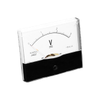
from DigiKey
Voltage (Voltmeter) Analog - Black Characters Display Panel Mount [See More]
- Outputs: Analog; Analog
- Input Type: DC Voltage
- Voltage Range: 0.0 to 3
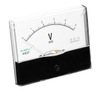
from DigiKey
Voltage (Voltmeter) Analog - Black Characters Display Panel Mount [See More]
- Outputs: Analog; Analog
- Input Type: DC Voltage
- Voltage Range: 0.0 to 5
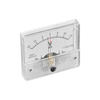
from DigiKey
Voltage (Voltmeter) Analog - Black Characters Display Panel Mount [See More]
- Outputs: Analog; Analog
- Input Type: DC Voltage
- Voltage Range: 15
- Width: 60
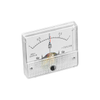
from DigiKey
Current (Ammeter) Analog - Black Characters Display Panel Mount [See More]
- Outputs: Analog; Analog
- Width: 60
- Current Range: 1
- Height: 55