
Thermistor Technology Laboratory Thermometers
Last Updated: April 1, 2025
Description
Thermistor Technology Laboratory Thermometers are precision instruments used to measure temperature. They utilize thermistors, which are semiconductor devices, to detect temperature changes by measuring variations in electrical resistance.
Working Principle
Thermistors operate on the principle that their electrical resistance is dependent on temperature. There are two main types of thermistors: Negative Temperature Coefficient (NTC) and Positive Temperature Coefficient (PTC). NTC thermistors decrease in resistance as temperature increases, while PTC thermistors increase in resistance with rising temperature. This property allows them to provide accurate temperature readings by converting resistance changes into temperature data. Their high sensitivity and stability make them particularly useful for precise temperature monitoring.
Applications
Thermistor Technology Laboratory Thermometers are commonly used in medical thermometry, where precise temperature readings are crucial, such as monitoring body temperature around 37°C (98.6°F). They are also employed in precision instrumentation applications, including hand-held meters and temperature gauges, where accurate and stable temperature measurements are required.
Advantages over other Mechanical - Mechanical Fasteners
Thermistors offer several advantages over traditional mechanical fasteners in temperature sensing applications. Their small size and high degree of stability allow for integration into compact and sensitive environments where mechanical fasteners might be too bulky or imprecise. Additionally, thermistors provide a high level of accuracy and long-lasting performance, which can be more reliable than mechanical alternatives in certain applications.
Limitations
Thermistors have a limited temperature range and are not suitable for extreme temperature conditions. Their non-linearity can also pose challenges in certain applications, requiring additional calibration or compensation to ensure accurate readings. Furthermore, thermistors are less rugged compared to some other temperature sensing technologies, which may limit their use in harsh environments.
Considerations
When considering the use of Thermistor Technology Laboratory Thermometers, it is important to account for their higher initial cost compared to some other temperature sensing devices. However, their operating expenses are generally low due to their long-lasting nature and minimal maintenance requirements. Durability can be a concern in extreme conditions, but their accuracy and stability make them a valuable choice for precise temperature monitoring. Replacement and maintenance costs are typically low, as thermistors are designed to provide consistent performance over time.
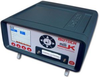
from Transcat, Inc.
Product Highlights. Range: -270 °C to 1820 °C (3308 °F). Accuracy: ±0.005 °C ( ±5mK) full range for PRTS. Resolution: 0.0001 °C (0.1mK). SPRT/PRT, Thermocouple, Thermistor and 4 20mA Inputs. Full color graphical display. Store up to 180 days of measurements. Can... [See More]
- Thermometer Technology: Thermistor Technology
- Range: -270 to 1820

from TEGAM, Inc.
Thermistor Thermometer. -55 °C to 150 °C, -70 °F to 300 °F. Tegam's Model 866 thermistor thermometer measure temperatures from -55 °C to 150 °C. Tegam's Model 865 thermistor thermometer measure temperatures from -70 °F to 300 °F. Compatible with all YSI Series 400... [See More]
- Thermometer Technology: Thermistor Technology
- Display / Scale Characteristics: Fahrenheit; Celsius/Centigrade
- Type: Digital Thermometer
- Range: -70 to 300