
Differential / Bias Regulators Gas Pressure Regulators
Last Updated: April 1, 2025
Description
Differential or bias regulators are specialized gas pressure regulators designed to maintain a consistent pressure differential between two points within a system. They are crucial in ensuring that the pressure difference remains stable, regardless of fluctuations in the inlet or outlet pressures.
Working Principle
Differential regulators operate by balancing the pressure difference between two points in a system. They use a diaphragm or piston mechanism to sense the pressure differential and adjust the flow accordingly to maintain the desired pressure difference. This regulation is achieved without the need for external power, making them particularly useful in remote or power-limited locations. The ability to maintain a stable pressure differential is essential for processes that require precise control over pressure conditions.
Applications
Differential regulators are commonly used in oil and gas production to maintain production pressure from the rig, ensuring that the wellhead pressure remains stable despite variations. They are also employed in systems where maintaining a specific pressure differential is critical, such as in certain chemical processing applications or in systems that require precise pressure control for safety and efficiency.
Advantages over other Gas Pressure Regulators
One of the primary advantages of differential regulators is their ability to maintain a stable pressure differential without the need for an external power supply. This makes them ideal for use in remote locations where power may not be readily available. Additionally, their design allows for precise control over pressure differences, which can be more challenging to achieve with standard pressure regulators.
Limitations
Differential regulators may not be suitable for applications requiring extremely high precision or where the pressure differential needs to be adjusted frequently. The mechanical components, such as diaphragms or pistons, can also be subject to wear and tear, potentially affecting long-term reliability and performance.
Considerations
When selecting a differential regulator, it is important to consider the initial cost, which can vary depending on the complexity and materials used. Operating expenses are generally low due to the lack of power requirements, but maintenance costs should be factored in, as regular inspections and potential replacements of diaphragms or pistons may be necessary. The durability and accuracy of the regulator will depend on the specific design and materials used, with more robust designs typically offering better long-term performance.

from Proportion-Air, Inc.
Modified spring for low pressure control is available [See More]
- Regulator: Differential
- Valve Size: 0.25 to 2.00
- Media: Gas
- Controlled Pressure Range: 0.00 to 300.00
from Emerson Automation Solutions – TESCOM Regulators, Valves & Systems
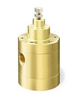
TESCOM ™ 26-2900 Series is a dome load negative bias backpressure tracking regulator with a balanced main valve. Controls upstream pressures to 1000 PSIG [69 bar] with spring bias setting. Ideal for use in constant bias applications like offshore diving, dumping exhaled breath from pressure... [See More]
- Regulator: Back Pressure; Differential
- Valve Size: 0.50
- Media: Gas
- Controlled Pressure Range: 0.00 to 30.00

from HORIBA Instruments, Inc.
The high performance auto pressure regulator UR-Z700 Series has electronic regulators with high-precision pressure sensors and high resolution, fast response piezo actuator valves. They control the pressure relative to the external control signal that they receive. For both Digital/Analog and... [See More]
- Regulator: Back Pressure; Differential
- Valve Size: 0.25
- Media: Gas
- Controlled Pressure Range: 1.09 to 137.78
from Emerson Automation Solutions – TESCOM Regulators, Valves & Systems
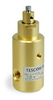
TESCOM ™ 44-4000 dome loaded, spring biased regulator is designed for pressure tracking applications to maintain a constant differential pressure. Self-venting allows for pressure tracking increases and decreases; Cvs = .7 and 2.0 are available. Ideal for use in diving applications for... [See More]
- Regulator: Differential
- Valve Size: 0.50 to 0.75
- Media: Gas
- Controlled Pressure Range: 0.00 to 350.00