
Resistance Speed Sensors
Description
Resistance speed sensors are devices designed to measure the speed of a moving object by detecting changes in resistance. These sensors convert the physical motion into an electrical signal that can be measured and analyzed.
Working Principle
Resistance speed sensors operate by utilizing the principle of resistance change in response to motion. As the object moves, the sensor detects variations in resistance, which are then converted into an electrical signal. This signal is proportional to the speed of the object. The usefulness of these sensors lies in their ability to provide accurate and reliable speed measurements without requiring direct contact with the moving object, making them suitable for various environments and conditions.
Applications
Unfortunately, specific applications for resistance speed sensors are not detailed in the provided documents. However, speed sensors in general are commonly used in applications such as wind turbine speed measurement, radar speed measurement, and linear output rotary sensors .
Advantages over other Speed Sensors
Resistance speed sensors offer several advantages over other types of speed sensors. For instance, they can provide high measurement accuracy and are typically low-cost solutions . Additionally, they do not require an external power source, which can simplify their integration into various systems .
Limitations
The limitations of resistance speed sensors are not explicitly detailed in the provided documents. However, general limitations of analog sensors, such as susceptibility to long-term drift, might apply .
Considerations
When considering resistance speed sensors, several factors should be taken into account:
- Initial Costs: These sensors are generally low-cost, making them an economical choice for many applications .
- Operating Expense: The lack of a need for an external power source can reduce operating expenses .
- Durability: The durability of these sensors can vary based on the specific design and materials used, but they are generally considered rugged .
- Accuracy: Resistance speed sensors are known for their high measurement accuracy .
- Replacement and Maintenance Costs: The maintenance-free and wearless operation of similar sensors suggests that resistance speed sensors may also have low replacement and maintenance costs .
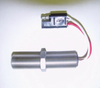
from Sensoronix, Inc.
The collapse of magnetic field due to the interruption by a ferrous gear tooth provides an analog signal output (sine wave) that does not require an outside power source. Variable reluctance sensor or Mag-pickup is suitable for speed sensing with a range from 30 to 1000 inches per second with a... [See More]
- Output: Resistance
- Linear Speed Range: 30 to 1000
- Sensor Technology: Variable Reluctance
- Operating Temperature: -4 to 221
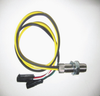
from Sensoronix, Inc.
Non-contact magnetic sensors that measure the collapse of magnetic field due to the interruption by a ferrous gear tooth. These sensors provide two analog signal outputs (sine wave) that does not require an outside power source. This sensor is suitable for speed sensing with a range from 30 to 1000... [See More]
- Output: Voltage; Current; Resistance
- Linear Speed Range: 32 to 1000
- Sensor Technology: Variable Reluctance
- Operating Temperature: 32 to 158

from Sensoronix, Inc.
Non-contact magnetic sensors that measure the distortion of magnetic field created by a ferrous target. Quadrature sensors provide two 90 º out of phase digital outputs to record speed and direction. When the target wheel or gear is rotating clockwise, the output signal # 1 leads output signal... [See More]
- Output: Voltage; Current; Resistance
- Operating Temperature: -4 to 221
- Sensor Technology: Hall Effect
- Power Requirements: DC Powered
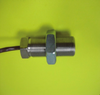
from Sensoronix, Inc.
Non-contact magnetic sensors that measure the distortion of magnetic fields and thus provide precise measurements of speed and direction. Output #1 is digital square wave and measures the speed of target wheel or gear. Output #2 is a DC level that when the target wheel rotates clockwise, the output... [See More]
- Output: Voltage; Current; Resistance
- Operating Temperature: -4 to 221
- Sensor Technology: Hall Effect
- Power Requirements: DC Powered