
Analog Display Flow Transmitters
Last Updated: April 1, 2025
Description
Analog Display Flow Transmitters are devices used to measure the flow rate of a fluid within a system. They provide a continuous analog output, typically in the form of a voltage or current signal, which corresponds to the flow rate of the fluid being measured. These transmitters are equipped with an analog display that allows users to visually monitor the flow rate in real-time.
Working Principle
Analog Display Flow Transmitters operate by converting the physical flow of a fluid into an electrical signal. This is achieved through various mechanisms, such as turbine flowmeters, where the fluid causes a rotor to spin. The rotational speed of the rotor is proportional to the flow rate, and this mechanical motion is then converted into an analog electrical signal. The analog output is advantageous for its simplicity and ability to provide continuous data, making it useful for real-time monitoring and control in various industrial applications.
Applications
Analog Display Flow Transmitters are commonly used in industries where real-time monitoring of fluid flow is critical. Specific examples include:
- Water Treatment Plants: Monitoring the flow of water through various stages of treatment.
- Chemical Processing: Ensuring the correct flow rates of reactants in chemical reactions.
- HVAC Systems: Measuring the flow of air or water to maintain optimal environmental conditions.
Advantages over other Flow Transmitters
Analog Display Flow Transmitters offer several advantages:
- Simplicity: The analog output is straightforward and easy to integrate into existing systems.
- Real-time Monitoring: The continuous output allows for immediate detection of flow changes, which is crucial for process control.
- Long-distance Signal Transmission: Analog current outputs, such as 4-20 mA, are suitable for transmitting signals over long distances without significant loss of accuracy.
Limitations
Despite their advantages, Analog Display Flow Transmitters have limitations:
- Susceptibility to Noise: Analog signals can be affected by electrical noise, which may lead to inaccuracies.
- Limited Data: Unlike digital transmitters, analog transmitters provide less detailed information and lack advanced diagnostic capabilities.
Considerations
When selecting and using Analog Display Flow Transmitters, several factors should be considered:
- Initial Costs: These transmitters are generally cost-effective, but the price can vary based on the specific technology and features.
- Operating Expense: Maintenance and calibration are necessary to ensure accuracy, which can add to operating costs.
- Durability: The mechanical components, such as rotors in turbine flowmeters, may wear over time, affecting performance.
- Accuracy: While generally reliable, the accuracy can be influenced by factors such as fluid properties and installation conditions.
- Replacement and Maintenance Costs: Regular maintenance is required to maintain accuracy, and parts may need replacement due to wear and tear.

from Orange Research, Inc.
Features. Two-wire connection. 2% FS accuracy. With or without indicators. Our new two-wire, loop-powered transmitter offers users more flexibility. Because there is no need to bring external power to the unit, installation time and cost are reduced. Offered on: > > Differential pressure (with... [See More]
- Display: Analog
- Meter Type: Volumetric Flow Meter
- Electrical Output: Current; Voltage
- Meter Technology: Venturi Tube
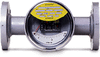
from ERDCO Engineering Corporation
Here is a combination of signal transmission with independent mechanical local flow rate indication. Should your 24vdc loop go down, you will still be able to take flow rate readings at the meter. [See More]
- Display: Analog
- Front Panel Interface: Knobs/Switches (optional feature)
- Electrical Output: Current; Frequency
- Meter Type: Volumetric Flow Meter

from Gemu Valves
Separation of media between the measurement point and the transducer [See More]
- Display: Analog
- Meter Type: Volumetric Flow Meter
- Electrical Output: Current (optional feature); Frequency (optional feature); Voltage (optional feature)
- Meter Technology: Velocity; Turbine

from Brooks Instrument
Engineered to work where you need it: Choose the MT3809 variable area (VA) flow meter (rotameter) for all the high-pressure, high-temperature VA flow measurement and control requirements on your next project. Proven to deliver reliable, repeatable gas and liquid flow measurement and control in... [See More]
- Display: Analog
- Interface Options: Network/Fieldbus
- Electrical Output: Current; Switch
- Meter Type: Volumetric Flow Meter
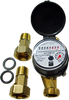
from Clark Solutions
CLXC-C1 Series. Single Jet Totalizing Water Meter. 1/2 " & 3/4 " Sizes, With or Without Reed Switch Output. Description. Model Series CLXC-C1 meters are single-jet dry type totalizing water meters. They are an ideal choice for a range of water use monitoring applications, as well as many OEM... [See More]
- Display: Analog
- Meter Type: Volumetric Flow Meter
- Electrical Output: Switch (optional feature)
- Meter Technology: Velocity; Single Jet Totalizing Meter
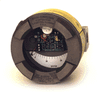
from ERDCO Engineering Corporation
Transmit a signal or actuate limit switches in hazardous areas with the 3700 Series Armor-Flo ™ meter. The cover housing is listed by Underwriters Laboratories as an enclosure for metering equipment in hazardous areas. It contains an easy to read calibrated scale and the signal output or switch... [See More]
- Display: Analog
- Front Panel Interface: Knobs/Switches (optional feature)
- Electrical Output: Current; Switch (optional feature)
- Meter Type: Volumetric Flow Meter

from Clark Solutions
The flowmeter Model DS20 works according to the proven variable area principle. A float is guided in a cylindrical measuring tube. The flowing medium moves the float in the flow direction. An externally mounted pointer indicator is magnetically coupled to the float and thus, following the float... [See More]
- Display: Analog
- Meter Type: Volumetric Flow Meter
- Electrical Output: Current (optional feature)
- Meter Technology: Rotameter; Variable Area