
Frequency Magnetic Proximity Sensors
Last Updated: April 1, 2025
Description
Frequency Magnetic Proximity Sensors are designed to detect the presence or absence of an object within a defined range by utilizing magnetic fields. These sensors are capable of generating a pulse train signal that corresponds to the frequency of the detected object, allowing for precise measurement and monitoring.
Working Principle
Frequency Magnetic Proximity Sensors operate by detecting changes in magnetic fields caused by the presence of a target object. The sensor generates a pulse train signal, where the frequency of the pulses is directly related to the proximity or movement of the object. This principle allows for accurate detection and measurement, making these sensors particularly useful in applications requiring high precision and reliability.
Applications
Frequency Magnetic Proximity Sensors are commonly used in various industrial applications. For example, they are employed in magnetic flow meters to measure the flow rate of liquids such as coolant or lubricating oil. These sensors are also utilized in manufacturing processes for metal parts counting on assembly lines, as well as in feedstock input monitoring and other similar applications .
Advantages over other Magnetic Proximity Sensors
One of the key advantages of Frequency Magnetic Proximity Sensors is their ability to provide more accurate measurements without interfering with the system being monitored. For instance, in magnetic flow meters, these sensors offer superior performance by reducing drag and improving resolution, which is crucial for precise flow rate measurements .
Limitations
Frequency Magnetic Proximity Sensors can be affected by varying environmental conditions such as temperature, humidity, and moisture. These factors can impact the accuracy and reliability of the sensor's performance .
Considerations
When considering the use of Frequency Magnetic Proximity Sensors, it is important to evaluate factors such as initial costs, operating expenses, and maintenance requirements. These sensors generally offer long operational life and solid-state output, which can reduce maintenance costs. However, their accuracy may not be as high as that of inductive proximity sensors, which should be taken into account when precision is critical .
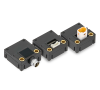
from Micro-Epsilon Group
The sensors of the MDS-40-MK series are the new generation of cost-effective and flexible magneto-inductive sensors. In addition to the pre-configured preferred types, a combination of further options (power supply, output, plug,...) for serial or industrial applications is possible. [See More]
- Electrical Output: Frequency
- Operating Temperature: -4 to 176
- Operation Distance: 0.0591 to 1.24
- Power Requirements: DC Powered
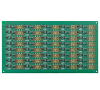
from Micro-Epsilon Group
The MDS-40-LP sensors are specially designed for large volume production from 2,000 pieces or more. As these sensors are reduced to pure measurement technology, the creation of cost-effective PCB sensors was possible. Their flat design and flexible arrangement of the magnets enable easy integration... [See More]
- Electrical Output: Frequency
- Operating Temperature: -4 to 185
- Operation Distance: 1.57
- Power Requirements: DC Powered

from elobau U.S., Inc.
Over the last three decades, innovation, reliability, and flexibility have become elobau hallmarks. Today, elobau is one of the leading manufacturers in the field of non-contact sensor technology. In addition to a broad and continually expanding array of standard products, elobau offers customized... [See More]
- Electrical Output: Frequency
- Operating Temperature: -13 to 167
- Operation Distance: 0.0787 to 0.5118
- Power Requirements: DC Powered

from elobau U.S., Inc.
Over the last three decades, innovation, reliability, and flexibility have become elobau hallmarks. Today, elobau is one of the leading manufacturers in the field of non-contact sensor technology. In addition to a broad and continually expanding array of standard products, elobau offers customized... [See More]
- Electrical Output: Frequency
- Operating Temperature: -13 to 167
- Operation Distance: 0.0787 to 0.5118
- Power Requirements: DC Powered