
Melting Induction Heaters
Last Updated: April 1, 2025
Description
Melting induction heaters are devices designed to heat metal objects to their melting point using electromagnetic induction. They are primarily used to melt metals by generating heat through the induction process, which involves creating an alternating magnetic field that induces eddy currents in the metal, causing it to heat up.
Working Principle
Melting induction heaters operate on the principle of electromagnetic induction. An alternating current (AC) is passed through a coil, creating a rapidly changing magnetic field. This magnetic field induces eddy currents in the metal workpiece placed within the coil. The resistance of the metal to these currents generates heat, causing the metal to reach its melting point. This method is efficient because it directly heats the metal without the need for an external heat source, making it a clean and precise heating method. Induction heating is particularly useful because it allows for rapid heating and precise control over the temperature, which is essential in processes that require specific thermal conditions.
Applications
Melting induction heaters are widely used in modern foundries for producing specialty steels and alloys. They are particularly beneficial in environments that require a vacuum or inert atmosphere to prevent contamination during the melting process. These heaters are also used in the manufacturing of metal components where precise melting and casting are necessary, such as in the automotive and aerospace industries.
Advantages over other Induction Heaters
Melting induction heaters offer several advantages over other types of induction heaters. They provide a cleaner method of melting metals compared to traditional furnaces like reverberatory furnaces or cupolas, which can produce more emissions and require more maintenance. The rapid heating capability of induction heaters also allows for faster processing times, which can increase production efficiency. Additionally, the non-contact nature of induction heating reduces the risk of contamination and wear on the heating elements, leading to longer equipment life and reduced maintenance costs.
Limitations
One limitation of melting induction heaters is the initial high capital investment required to set up the system. The cost of the equipment and the need for specialized infrastructure can be significant. Additionally, the efficiency of the induction heating process can be affected by the design of the inductor and the characteristics of the metal being heated, which may require careful consideration and customization for specific applications.
Considerations
When considering the use of melting induction heaters, it is important to evaluate the initial costs, including the purchase of the equipment and any necessary modifications to existing facilities. Operating expenses should also be considered, as induction heating systems can consume significant amounts of electricity. However, the precise control and rapid heating capabilities can lead to cost savings in terms of reduced processing times and lower maintenance requirements. Durability and accuracy are key benefits of induction heating, but regular maintenance and potential replacement of components like coils should be factored into the overall cost analysis.

from Ambrell Induction Heating Solutions
Equipped to operate over a broad frequency range from 150 to 400kHz the EASYHEAT-0224 is a compact and efficient heating solution for applications requiring up to 2.4kW of power. EASYHEAT-0224 is frequency –agile, continuously optimizing the power delivered to the load for accurate, repeatable... [See More]
- Applications: Annealing or Heat Treating; Curing or Tempering; Melting; OEM / Custom (optional feature); Bond, Braze, Stake, Solder, Harden, More
- AC Voltage Required: 117 to 220
- Phase: Single Phase AC Voltage
- Output Power: 2.40
from Inductotherm Group
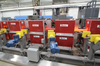
Thermatool ™ Quench and Temper lines can process 2, 5, 10, 15, 20 or 30 tons per hour for Austenitizing, Quench and Temper utilizing induction, gas, or electric furnaces coupled with the Thermatool ™ Precision Quench ™. Thermatool ™ Quench and Temper lines feature Solid State... [See More]
- Applications: Annealing or Heat Treating; Melting
- Output Frequency: 0.2000 to 10
- Output Power: 50.00 to 38000.00

from Ambrell Induction Heating Solutions
Equipped to operate over a broad frequency range from 150 to 400kHz the EASYHEAT-3542 is a versatile, reliable and efficient heating solution for applications requiring up to 4.2kW of power. EASYHEAT-3542 is frequency-agile, continuously optimizing the power delivered to the load for accurate,... [See More]
- Applications: Annealing or Heat Treating; Curing or Tempering; Melting; OEM / Custom (optional feature); Bond, Braze, Harden, Stake, Solder, More
- AC Voltage Required: 187 to 520
- Phase: Three Phase AC Voltage
- Output Power: 4.20

from Ambrell Induction Heating Solutions
EKOHEAT induction heating systems for 15-40 kHz range provide reliable and repeatable solutions for heating larger parts when efficient heating of your part dimensions requires higher frequencies than our 10kHz models. Among the many typical applications are heat treating of steels, preheating for... [See More]
- Applications: Annealing or Heat Treating; Melting; OEM / Custom (optional feature); Heating Parts For Deeper Heat Penetration, Heat Treating Steel, Preheating For Forging Of Steel, Aluminum, Copper Or Brass, And Melting In Crucibles
- AC Voltage Required: 360 to 520
- Phase: Three Phase AC Voltage
- Output Power: 100.00

from Ambrell Induction Heating Solutions
EKOHEAT induction heating systems for 50-150 kHz range provide reliable and repeatable solutions for high-speed heating of smaller parts where the part geometry or the coil size requires high frequency for efficient heating. Among many typical applications are heat treating of steels, shallow case... [See More]
- Applications: Annealing or Heat Treating; Curing or Tempering; Melting; OEM / Custom (optional feature); Heat Treating, Shallow Case Depth Hardening, And Heating Of Steel, Aluminum, Copper Or Brass For Brazing, Shrink Fitting, Curing, Forming And Melting
- AC Voltage Required: 360 to 520
- Phase: Three Phase AC Voltage
- Output Power: 15.00

from Ambrell Induction Heating Solutions
EKOHEAT induction heating systems for 50-150 kHz range provide reliable and repeatable solutions for high-speed heating of smaller parts where the part geometry or the coil size requires high frequency for efficient heating. Among many typical applications are heat treating of steels, shallow case... [See More]
- Applications: Annealing or Heat Treating; Curing or Tempering; Melting; OEM / Custom (optional feature); Heat Treating, Shallow Case Depth Hardening, And Heating Of Steel, Aluminum, Copper Or Brass For Brazing, Shrink Fitting, Curing, Forming And Melting
- AC Voltage Required: 360 to 520
- Phase: Three Phase AC Voltage
- Output Power: 180.00

from Ambrell Induction Heating Solutions
EKOHEAT induction heating systems for 15-40 kHz range provide reliable and repeatable solutions for heating larger parts when efficient heating of your part dimensions requires higher frequencies than our 10kHz models. Among the many typical applications are heat treating of steels, preheating for... [See More]
- Applications: Annealing or Heat Treating; Melting; OEM / Custom (optional feature); Heating Parts For Deeper Heat Penetration, Heat Treating Steel, Preheating For Forging Of Steel, Aluminum, Copper Or Brass, And Melting In Crucibles
- AC Voltage Required: 360 to 520
- Phase: Three Phase AC Voltage
- Output Power: 20.00