
Switch / Relay Input pH Controllers
Description
Switch/Relay Input pH Controllers are devices designed to monitor and control the potential of hydrogen (pH) levels in various environments. They provide rapid on/off control of dosing, ensuring that the pH levels remain within a specified range. These controllers are equipped with various control types, including limit control, linear control, and non-linear control, to suit different monitoring needs.
Working Principle
Switch/Relay Input pH Controllers operate by receiving input signals that represent the current pH level. They compare this input with a predefined set point and use control algorithms such as proportional, integral, and derivative (PID) control to adjust the output. This adjustment can involve activating relays or switches to initiate corrective actions, such as adding chemicals to adjust the pH level. The controllers are useful because they automate the process of maintaining pH balance, which is crucial for many industrial and environmental processes.
Applications
Switch/Relay Input pH Controllers are used in a variety of applications. In food processing, they help maintain the pH levels necessary for product safety and quality. In hydroponics, they ensure optimal pH levels for plant growth. Water purification systems use these controllers to maintain the pH balance necessary for safe drinking water. Additionally, they are employed in waste control to neutralize acidic or basic waste before it is discharged into the environment.
Advantages over other Manufacturing - Cutting Tools
Switch/Relay Input pH Controllers offer advantages over traditional manufacturing tools in specific contexts. For instance, in processes where precise chemical dosing is required, these controllers provide more accurate and automated control compared to manual methods. This precision can lead to improved product quality and reduced waste, which are significant advantages in industries like pharmaceuticals and food processing.
Limitations
One limitation of Switch/Relay Input pH Controllers is their reliance on accurate sensor inputs. If the sensors are not properly calibrated or maintained, the controllers may provide incorrect outputs, leading to suboptimal pH levels. Additionally, the complexity of the control algorithms may require specialized knowledge for setup and troubleshooting, which can be a barrier for some users.
Considerations
When selecting Switch/Relay Input pH Controllers, several factors should be considered. Initial costs can vary depending on the complexity and features of the controller. Operating expenses may include regular calibration and maintenance of sensors to ensure accuracy. Durability is an important consideration, especially in harsh environments, where waterproof or washdown-capable models may be necessary. Accuracy is critical, as even small deviations in pH can have significant impacts in sensitive applications. Replacement and maintenance costs should also be factored in, as these can affect the long-term cost-effectiveness of the controller.
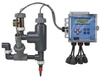
from Iwaki America and Walchem, IWAKI America Inc
The WCT400/410 Cooling Tower Controllers represent the latest in technological and innovative advancements from Walchem. All of the standard features you ’d expect from a conventional cooling tower controller are included, plus optional simple-to-use information management tools that enable... [See More]
- Type: Switch / Relay Input; Frequency Inputs
- Control: Limit; PID
- Controller Type: pH / ORP
- Features: Multi-Function; Rate Indication/ Control; Totalizing (Length or Roll Diameter) Indication/ Control

from Florite International, Inc.
The 900 Series is an economic one loop microcomputer-based instrument incorporating user selectable digital and analog inputs, as well as analog and relay outputs. Other 900 Series features include .005% high accuracy PID, batch, and dose control functions. Additionally, the 900 Series encompasses... [See More]
- Type: DC Voltage Inputs; Current Loop (Transmitter) Excitation; Resistive/ Potentiometer Inputs; Switch / Relay Input; Frequency Inputs; Serial / Digital Input; Fieldbus / Network Input; Screw Terminal
- Control: Limit; Linear; Feedforward; PID
- Controller Type: Laboratory; pH / ORP
- Features: PLC; Multi-Function; Datalogger; Is a Chart Recorder; Rate Indication/ Control; Totalizing (Length or Roll Diameter) Indication/ Control

from Florite International, Inc.
The Florite Model 990X is an innovative, technically superior, high quality and reliable microcomputer-based controller suitable for any commercial or industrial application. The instruments user configurable screw-terminal channels enable any mix of up to eight inputs and or outputs regardless of... [See More]
- Type: DC Voltage Inputs; Current Loop (Transmitter) Excitation; Resistive/ Potentiometer Inputs; Switch / Relay Input; Frequency Inputs; Serial / Digital Input; Fieldbus / Network Input; Screw Terminal, DA15
- Control: Limit; Linear; Feedforward; PID
- Controller Type: Laboratory; pH / ORP
- Features: PLC; Multi-Function; Datalogger; Is a Chart Recorder; Rate Indication/ Control; Totalizing (Length or Roll Diameter) Indication/ Control