
Locking PC Enclosures
Last Updated: April 1, 2025
Description
Locking PC enclosures are specialized housings designed to securely contain personal computers. These enclosures provide a physical barrier to protect the PC from unauthorized access, theft, or tampering. They are typically equipped with locking mechanisms that can be operated using keys, electronic locks, or biometric systems.
Working Principle
Locking PC enclosures work by encasing the computer in a robust structure that can only be accessed through a secure locking mechanism. This mechanism may involve traditional keys, electronic access systems, or biometric verification, ensuring that only authorized personnel can access the contents. The primary utility of these enclosures is to enhance security by preventing unauthorized access and protecting sensitive data stored on the computers.
Applications
Locking PC enclosures are used in environments where security is a priority. Specific examples include:
- Industrial Settings: Protecting PCs in manufacturing plants where unauthorized access could lead to data breaches or operational disruptions.
- Educational Institutions: Securing computers in schools and universities to prevent theft and unauthorized use.
- Healthcare Facilities: Ensuring the security of patient data by restricting access to computers in hospitals and clinics.
Advantages over other PC Enclosures
Locking PC enclosures offer several advantages over standard PC enclosures:
- Enhanced Security: The inclusion of locking mechanisms provides a higher level of security against theft and unauthorized access.
- Access Control: Advanced locking systems, such as electronic or biometric locks, offer precise control over who can access the PC.
- Durability: Often made from robust materials, these enclosures can withstand physical tampering better than standard enclosures.
Limitations
Locking PC enclosures do have some limitations:
- Cost: They are generally more expensive than standard enclosures due to the added security features.
- Complexity: The inclusion of advanced locking mechanisms can complicate installation and maintenance.
- Limited Accessibility: While enhancing security, these enclosures can make it more cumbersome to access the PC for routine maintenance or upgrades.
Considerations
When considering locking PC enclosures, several factors should be taken into account:
- Initial Costs: The upfront cost can be higher due to the security features and materials used.
- Operating Expense: Maintenance of locking mechanisms, especially electronic or biometric systems, can add to operating costs.
- Durability: The choice of materials affects the enclosure's ability to withstand environmental conditions and physical tampering.
- Replacement and Maintenance Costs: Regular maintenance of the locking systems is necessary to ensure continued security, which can incur additional costs over time.

from Rittal North America LLC
Four widths to complete the console system. [See More]
- Features: Hinged Cover; Locking
- NEMA Rating: Type 12
- Material: Steel; Housing: Carbon steel, 1.5 mm Door and console lid: Carbon steel, 2.0 mm, all-round foamed-in PU seal
- Ingress Protection(IP) Rating Against Foreign Objects: 5
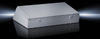
from Rittal North America LLC
Four widths form the bridge for a three-piece configuration of the TopConsole system. [See More]
- Features: Hinged Cover; Locking
- NEMA Rating: Type 12
- Material: Steel; Housing: Carbon steel, 1.5 mm Door and console lid: Carbon steel, 2.0 mm, all-round foamed-in PU seal
- Ingress Protection(IP) Rating Against Foreign Objects: 5
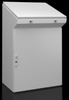
from Rittal North America LLC
One-piece console for operating and monitoring, with large mounting plate and a high protection category of IP 55, available in four different widths. The AX lock plate ensures a uniform appearance, and two-part gland plates are included with the supply for simple cable routing. [See More]
- Features: Hinged Cover; Locking
- NEMA Rating: Type 12
- Material: Steel; Housing: Carbon steel, 1.5 mm Door and console lid: Carbon steel, 2.0 mm, all-round foamed-in PU seal Mounting plate: Carbon steel, 3.0 mm
- Ingress Protection(IP) Rating Against Foreign Objects: 5