
Ion Exclusion HPLC Columns
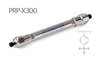
from Hamilton Company
Hamilton PRP-X300 columns offer an easy, rapid way to separate closely related alcohols and organic acids. The sulfonated poly(styrene-divinylbenzene) support separates samples via a mixed mode mechanism. Separation on the PRP-X300 is accomplished by three modes: Hydrogen Bonding —The... [See More]
- Stationary Phase/Separation Process: Ion Exclusion
- Construction Material: Stainless Steel
- Column Type: Analytical
- Packing Diameter: 7
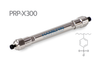
from Hamilton Company
Hamilton PRP-X300 columns offer an easy, rapid way to separate closely related alcohols and organic acids. The sulfonated poly(styrene-divinylbenzene) support separates samples via a mixed mode mechanism. Separation on the PRP-X300 is accomplished by three modes: Hydrogen Bonding —The... [See More]
- Stationary Phase/Separation Process: Ion Exclusion
- Construction Material: Stainless Steel
- Column Type: Analytical
- Packing Diameter: 7
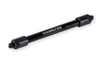
from Hamilton Company
Hamilton PRP-X300 columns offer an easy, rapid way to separate closely related alcohols and organic acids. The sulfonated poly(styrene-divinylbenzene) support separates samples via a mixed mode mechanism. Separation on the PRP-X300 is accomplished by three modes: Hydrogen Bonding —The... [See More]
- Stationary Phase/Separation Process: Ion Exclusion
- Construction Material: polymer
- Column Type: Analytical
- Packing Diameter: 7

from Hamilton Company
Hamilton PRP-X300 columns offer an easy, rapid way to separate closely related alcohols and organic acids. The sulfonated poly(styrene-divinylbenzene) support separates samples via a mixed mode mechanism. Separation on the PRP-X300 is accomplished by three modes: Hydrogen Bonding —The... [See More]
- Stationary Phase/Separation Process: Ion Exclusion
- Construction Material: Stainless Steel
- Column Type: Guard
- Packing Diameter: 20

from Hamilton Company
Hamilton PRP-X300 columns offer an easy, rapid way to separate closely related alcohols and organic acids. The sulfonated poly(styrene-divinylbenzene) support separates samples via a mixed mode mechanism. Separation on the PRP-X300 is accomplished by three modes: Hydrogen Bonding —The... [See More]
- Stationary Phase/Separation Process: Ion Exclusion
- Construction Material: polymer
- Column Type: Guard
- Packing Diameter: 20
from Cole-Parmer
bull; Efficient separations with durable media. Hamilton polymeric PRP <tm > columns are resin-based, offering excellent resolution due to their high selectivity, efficiency, and capacity. The chemically inert macroporous poly(styrenedivinylbenzene) stationary phase is stable from pH 1 to 13. [See More]
- Stationary Phase/Separation Process: Ion Exclusion