
Glass Industrial Inks

from Ruco USA, Inc.
Application Fields. Universal high-gloss 2 component UV screen printing ink for the printing of glass and ceramics. Substrates may differ in their surface properties or method of manufacture. Therefore, a suitability test must always be carried out before printing. Characteristics. This 2 component... [See More]
- Substrate: Ceramic; Glass; Metallic
- Dispensing Method: Printing / Screen
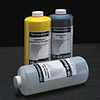
from Videojet Technologies, Inc.
Videojet inks and fluids are designed, tested and manufactured together, to function together at optimum performance levels, no matter what your application or production environment. [See More]
- Substrate: Aluminum; Ceramic; Glass; Metallic; Plastic; Wood
- Form: Liquid; Water (optional feature)
- Cure / Setting Technology: Film Drying
- Dispensing Method: Printing / Screen
from BELL-MARK Corporation
Acetate base, resists solvents for marking on metal, glass, and plastics [See More]
- Substrate: Glass; Metallic; Plastic
- Coating Material: Acetate Based
- Cure / Setting Technology: Film Drying
- Form: Cartridge; Liquid
from TherMark Holdings Inc.
Allows CO2, YAG, and fiber lasers to mark substrates with color [See More]
- Substrate: Ceramic; Glass; Other; Spandrel
- Coverage: 17 to 21
- Cure / Setting Technology: Laser Fused (Laser Marking)
- Thickness: 1.00E-3 to 0.0050
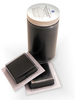
from Graphic Controls
Graphic Controls new line of solid inks for use in Markem ® printersare formulated with our customer needs in mind. Whether you have smallcharacter or large character ink jet printing systems, printing text,bar codes or graphics, Graphic Controls has a solution. . GraphicControls... [See More]
- Substrate: Aluminum; Glass; Plastic; Wood; Other
- Cure Temperature: 40 to 120
- Cure / Setting Technology: Film Drying
- Operating Temperature: 40 to 120
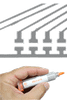
from Protavic America, Inc.
PTV 28997. The PROTAVIC ® C 3513 S is a pure silver-filled electro-conductive ink which is supplied as a single substrates, and is specially adapted for silk screen printing. Its characteristic features are: fineness, good electrical conductivity and good adhesion on all substarates, especially... [See More]
- Substrate: Aluminum; Anodized; Ceramic; Concrete; Glass; Metallic; Plastic; Steel; Wood
- Coating Material: Metal Filled; Resin; Silver
- Cure / Setting Technology: Thermoset
- Cure Temperature: 257