
Controller Electromechanical Timers
Last Updated: February 12, 2025
Description
Controller electromechanical timers are devices designed to manage the timing of electrical circuits. They can be programmed to perform one or more timing functions, such as opening or closing a switch's contacts after a specific time interval. These timers can accept various inputs like voltage, current, frequency, or pulse and provide outputs in serial, digital, or switch form.
Working Principle
Electromechanical timers operate by using mechanical components to control the timing of electrical circuits. They can be set up to perform functions such as delay on, delay off, or one-shot timing. For example, a delay on timer will open or close a switch's contacts after receiving an input signal and a predetermined time has passed. These timers are useful because they provide reliable and repeatable timing functions, which are essential in many industrial and manufacturing processes.
Applications
Electromechanical timers are commonly used in industrial settings. Specific examples include controlling the operation of valves, where a timer may cause a valve to open and remain open for a specified period. They are also used to control mixers, ensuring they turn on and remain running upon receiving a signal that more mix has been added. Other applications include automatic milling machines, periodic lubrication systems, and industrial washing machines.
Advantages over other Electromechanical Timers
Electromechanical timers offer the advantage of being able to handle a wide range of input types and provide various output forms. They can be programmed for multiple time ranges or be field-selectable, offering flexibility in different applications. Additionally, some electromechanical timers are rated as explosion-proof or include features like audible alarms and visual signals, which can be advantageous in specific industrial environments.
Limitations
One limitation of electromechanical timers is their accuracy and repeatability, which may not be as high as digital timers. They also have minimum and maximum time intervals, which can limit their use in applications requiring very precise timing. Additionally, the mechanical components may be subject to wear and tear over time, potentially affecting their performance and reliability.
Considerations
When considering electromechanical timers, it's important to evaluate initial costs, operating expenses, and durability. These timers may have higher initial costs compared to simpler mechanical timers but can offer more functionality and flexibility. Operating expenses may include maintenance and replacement costs due to the wear of mechanical components. Durability and accuracy are also key considerations, as these factors will impact the long-term performance and reliability of the timer in its intended application.

from Festo Corporation
Complete system offering control elements with all the functions required for pneumatic sequence controls. For control cabinet installation. Fast replacement of components [See More]
- Functions: Controller
- Technology: Electromechanical
- Instrument Type: Timer
- Operating Temperature: 14 to 140
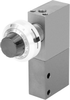
from Festo Corporation
Time delay infinitely adjustable [See More]
- Functions: Controller
- Technology: Electromechanical
- Instrument Type: Timer

from Festo Corporation
Time delay infinitely adjustable [See More]
- Functions: Controller
- Technology: Electromechanical
- Instrument Type: Timer

from Traceable® Products
Automatic mechanical units turn on and off any piece of equipment. Use them to turn on chemical, water, and air pumps as part of a sampling process. Automate testing, heating, mixing, or even feeding of animals. Easy-to-set controllers are ready to use out of the box, program in less than a minute,... [See More]
- Functions: Controller
- Technology: Electromechanical
- Instrument Type: Timer
- Number of Functions: Single