
-
Supplier: Metrohm USA, Inc.
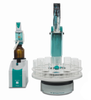
Description: Fully automatic system for potentiometric titration of acids and bases in series of up to 12 samples. The titration is carried out directly in the beaker on the rack. Afterwards, the electrode is cleaned automatically using the membrane pumps built into the sample changer
- Titration Indication Method: Potentiometry
-
Supplier: Accuris
Description: STANDARD TEST METHOD FOR PYRIDINE BASES IN CRESYLIC ACID BY DIRECT TITRATION
-
Supplier: Accuris
Description: Petroleum products - Determination of base number - Perchloric acid potentiometric titration method
-
-
Supplier: Accuris
Description: STANDARD TEST METHOD FOR ACID AND BASE NUMBER BY COLOR-INDICATOR TITRATION
-
Supplier: Accuris
Description: Standard Test Method for Pyridine Bases in Cresylic Acid by Direct Titration
-
Supplier: CSA Group
Description: salts of weak acids (e.g. soaps), basic salts of polyacid bases, and salts of heavy metals. The ranges of base number values for which precision values for the method have been established are: unused oils: base numbers from 3 to 45; additive concentrates: base
-
Description: salts of weak acids (e.g. soaps), basic salts of polyacid bases, and salts of heavy metals. The ranges of base number values for which precision values for the method have been established are: unused oils: base numbers from 3 to 45; additive concentrates: base
-
Supplier: CSA Group
Description: Specifies a colour-indicator titration method for the determination of acidic or basic constituents in petroleum products and lubricants soluble in mixtures of toluene and propan-2-ol. It is applicable for the determination of acids or bases having extremly low dissociation
-
Description: Specifies a colour-indicator titration method for the determination of acidic or basic constituents in petroleum products and lubricants soluble in mixtures of toluene and propan-2-ol. It is applicable for the determination of acids or bases having extremly low dissociation
-
Supplier: ASTM International
Description: acids, esters, phenolic compounds, lactones, resins, salts of heavy metals, and addition agents such as inhibitors and detergents. Similarly, constituents considered to have basic properties include organic and inorganic bases, amino compounds, salts of weak acids (soaps), basic
-
Supplier: ASTM International
Description: This test method uses hydrochloric acid as the titrant, whereas Test Method D2896 uses perchloric acid as the titrant. This test method may or may not titrate these weak bases and, if so, it will titrate them to a lesser degree of completion; some additives such as inhibitors or
-
Supplier: Metrohm USA, Inc.
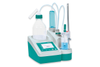
Description: The compact Eco Titrator with integrated magnetic stirrer and touch-sensitive user interface is ideal for routine analysis. It provides GLP-compliant results with minimum space requirements at all times (approx. DIN A4). The Eco Titrator Acid/Base offers you the complete package for
-
Supplier: ASTM International
Description: 1.1 This test method covers the determination of pyridine and other basic nitrogen impurities in crude and refined cresylic acids streams, including mixtures. 1.2 This test method is applicable for pyridine base levels of 0.001?% to 0.5?%. 1.3 In determining the conformance of the test
-
Supplier: ASTM International
Description: 1.1 This test method covers the determination of basic constituents in petroleum products by titration with perchloric acid in glacial acetic acid. 1.2 Procedures A and B use different titration solvent volumes and sample weights. Note 1-A round robin on a series of new
-
Supplier: GFS Chemicals, Inc.
Description: ITEM#:3415 CF3CF2CO2H CAS#:422-64-0 F.W.:164.03 NFPA#: Specific Gravity: 1.561 DOT:8/II Descriptions: Specification TEST 1. Assay (Acid-base titration), 97.5% - 102.5% 2. Appearance - Clear, colorless to amber liquid Properties No properties.
- Trigger: Acid
- State of Matter: Powder
-
Supplier: GFS Chemicals, Inc.
Description: ITEM#:906 C3N3(OH)3 CAS#:108-80-5 F.W.:129.08 NFPA#: Specific Gravity: 0.000 DOT:8/II Descriptions: Convenient lab source for HCN gas. Specification TEST 1. Assay (Acid/base titration), 97.5% - 102.5% 2. Appearance - White to off-white solid Properties No properties.
- Trigger: Acid
- State of Matter: Powder
-
Supplier: Metrohm USA, Inc.
Description: Automated system for the performance of potentiometric titrations on acids and bases. Up to 100 samples can be placed on the sample rack. The sample is pipetted out of the beaker into the external titration vessel, after which a completely automatic determination is
- Titration Indication Method: Potentiometry
-
Supplier: GFS Chemicals, Inc.
Description: ITEM#:3272 CH3CH2C≡CCOOH CAS#:5963-77-9 F.W.:98.10 NFPA#: Specific Gravity: DOT:NR Descriptions: Not on the TSCA inventory. Specification TEST 1. Assay (Acid-Base Titration), 97.5% min 2. Assay (GC-FID by Esterification), 97.5% min 3. Identification by GC/MS - Conforms
- Trigger: Acid
- State of Matter: Powder
-
Supplier: GFS Chemicals, Inc.
Description: ITEM#:3455 H2C=CH(CH2)3COOH CAS#:1577-22-6 F.W.:114.14 NFPA#: Specific Gravity: 0.961 DOT:8/III Descriptions: Not on the TSCA inventory. Specification TEST 1. Assay (GC-FID), 97.5% min 2. Assay (Acid-base titration), 97.5% - 102.5% 3. Identification by GC/MS - Conforms 4. H2O
- Trigger: Acid
- State of Matter: Powder
-
Supplier: SAE International
Description: The test method describes the procedure for determination of the total acid number of new and degraded polyol ester and diester based gas turbine lubricants by potentiometric titration technique. The method was validated to cover an acidity range 0.05 to 6.0 mg KOH g 2x. The method may
-
Supplier: SAE International
Description: The test method describes the procedure for determination of the total acid number of new and degraded polyol ester and diester based gas turbine lubricants by potentiometric titration technique. The method was validated to cover an acidity range 0.05 to 6.0 mg KOH g 2x. The method may
-
Supplier: Metrohm USA, Inc.
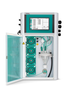
Description: The 2026 HD Titrolyzer is a heavy-duty online analyzer designed for precise potentiometric titrations in demanding industrial environments. It supports a wide range of titration methods, including acid/base, redox, and precipitation titrations, and can also be
- Titration Indication Method: Potentiometry
-
Supplier: CSA Group
Description: Applicable of products the SO2 content of which is equal to or more than 2 mg/kg. Based on the displacement of the sulphur dioxide present in the test portion by a current of pure nitrogen and absorption in a known volume of iodine solution. Titration of the excess of iodine with standard
-
Supplier: CSA Group
Description: Two cases are considered: sulphuric acid contents equal to or lower than 98 % (m/m) and sulphuric acid contents higher than 98 % (m/m). The principle is based on oxidation of a test portion with hydrogen peroxide and titration of the total acidity with a standard volumetric
-
Supplier: Hamilton Company
Description: The Liq-Glass Knick® is a robust electrode for daily laboratory use, ideally suited for titrations with strong acids as well as in strong bases. It is especially well suited for Knick Portamess® equipment.
- pH Range: 0 to 14 ph
- Operating Temperature: 14 to 212 F
- Electrode Configuration: Combination
- Body Material: Glass
-
Supplier: Hamilton Company
Description: The Liq-Glass Knick® is a robust electrode for daily laboratory use, ideally suited for titrations with strong acids as well as in strong bases. It is especially well suited for Knick Portamess® equipment.
- pH Range: 0 to 14 ph
- Operating Temperature: 14 to 212 F
- Electrode Configuration: Combination
- Body Material: Glass
-
Supplier: Hamilton Company
Description: The Liq-Glass Knick® is a robust electrode for daily laboratory use, ideally suited for titrations with strong acids as well as in strong bases. It is especially well suited for Knick Portamess® equipment.
- pH Range: 0 to 14 ph
- Operating Temperature: 14 to 212 F
- Electrode Configuration: Combination
- Body Material: Glass
-
Description: The principle of the procedure based on titration of a test portion with a standard volumetric hydrochloric acid solution, in the presence of methyl orange as indikator. The alkalinity is expressed as a percentage by mass of sodium oxide potassium oxide.
-
Supplier: Cole-Parmer
Description: titration packages are designed with everything you need for acid/base, acidity, precipitation, redox, and Karl Fischer volumetric titrations
the ideal replacement for laboratories still performing manual titrations! Although small in size, these quality -
Supplier: Cole-Parmer
Description: Affordable automatic titration packages are designed with everything you need for acid/base, acidity, precipitation, redox, and Karl Fischer volumetric titrations
the ideal replacement for laboratories still performing manual titrations! Although small in -
Supplier: Cole-Parmer
Description: automatic titration packages are designed with everything you need for acid/base, acidity, precipitation, redox, and Karl Fischer volumetric titrations
the ideal replacement for laboratories still performing manual titrations! Although small in size, these -
Supplier: Cole-Parmer
Description: automatic titration packages are designed with everything you need for acid/base, acidity, precipitation, redox, and Karl Fischer volumetric titrations
the ideal replacement for laboratories still performing manual titrations! Although small in size, these -
Supplier: TCI America
Description: [Characteristics] 1) Acid dissociation constant pKa is between 6~8. 2) High water solubility. 3) Low penetration through biomembranes. 4) Low base effect toward biological systems. 5) pKa is less affected by concentration, temperature and ion composition. 6) Low complexation ability








Find Suppliers by Category Top
Featured Products Top
-
 high?impact applications: crude overhead water analysis (ammonia, chloride, and iron), mercaptan measurement, and total acid and base number (TAN/TBN). You will see how lab methods translate into a continuous process analyzer and what that means for your accuracy, repeatability, data traceability, and ROI across lab, process, and plant operations. (read more)
Browse Titration Instruments Datasheets for Metrohm USA, Inc. -
than an increase, and a usual culprit is fuel contamination. Total Base Number Total Base Number (TBN) is a measure of the alkaline reserve in a lubricant. This has often been measured by titration, as in the Karl Fischer method, but can be measured in other ways as well, such as by (read more)
Browse Oil Sensors and Analyzers Datasheets for AMETEK Spectro Scientific
More Information Top
 Indicates content that may require registration and/or purchase.

-
What Sustains Life?
In the following paragraphs, visual comparisons will be made with reference to Figures 5.34 (comparing Hill coefficients) and 5.35 (comparing the area of acid base titration curves).
-
A Revised Analytical Method for HCO 3 ‐ and CO 3 2‐ Determinations in Geothermal Waters: An Assessment of IAGC and IAEA Interlaboratory Comparisons
Similarly, there is no inflow of CO2 during the backward titration as the back titration curve is similar to the strong- acid base titration curve.
-
http://eprints.hud.ac.uk/420/1/savilljowittFINAL.pdf
64 Table 17: C.E.C.’s for Purolite and Amberlyst sulfonated ion exchange resins determined from acid base titration based on dry weight........................................................................................................................
-
Exopolymeric substances of sulfate‐reducing bacteria: Interactions with calcium at alkaline pH and implication for formation of carbonate minerals
For the acid base titration , 2–3 mL of the dialysed EPS (approximately 6.5 mg of dry EPS) was dissolved in de-ionized water (>18 MΩ) to obtain a final volume of 40 mL. The solution was transferred to an anaerobic chamber …
-
Oxidative and hydrolytic stability of a novel acrylic terpolymer for biomedical applications
SEC, 1 H-NMR, acid base titration , and tensile testing were used to characterize this material.
-
http://dspace.mit.edu/bitstream/handle/1721.1/50266/5-111Fall-2005/NR/rdonlyres/Chemistry/5-111Fall-2005/74553AE8-C3EF-45D5-8A05-51A188ABD62F/0/5_1112005L24.pdf
I think people find the acid based titrations a little bit of thinking more here, you count, so that might be a little nice relief coming up. OK.
-
http://www.clays.org/journal/archive/volume%2042/42-4-444.pdf
Acid base titration of the interlayered montmorillonitesproduced values for the PZC in the range 4.5-5.9, increasing with the A1 content of the materials.
-
Effects of ionizing radiation on two gelatin fractions I. Material preparation, dosimetry, and acid‐base behavior
radiation doses were limited to those producing visually nondiscernible denaturation of the gelatin since acid base titrations or other physical meas- urements on solutions containing precipitated protein would not yield readily interpretable re- sults .
-
Characterization of strong polyelectrolyte hydrogels based on poly(vinyl alcohol)
More details on acid base titration and equations used to determine MA% were discussed .
-
http://eprints.hud.ac.uk/5014/1/addavisonfinalthesis.pdf
These acid base titrations were designed to establish confidence with the equipment, and to verify data in the literature.