
-
Supplier: Ellsworth Adhesives
Description: ITW Performance Polymers Plexus® MA830 Gray with Glass Beads is a two component methacrylate adhesive designed for structural bonding of metals without primers. Requires little to no surface prep and provides excellent fatigue endurance, impact resistance, and toughness. 10:1 mix
- Applied Thickness / Gap Fill: 0.01181103 to 0.5118113 inch
- Viscosity: 35,000 to 120,000 cP
- Tensile Strength (Break): 3,200 to 3,800 psi
- Chemical System: Acrylic / Polyacrylate
-
Supplier: Ellsworth Adhesives
Description: ITW Performance Polymers Plexus® MA832 Gray with Glass Beads is a two component methacrylate adhesive designed for structural bonding of metals without primers. Requires little to no surface prep and provides excellent fatigue endurance, impact resistance, and toughness. 10:1 mix
- Applied Thickness / Gap Fill: 0.01181103 to 0.4724412 inch
- Viscosity: 35,000 to 130,000 cP
- Tensile Strength (Break): 2,700 to 3,000 psi
- Chemical System: Acrylic / Polyacrylate
-
Description: ProMar° VOC Compliant Acrylic Copolymer Traffic Paint is a conventional dry (non-heat applied) acetone based paint. Acetone, as the main solvent, has Exempt Status under Federal law and does not contribute harmful VOC°s. ProMart° VOC Compliant Acrylic Traffic Paint is 100%
- Wet / Applied Thickness: 0.015 inch
- Operating / Use Temperature: 40 to 90 F
- Chemistry: Acrylic / Latex, Resin Base / Polymer Binder
- Substrate: Asphalt, Concrete / Masonry
-
-
Description: Setfast® LOW VOC ACRYLIC TRAFFIC MARKING PAINT is a conventional dry (non-heat applied) acetone based paint. Acetone, as the main solvent, has Exempt Status under Federal law and does not contribute harmful VOCs. This is 100% acrylic, which offers the following outstanding properties:
- Wet / Applied Thickness: 0.015 inch
- Cure / Dry Temperature: 77 F
- Operating / Use Temperature: 40 to 90 F
- Chemistry: Acrylic / Latex, Resin Base / Polymer Binder
-
Description: Setfast® ACRYLIC WATERBORNE TRAFFIC MARKING PAINT is a conventional dry, waterborne acrylic product available in two colors, white and yellow, which conform to U.S. Bureau of Public Roads colors and meets Federal Specifications TT-P-1952B, Type 1. Low VOC Highly visible colors Ready to
- Wet / Applied Thickness: 0.015 inch
- Cure / Dry Temperature: 77 F
- Operating / Use Temperature: 50 to 110 F
- Chemistry: Acrylic / Latex, Resin Base / Polymer Binder
-
Description: Setfast® ACRYLIC LATEX TRAFFIC MARKING PAINT is a conventional dry (non-heated application) water based paint intended for use in marking parking lots, airports, and roads. TM2160, and TM2161 conform to current VOC regulations, and may be used for general applications where specific
- Wet / Applied Thickness: 0.015 inch
- Cure / Dry Temperature: 77 F
- Operating / Use Temperature: 50 to 110 F
- Chemistry: Acrylic / Latex, Resin Base / Polymer Binder
-
Supplier: Surventis Surface Treatment LLC
Description: AL-7525 is an interleaving powder based on acrylic beads (PMMA) and adipic acid (75% by weight). The polymer bead has a mean particle size of 125 microns. AL-7525 is used as an interleaving powder if high protection against glass corrosion is required. Typical float line
- Materials / Substrates Finished: Ceramics / Glass
- Features: Specialty / Other
-
Supplier: Scientific Polymer Products, Inc.
Description: Poly(isobutyl methacrylate) Catalog # : 112 CAS : 9011-15-8 Physical Form : Beads Approx Mw : 260,000 Density (g/cc) : 1.045 (20C) Refractive Index : 1.477 Inherent viscosity : 0.66 TSCA : TSCA listed Tg (C) : 53 Misc : Solubility parameter 8.65 Soluble in : Acetone, benzene, chloroform,
- Index of Refraction: 1.477
- Chemical System: Acrylic
- Type: Thermoplastic
-
Supplier: Scientific Polymer Products, Inc.
Description: Poly(methyl methacrylate) Catalog # : 037A CAS : 9011-14-7 Physical Form : Beads Approx Mw : 35,000 Density (g/cc) : 1.20 (25C) Refractive Index : 1.490 Inherent viscosity : 0.18 Fp (F) : 572 TSCA : TSCA listed Tg (C) : 105 Misc : Solubility parameter 9.3 Soluble in : Acetone, benzene,
- Index of Refraction: 1.49
- Chemical System: Acrylic
- Type: Thermoplastic
-
Supplier: Scientific Polymer Products, Inc.
Description: Poly(ethyl methacrylate) Catalog # : 113 CAS : 9003-42-3 Physical Form : Beads Approx Mw : 250,000 Density (g/cc) : 1.11 (25C) Refractive Index : 1.485 Intrinsic viscosity : 0.95 Fp (F) : 572 TSCA : TSCA listed Tg (C) : 63 Misc : Solubility parameter 8.95 Soluble in : Acetone, benzene,
- Index of Refraction: 1.485
- Chemical System: Acrylic
- Type: Thermoplastic
-
Supplier: Scientific Polymer Products, Inc.
Description: Poly(n-butyl methacrylate) Catalog # : 111 CAS : 9003-63-8 Physical Form : Beads Approx Mw : 180,000 Density (g/cc) : 1.07 (25C) Refractive Index : 1.483 Inherent viscosity : 0.52 Fp (F) : 572 TSCA : TSCA listed Tg (C) : 15 Misc : Solubility parameter 8.75 Soluble in : Acetone, benzene,
- Index of Refraction: 1.483
- Chemical System: Acrylic
- Type: Thermoplastic
-
Supplier: Esprix Technologies
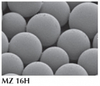
Description: Characteristics High crosslinked acrylic beads with a mid range particle size distribution. MZ Series exhibits excellent flow properties. High Crosslinked Middle Monodispersed Acrylic Applications Matting agent in paints which provides excellent dispersion and improves
- Applications: Coatings / Paint
- Form & Features: Organic Chemical / Polymer
- Features: Other
-
Supplier: Bio-Rad Laboratories, Inc.
Description: acrylic acid moieties inside the AG 1-X8 resin, which produces a spherical resin bead containing paired anion and cation exchange sites. The result is a styrene divinylbenzene crosslinked, rigid polymer lattice with attached quaternary ammonium groups (strongly basic anion
- Filter Medium Material: Anion Exchange Resin
-
Supplier: Bio-Rad Laboratories, Inc.
Description: acrylic acid moieties inside the AG 1-X8 resin, which produces a spherical resin bead containing paired anion and cation exchange sites. The result is a styrene divinylbenzene crosslinked, rigid polymer lattice with attached quaternary ammonium groups (strongly basic anion
- Filter Medium Material: Anion Exchange Resin
-
Supplier: Bio-Rad Laboratories, Inc.
Description: acrylic acid moieties inside the AG 1-X8 resin, which produces a spherical resin bead containing paired anion and cation exchange sites. The result is a styrene divinylbenzene crosslinked, rigid polymer lattice with attached quaternary ammonium groups (strongly basic anion
- Filter Medium Material: Anion Exchange Resin
-
Supplier: Bio-Rad Laboratories, Inc.
Description: acrylic acid moieties inside the AG 1-X8 resin, which produces a spherical resin bead containing paired anion and cation exchange sites. The result is a styrene divinylbenzene crosslinked, rigid polymer lattice with attached quaternary ammonium groups (strongly basic anion
- Filter Medium Material: Anion Exchange Resin



Find Suppliers by Category Top
More Information Top
 Indicates content that may require registration and/or purchase.

-
Double‐shell surface modifications of large poly(methyl methacrylate) spheres
Diakon acrylic bead polymer from Ineos Acrylics was chosen as the original spheres.
-
Polymer‐Supported Chiral Organocatalysts: Synthetic Strategies for the Road Towards Affordable Polymeric Immobilization
conversion, but poorer selectivity than 49.[44] For our acrylic polymer beads , the presence of a spacer seemed to have a surprisingly small effect on enantioselectivity, but slightly more on the diastereoselectivity.[41b] However, for proline supported on the styrenic Merrifield resin …
-
Heterogenized Homogeneous Catalysts for Fine Chemicals Production
From this point of view, Hansen and coworkers have described a new and efficient approach to synthesizing acrylic polymer beads containing proline and prolinamides to be used in organocatalysis [28].
-
Preparation by suspension polymerization of porous beads for enzyme immobilization
Acrylic polymer beads crosslinked with divinyl benzene (DVB) are prepared from various combinations of monomers, particularly methyl methacrylate (MMA), methyl acrylate (MA), and methacrylic acid (MAA), but also a few containing ethyl acrylate (EA) and N,N-dimethyl acrylamide ( N ,N-DMA).
-
Synthesis and metal binding properties of poly(hydroxamic acid) resins from poly(ethyl acrylate‐ co ‐divinylbenzene) beads
Acrylic polymer beads crosslinked with divinyl- benzene (DVB) were prepared from various com- binations of monomers with d i l ~ e n t , ' ~ , ' ~but few contain ethyl acrylate (EA).17 In this study, porous crosslinked poly(ethyl ac …
-
Evaluation of the performance of immobilized penicillin G acylase using active‐site titration
macroporous oxirane-activated acrylic polymer beads ) is well described, and its industrial potential was recently reviewed (Katchalski-Katzir and Kraemer, 2000).
-
Immobilization/stabilization on Eupergit C of the β-galactosidase from B.
circulans and an α-galactosidase from Aspergillus
oryzae .
Immobilization of 2 galactosidases, β-galactosidase (EC 3.2.1.23) from Bacillus circulans and an α-galactosidase from Aspergillus oryzae , was undertaken using Eupergit C ( acrylic polymer beads ) as the immobilization support.
-
Improved activity in acidic media of immobilized lysozyme
These acrylic polymer beads are considered safe from a toxicological standpoint and are already being used in the pharmaceuti- cal field.
-
Synthesis of porous poly(hydroxamic acid) from poly(ethyl acrylate-co -divinylbenzene)
Acrylic polymer beads croSs/inked with DVB are prepared from various combination of monomers with diluent (13 - 15), but few containing EA (16).
-
Pumping up your POLYMERS - Canadian Plastics
Altuglas International, a business of Arkema, has introduced a new line of weatherable acrylic polymer beads for use as matting agents in a wide variety of polymers, including PVC and ABS.