
Products & Services
See also: Categories | Featured Products | Technical Articles | More Information-
Supplier: Accuris
Description: Crack Detection Material
-
Supplier: Accuris
Description: Crack Detection Agent
-
Supplier: Accuris
Description: Crack Detection Agent, Liquid
-
-
Supplier: Accuris
Description: Crack Detection Agent, Water-Soluble
-
Supplier: ASTM International
Description: thermography is a surface examination but has demonstrated detection sensitivity for subsurface defects including back wall defects for thin components (5), (6). Care should be taken when developing vibroacoustic thermography for the detection of subsurface defects. 1.4 Warnings: 1.4.1
-
Description: Addresses procedures for inspection of deaerator heater and water storage vessel welds, including reinspection criteria and qualification of personnel; factors influencing boiler feedwater deaerator cracking based on literature references and case history analyses; standardized nomenclature of
-
Supplier: AMPP Resources
Description: Addresses procedures for inspection of deaerator heater and water storage vessel welds, including reinspection criteria and qualification of personnel; factors influencing boiler feedwater deaerator cracking based on literature references and case history analyses; standardized nomenclature of
-
Description: BESTSELLER! Addresses procedures for inspection of deaerator heater and water storage vessel welds, including reinspection criteria and qualification of personnel; factors influencing boiler feedwater deaerator cracking based on literature references and case history analyses; standardized
-
Supplier: AMPP Resources
Description: BESTSELLER! Addresses procedures for inspection of deaerator heater and water storage vessel welds, including reinspection criteria and qualification of personnel; factors influencing boiler feedwater deaerator cracking based on literature references and case history analyses; standardized
-
Supplier: NACE International
Description: BESTSELLER! Addresses procedures for inspection of deaerator heater and water storage vessel welds, including reinspection criteria and qualification of personnel; factors influencing boiler feedwater deaerator cracking based on literature references and case history analyses; standardized
-
Supplier: NACE International
Description: Addresses procedures for inspection of deaerator heater and water storage vessel welds, including reinspection criteria and qualification of personnel; factors influencing boiler feedwater deaerator cracking based on literature references and case history analyses; standardized nomenclature of
-
Supplier: AMPP Resources
Description: This standard is intended to be a primary source of information on cracking in wet H2S petroleum refinery environments and provides guidelines on the detection, repair, and mitigation of cracking of existing carbon steel refinery equipment in wet H2S environments. Key Words: H2S, cracking,
-
Description: This standard is intended to be a primary source of information on cracking in wet H2S petroleum refinery environments and provides guidelines on the detection, repair, and mitigation of cracking of existing carbon steel refinery equipment in wet H2S environments. Key Words: H2S, cracking,
-
Description: HISTORICAL DOCUMENT. This standard is intended to be a primary source of information on cracking in wet H2S petroleum refinery environments and provides guidelines on the detection, repair, and mitigation of cracking of existing carbon steel refinery equipment in wet H2S environments. This
-
Supplier: NACE International
Description: HISTORICAL DOCUMENT. This standard is intended to be a primary source of information on cracking in wet H2S petroleum refinery environments and provides guidelines on the detection, repair, and mitigation of cracking of existing carbon steel refinery equipment in wet H2S environments. This
-
Supplier: AMPP Resources
Description: adjacent heat-affected zones resulting from corrosion fatigue. Of the three reported storage vessel ruptures, one resulted in fatalities and considerable plant downtime. Other literature on deterioration of deaerators noted that investigations of various systems indicated that cracks in the
-
Supplier: NACE International
Description: 检测、修补和缓解炼厂压力容器在湿H2S环境下发生开裂的 DOWNLOADABLE HISTORICAL DOCUMENT. Chinese translation. Intended to be a primary source of information on cracking in wet H2S petroleum refinery environments. Provides guidelines on detection, repair, and mitigation of cracking of existing carbon steel refinery
-
Supplier: Johnson and Allen, Ltd.
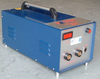
Description: Designed for ease of operation, portability and flexibility, the Tri-Mag and Tri-Ad can supply AC and DC outputs for techniques such as encircling coil, pistol prod and current flow. Demagnetisation is also possible using the units variable current supply built in as standard. Both units can be
- Instrument Type: Flaw Detection
- Instrument Technology: Magnetic Particle System
- Form Factor: Portable / Hand Held / Mobile
- Features: Surface Cracks / Abrasion, Uses Magnetic Sensors
-
Supplier: Sonel Test
Description: Hear the inaudible Comprehensive ultrasonic detection set Sonel TG-1 is a reliable professional intended for effective ultrasonic detection. The Sonel TG-1 set is designed for effective and trouble-free ultrasonic detection. It consists of professional instruments of reliable
- Testing Method: Manual
-
Supplier: Evident Scientific
Description: Features Ideal for detection of skin-to-skin disbonds (metal-to-metal) Ideal for detection of delamination in composite Phase analysis allows evaluation of defect location or part thickness Detects corrosion between layers Easily used a go/no-go method Available in a range of probe
- Application: Flaw / Crack Detection
-
Supplier: Evident Scientific
Description: Detachable stainless steel straight shaft surface probes have a small-diameter housing and coils built for higher frequencies. They are usually used for surface breaking crack detection. This straight shaft design is the standard pencil probe style. Advantages Suitable for small defect
- Application: Flaw / Crack Detection
- Probe Style: Surface Probe
-
Supplier: Evident Scientific
Description: for surface breaking crack detection. Advantages Suitable for small defect detection. Reaches areas inaccessible to standard probes. Drop helps to inspect around fasteners. Available with Powerlink™ technology. Wide selection of lengths and drops. Available with bridge or
- Application: Flaw / Crack Detection
- Probe Style: Surface Probe
-
Supplier: ASTM International
Description: parts which exhibit audio or ultrasonic ringing. They are used to distinguish acceptable parts from those containing crack-like or crystallographic flaws, or both, that are closely associated with nonlinear dynamic responses of the parts. 1.2 The values stated in SI units are to be regarded
-
Supplier: CSA Group
Description: Specifies an accelerated test for the purpose of detecting the presence of residual (internal) stresses in wrought copper and copper alloy products that might bring about failure of the material in service or storage through stress corrosion cracking. The method is not intended for testing
-
Description: Specifies an accelerated test for the purpose of detecting the presence of residual (internal) stresses in wrought copper and copper alloy products that might bring about failure of the material in service or storage through stress corrosion cracking. The method is not intended for testing
-
Supplier: Evident Scientific
Description: The 30-70-70 crack detection technique uses a single element transducer with a CDS wedge for detection and sizing of ID connected cracks. This technique uses a combination of three waves for sizing flaws of different depths. An OD creeping wave creates a 31.5 degree
- Transducer Style: Angle Beam / Wedge Transducer
- Application: NDT - Flaw / Crack Detection
-
Supplier: SAE International
Description: sub-surface flaws, cracks, voids, delaminations and porosity. AM observed features and defects can be indicators that the components were improperly handled, stored, altered or previously used. If AS6171/6 is invoked in the contract, the base document, AS6171 General Requirements shall also
-
Supplier: ASTM International
Description: 1.1 This test method covers an accelerated test method for evaluating the tendency of gas leak detection fluids (LDFs) to cause stress corrosion cracking (SCC) of brass components in compressed gas service. 1.2 The values stated in inch-pound units are to be regarded as standard. The values
-
Supplier: ASTM International
Description: metallic materials to EAC under various environmental conditions. In many cases, the initiation of EAC is accelerated through the application of a dynamic strain in the gage section or at a notch tip or crack tip, or both, of a specimen. Due to the accelerated nature of this test, the results
-
Supplier: UE Systems, Inc.
Description: Bend this probe to odd angles to locate sound sources in hard to reach areas.
- Application: Flaw / Crack Detection
- NDT Probe Technology: Ultrasonic
-
Supplier: UE Systems, Inc.
Description: Magnetically mounted contact probe with cable for testing consistency and for hard to reach test points. Must be used with remote access module (RAM) shown below.
- Application: Flaw / Crack Detection
- NDT Probe Technology: Ultrasonic
-
Supplier: UE Systems, Inc.
Description: Extend and Bend this probe to odd angles to locate sound sources in hard to reach areas. (up to 56 in / 1.4 m)
- Application: Flaw / Crack Detection
- NDT Probe Technology: Ultrasonic
-
Supplier: Sardello, Inc.
Description: Crack detection, MPI & Dye Penetrant, Visual Inspection
- Capability / Technology: Magnetic Particle System, Penetrant Testing System (Dye / FPI)
- Features: North America, Northeast US Only, United States Only
-
Supplier: SONOTEC Ultraschallsensorik Halle GmbH
Description: Designed with ergonomic and strictly functional characteristics in mind, the new SONOSCREEN ST 10 ultrasonic flaw detector from Sonotec GmbH boasts a user-friendly menu navigation system. This improves testing reliability and saves valuable testing time.Weld seam testing accounts for 70 percent of
- Instrument Type: Flaw Detection
- Form Factor: Monitoring System
- Features: Other, Subsurface Crack Detection, Surface Cracks / Abrasion, Weld / Joint Inspection
- Instrument Technology: Ultrasonic
-
Supplier: FARO CREAFORM
Description: Fast and Accurate Inspection Solution for Aircraft Surface 3D Assessment Aircraft is the first dedicated 3D visualization software for aircraft assessment and the characterization of dent damages on aircraft surfaces. More accurate and faster than traditional methods, it limits the operators’
- Instrument Type: Corrosion, Flaw Detection
- Features: General Corrosion Detection, Other, Surface Cracks / Abrasion

















Find Suppliers by Category Top
Featured Products Top
-
 in our shop or at your facility. Non-Destructive testing is used for the detection of cracks and irregularities in metals without causing any physical harm of the component being tested. The term can also be used for other tests which are used to measure parameters (read more)
Browse Inspection Services Datasheets for NDE Professionals Inc. -
ESPEC North America Inc | Qualmark Products and Services
The Vital Role of Temperature & Humidity Chambers
vulnerabilities, improve designs, and validate durability before products reach customers. Accelerating Failure Detection By cycling between temperature extremes and high humidity, engineers can expose cracks, corrosion, and other early-stage failures. This accelerated testing (read more)
Browse Environmental Test Chambers and Rooms Datasheets for ESPEC North America Inc | Qualmark Products and Services -
are used to find out possible leaks due to non-suitable material (porosity, blowholes, cracks), or in the machining process to find out machining errors or defective parts, and ultimately in assembly, to find out missing or defective gaskets, wrong positioning or assembly. The presence of a (read more)
Browse Motor Test Equipment Datasheets for Marposs Corp -
capacitance field around the probe. The active portion of the probe is fully submerged into the liquid or solid to the point of targeted interest. Changes in product dielectric due to blending of other products, moisture content of solids, or process cracking will cause a positive or negative capacitance (read more)
Browse Process Monitors Datasheets for Arjay Engineering -
grid distortion. The conductivity test, thus, enables the indirect detection of defects in materials and material properties. The conductivity test finds therefore its application when reviewing alloy compositions (material sorting), in the evaluation of hardness properties, when material (read more)
Browse Conductivity and Resistivity Meters Datasheets for PCE Instruments / PCE Americas Inc. -
satisfy every application needs to detect surface-open cracks, small porosities as well as to verify the correctness of heat treatment on any conductive material (steel, cast iron, aluminum, brass, copper, etc.). In addition to NDT eddy current probes, to check material integrity and (read more)
Browse Nondestructive Testing (NDT) Probes Datasheets for Marposs Corp -
capable of dulling the sense of smell before its presence is noticed. This gas is common in oil refineries, wastewater plants, and mining operations, where confined spaces and reactive materials make its presence especially hazardous. Maintaining safety and achieving accurate detection in these (read more)
Browse Calibration Instruments Datasheets for Environics, Inc. -
Failure - Pipelines become degraded over time by moisture, chemicals, temperature fluctuations and regular usage, particularly metal pipes. Corrosion damages their structures resulting in cracks or leaks. Without regular inspections these issues might go undetected leading to (read more)
Browse Plugs, Stoppers, and Inserts Datasheets for Petersen Products Co. -
light reflection rate of black alumina ceramic is lower, which can effectively reduce stray light and prevent light from reflecting onto the chip surface within the device cavity, thereby improving the purity of the laser output light and the signal-to-noise ratio of photoelectric detection. This is (read more)
Browse Aluminum Oxide and Alumina Ceramics Datasheets for Xiamen Innovacera Advanced Materials Co., Ltd. -
The Future of Autonomous Vehicles, Robots & Drones Rides on Evolution & Protection of LiDAR Developed over four decades ago by NASA and the U.S. Military, LiDAR (Light Detection and Ranging) is now considered a viable, safe solution (read more)
Browse Self-sealing Fasteners Datasheets for ZAGO Manufacturing Company, Inc.
Conduct Research Top
-
Asphalt Crack Detection Using Thermography
This paper reports on research used to evaluate the application of infrared thermography for the detection of asphalt cracking, which in the past, has generally relied on images produced by analog and digital cameras operating in the visual range of light. Presence of shadows, poor light conditions
-
Detection and Sizing Techniques of ID Connected Cracking
This paper provides a brief summary of advanced detection and sizing techniques for the evaluation of flaws connected to the inner surface of test material. In general, these techniques have found application for the detection, characterization and sizing of intergranular or transgranular stress
-
Ultrasonic Flaw Detection
Of all the applications of industrial ultrasonic testing, flaw detection is the oldest and the most common. Since the 1940s, the laws of physics that govern the propagation of sound waves through solid materials have been used to detect hidden cracks, voids, porosity, and other internal
-
The Detection of Stud Line Cracking in Metal Stud Walls (.pdf)
Polyurethane spray foams have found widespread use in the construction industry as insulation, moisture and air barriers. Due to the in-field application of Spray-Applied Polyurethane Foam (SPF), the foam is applied under a wide variety of environmental conditions. Applying spray polyurethane foams
-
Probe Types and Their Usage
These are the probes normally used for surface crack detection, also known as High Frequency Eddy Current probes (HFEC). They have a small coil that can be made shielded or unshielded. Most are absolute types, although they can be made with the balance coil built into the probe body to ensure good
-
Intro to Ultrasonic Phased Array
ultrasonic tests that include weld inspection, bond testing, thickness profiling, and in-service crack detection. This paper provides a brief introduction to how phased array systems work and how they can be employed in industrial ultrasonic nondestructive testing.
-
Introduction to Eddy Current Testing
and service environments that require inspection of thin metal for potential safety-related or quality-related problems. In addition to crack detection in metal sheets and tubing, eddy current can be used for certain metal thickness measurements such as identifying corrosion under aircraft skin, to measure
-
An Introduction to Angle Beam Assemblies
Angle beam assemblies, consisting of a transducer and a wedge, are extremely important to the field of ultrasonic nondestructive testing, commonly used in a wide variety of weld inspection applications and also for detection of cracks oriented perpendicular to the surface in metal plates, pipes
More Information Top
 Indicates content that may require registration and/or purchase.

-
Encyclopedia of Structural Health Monitoring Complete Document
… Continuous Bit Cycle-Based Load Counting Condition-Based Maintenance Condition-Based Maintenance Plus Composite Bonded Repair Charge Coupled Devices Cross Covariance Function Commercial Cabling Network System Camera Coordinate System Closed Circuit Television Command and Control Unit Crack Detection Sensors Cumulative Density Function …
-
Integrated Imaging and Vision Techniques for Industrial Inspection
In [35], the combination of high-resolution digital imaging (HRDI) and high-definition video (HDV) digital crack detection and IR thermography tech- nology was implemented for in-service bridge inspections.
-
Vibration Engineering and Technology of Machinery
Off-Line Crack Detection in Rotors . . . . . . . . . . . . . . . . . . . . . . . . . .
-
Pipeline Pigging and Integrity Technology
ILI with high-resolution EMAT technology: crack detection and coating disbondment (2008) .........................................
-
Structural Health Monitoring 2009
Crack Detection and Monitoring Using Patch Antenna . . . . . . . .
-
Structural Health Monitoring and Integrity Management
Development of an active wireless sensor node for fatigue crack detection using nonlinear wave modulation .
-
Aeronautical Applications of Non-destructive Testing
The frequency of inspection must be such that crack detection is assured well before the growing crack can reach a critical size.
-
ICAF 2011 Structural Integrity: Influence of Efficiency and Green Imperatives
Eddy current inspection (conductivity measurement, layer thickness measurement, surface crack detection , multi-frequency technology, Figure 8) .