
Products & Services
See also: Categories | Featured Products | Technical Articles | More Information-
Supplier: Columbia Research Labs, Inc.
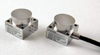
Description: configuration comparable to strain gage accelerometers, but the superior force balance technology of Models SA-522PE/SE provides a higher level output as well as superior performance, ruggedness, and reliability when compared to strain gage technologies. Models SA-522PE and
- Acceleration: -50 to 50 g
- Frequency Range: 100 to 300 Hz
- Minimum Accuracy: 0.01 +/-% FS
- Maximum Shock: 1,000 g
-
Supplier: Columbia Research Labs, Inc.
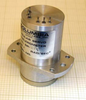
Description: The Columbia Model SR-107VFR Angular Accelerometer is a selectable range sensor that allows the user to easily change the scale factor and range to obtain optimum accuracy and readout match. This accelerometer incorporates the force balance fluid rotor technology, which
- Angular Acceleration: -500 to 500 rad/sec²
- Frequency Range: 10 to 100 Hz
- Minimum Accuracy: 0.05 +/-% FS
- Maximum Shock: 1,000 g
-
Supplier: Columbia Research Labs, Inc.
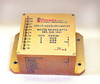
Description: The Columbia Models SA-102MFTB and SA-302MFTA are precision miniature force balance accelerometers designed to operate from +24 to +32 VDC aircraft power. The high level output signal and inherent self-regulation qualities of the servo loop design make these
- Acceleration: -35 to 35 g
- Frequency Range: 100 Hz
- Minimum Accuracy: 0.05 +/-% FS
- Maximum Shock: 100 g
-
-
Supplier: Columbia Research Labs, Inc.
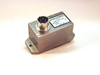
Description: The Columbia Model SA-101HP is an extremely rugged, compact premiumperformance accelerometer. The SA-101HP accelerometer design has exceptional versatility allowing for performance and packaging adaptations to optimize the cost vs. performance ratio. This device incorporates Columbia's
- Acceleration: -100 to 100 g
- Frequency Range: 50 to 300 Hz
- Minimum Accuracy: 0.1 +/-% FS
- Maximum Shock: 250 g
-
Supplier: Sherborne Sensors
Description: The Sherborne Sensors' A200 range of Servo Accelerometers measure vector acceleration with high accuracy using a closed loop force balance torquer mechanism. A pendulous mass develops a torque proportional to the product of its mass unbalance and the applied acceleration. The
- Acceleration: -20 to 20 g
- Frequency Range: 90 to 150 Hz
- Maximum Shock: 100 g
- Operating Temperature: -67 to 203 F
-
Supplier: Instrumented Sensor Technology
Description: power consumption. Acceleration recording can be configured for the internal tri-axial accelerometer channels and/or up to 3 optional external accelerometer inputs. External Accelerometers The optional external accelerometer input channels are designed for use with "low
- Shock Rating: 500 g
- Inputs: Accelerometer Input
- Data Acquisition: Datalogger / Recorder
- Application: General Lab and Industrial, Vehicular



Find Suppliers by Category Top
Featured Products Top
-
 low-noise, high resolution, closed-loop digital MEMS accelerometer with ± 1 g input range that offers a performance-equivalent, low-SWaP and cost-effective alternative to force balance inclinometers. It demonstrates an ultra-low noise density of 9 μg/√Hz with an (read more)
Browse Accelerometers Datasheets for Tronics Microsystems -
MEMS accelerometer with ±1 g input range that offers a performance-equivalent, low-SWaP (Size, Weight and Power) and cost-effective alternative to force balance inclinometers and servo-accelerometers. It demonstrates an ultra-low noise (read more)
Browse Accelerometers Datasheets for Tronics Microsystems
Conduct Research Top
-
Force Balance Sensor Technology
The servo force balance accelerometer offers significant performance and accuracy advantages. This fact is evident by their extensive use in applications requiring 0.1% or better overall accuracy. Unlike conventional accelerometers, the servo type contains a freely suspended mass constrained
More Information Top
 Indicates content that may require registration and/or purchase.

-
Microsystems and Nanotechnology
Sensors and Actuators, 20: 25 32 [24] Amini A., and M. Trifunac, (1985), Analysis of a Force Balance Accelerometer .
-
Operational Modal Analysis of Civil Engineering Structures
Force balance accelerometers can measure also static forces, so their bandwidth starts from DC.
-
Development of force-balance accelerometer with high accuracy for precision motion measurement
A precision force balancing accelerometer for inertial navigation applications is developed.
-
Health Monitoring of Bridges Complete Document
Level II Forced Balance Accelerometers .
-
Instrumentation in Earthquake Seismology
Today, purely mechanical sensors are only constructed to have resonance frequencies down to about 1.0 Hz (short period sensors), while sensors that can measure lower frequencies are based on the Force Balance Accelerometer (FBA) Principle of measuring acceleration directly.
-
Electrostatic pull-in behavior in 50g force balanced MEMS accelerometer
Beside the Vdr value range is important to relate the changes in Fei and it is also as the sensitivity parameter for force balanced accelerometer .
-
Directions in Strong Motion Instrumentation
The A-900 has all the features of the A-800 while being upgraded with a 16-bit ADC, new Geotech DC Force Balanced Accelerometers (FBA) and the capability to use a GPS receiver for its time synchronization source.
-
Force Balance Sensor Technology
The servo force balance accelerometer offers significant performance and accuracy advantages.
-
Experimental case studies on wireless and wired sensors
The sensor unit includes three EpiSensor force balance accelerometer modules mounted orthogonally in one small package.
-
Utilizing Hybrid Surface - Downhole Seismic Networks to Monitor Hydraulic Fracture Stimulations
… each with twenty to forty-eight three-component levels of omni 15Hz geophones deployed vertically in close proximity to the treatment well and using a near-surface network of five stations consisting of three component Force Balance Accelerometers and 4.5Hz geophones.