
-
Supplier: Rieke Metals, Inc.
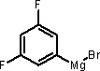
Description: 3,5-Difluorophenylmagnesium bromide Formula C 6H3BrF2Mg mol weight 217.3 CAS 62351-47-7 Notes 0.5 M in Tetrahydrofuran
- Features: Alkali Earths (Be, Mg, Ca, etc.), All Halogens, Bromides
- State of Matter: Liquid / Solution
- Type: OrganoMetallics
-
Supplier: GFS Chemicals, Inc.
Description: ITEM#:1167 Mg CAS#:7439-95-4 F.W.:24.30 NFPA#:0-2-2 Specific Gravity: 0.000 DOT:4.1/III Descriptions: Specification TEST 1. Assay 99.5% min. 2. Suitablity for Grignard-pass test Properties No properties.
- State of Matter: Powder
-
Supplier: Gelest, Inc.
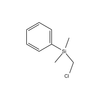
Description: Additional Properties Hydrolytic Sensitivity 4: no reaction with water under neutral conditions Application Review of synthetic utility.1 Readily forms Grignard reagent, which is useful for Peterson olefinations and as a masked hydroxyl moiety.2,3 Reference 1. Handbook of
- Purity: 97 %
- Features: Metalloids (B, Si, Ge, etc.), Non-Metals (C, N, O, P, S)
-
-
Supplier: Gelest, Inc.
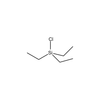
Description: Additional Properties Hydrolytic Sensitivity 8: reacts rapidly with moisture, water, protic solvents Application Forms silylated derivatives of alcohols stable to Grignard conditions.1 Reference 1. Arkles, B. In Handbook of Grignard Reagents; Silverman, G., Ed; Marcel Dekker:
- Boiling Point: 291.2 to 293 F
- Flash Point: 86 F
- Purity: 97 %
-
Supplier: Gelest, Inc.
Description: toluene: 85 g/L Solubility, water: 11.0 g/L UV max: 265-298 nm Trimeric compound Water removed by azeotropic distillation with toluene NMR shift reagent Catalyzes conjugate addition of alkynyl aluminums to enones Catalyzes coupling of Grignard reagents to give biaryls Catalyzes
-
Supplier: Gelest, Inc.
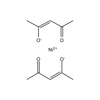
Description: benzylhydrazones.6 Opens epoxides with high enantioselectivity.7 Converts tertiary alcohols to isocyanides.8 Used to protect aldehydes in formation of aldehyde-functional Grignard reagents.9 Reference 1. Handbook of Reagents for Organic Synthesis, Reagents for
- Flash Point: 33.8 F
- Purity: 97 %
- Features: Metalloids (B, Si, Ge, etc.), Non-Metals (C, N, O, P, S)


Find Suppliers by Category Top
More Information Top
 Indicates content that may require registration and/or purchase.

-
March's Advanced Organic Chemistry: Reactions Mechanisms and Structure 6th Edition Complete Document
The CÀÀMg bond in Grignard reagents is covalent and not ionic.
-
Radicals in Synthesis III
First evidence for a catalytic cycle involving a radical chain process in Kumada cross-coupling reactions of aryl Grignard reagents with aryl bromides was provided by Knochel and Manolikakes (Scheme 39) [159].
-
Organic Mechanisms
… the asymmetric Sharpless dihydroxy- lation and the asymmetric Noyori hydrogenation, which were honored with the Nobel Prize in 2001, (3) the iodine/magnesium exchange reaction with aromatic compounds, (4) the discussion of the structures of organolithium compounds/ Grignard reagents /cuprates, (5) the carbocupration …
-
Iron Catalysis II
Following the pioneering work by Vavon and Mottez in the 1940s [24], Kochi reported in the early 1970s that the Kumada cross-coupling reaction of Grignard reagents with organic halides is catalyzed by iron salts.
-
Iron-Catalyzed Synthesis of Fused Aromatic Compounds via C–H Bond Activation
‘‘Synthesis of Polysubstituted Naphthalenes by Iron-Catalyzed [2 + 2 + 2] Annulation of Grignard Reagents with Alkynes’’ Ilies, L.; Matsumoto, A.; Kobayashi, M.; Yoshikai, N.; Nakamura, E.
-
Coming of Age: Sustainable Iron‐Catalyzed Cross‐Coupling Reactions
Albeit the first iron-catalyzed homo-coupling of aryl Grignard reagents was described by Kharasch and Fields already in 1941,[6] the genuine era of iron- catalyzed cross-coupling reactions originated in the early 1970s, predating its palladium and nickel relatives, when …
-
Advanced Organic Chemistry
Originally, Grignard reagents were used for deprotonation but lithium amides are now usually employed.
-
Applied Cross-Coupling Reactions
Historically, cross-couplings started in 1972 (date received, October 28, 1971) from the research of Corriu at Montpellier University, France using Grignard reagents (m = MgX) and a catalytic amount of Ni(acac)2 to construct carbon(sp2 )–car- .
-
Nickel Complex Catalyzed Efficient Activation of sp3 and sp2 C–H Bonds for Alkylation and Arylation of Oxygen Containing Heterocyclic Molecules
Abstract A nickel(II) complex (1) of N,N0 -bis(2,6- diisopropylphenyl)-2,6-pyridinedicarboxamido (L) ligand was examined for catalytic coupling of Grignard reagents with the C–H bond of oxygen containing heterocyclic compounds such as tetrahydrofuran and furan.
-
Grignard Reactions Involving Halogenated Pyrimidines
Generally, there are two pathways that involve Grignard reagents and halogenated pyrimidines.