
Products & Services
See also: Categories | Featured Products | Technical Articles | More Information-
Supplier: DeZURIK, Inc.
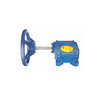
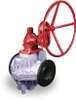
Description: DeZURIK Manual Gear Actuators are available on BHP High-Performance Butterfly Valves, BOS-US Resilient Seated Butterfly Valves, RCV Rotary Control Valves, VPB V-Port Ball Valves and .5-3″ Eccentric Plug Valves. Manual gear cast iron actuators feature
- Features: Manual
- Valve Motion: Rotary Motion Valve
-
Supplier: KSB AG
Description: Manual actuators for the operation of quarter-turn valves. MA range manual gearbox, irreversible planetary gear kinematics, operation by handwheel. Applications Building services, industrial processes.
- Actuator Torque: 1,106.1946902654865 to 2,212.389380530973 In-lbs
- Operating Temperature: -4 to 176 F
- Actuator Type: Handwheel Actuator
- Features: Manual, Modulating, Non-hazardous
-
Supplier: DeZURIK, Inc.
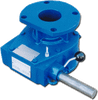
Description: G-Series feature sintered bronze bearings on each end of the input shaft for durability and performance. The ductile iron gear provides strength for robust applications and a long service life without maintenance. G-Series manual gear cast iron actuators are available
- Features: Manual
-
-
Supplier: BI-TORQ® Valve Automation
Description: Our sandwich-mount declutch operator are designed to mount between a pneumatic actuator and valve, allowing an operator to manually override the action of the pneumatic actuator. Operators in this category are totally enclosed, weatherproof and permanently lubricated. The declutch
- Actuator Torque: 74 to 150 In-lbs
- Operating Temperature: -20 to 150 F
- Actuator Type: Declutchable Manual Actuator
- Actuator Action: Direct Acting
-
Supplier: Ewellix
Description: IP67/69K Ewellix electromechanical CAWD actuators are engineered to operate in severe environmental conditions at temperatures from -40 to +85 °C even with ice and feature robust metal gears encapsulated in a corrosion-resistant housing offering IP69K/67 protection rating. The CAWD
- Stroke or X-Axis Travel: 16.929143 inch
- Rated Speed: 0.47244094488189 in/sec
- Actuation Type: Electrical
-
Supplier: SAE International
Description: This SAE Aerospace Recommended Practice (ARP) provides a guide for preparation of requirements for general design, performance, and testing of mechanical geared rotary actuators intended to be used for applications requiring motion control in response to manual or automatic power
-
Supplier: SAE International
Description: This specification establishes general design, performance and test requirements for mechanical geared rotary actuators intended to be used for applications to position control surfaces in response to manual or automatic power control system inputs.
-
Supplier: Stearns®
Description: Features & Benefits Series 320 is designed for commercial duty, small gear motors Torque rating 3 to 50 lb-in / (.34 to 5.6 NM) UR and CUR Recognized insulation system, E-125303 and sizes 1.8, 2.8 brakes with internal power supply File E-71115 Class B temperature rise with Class H mag wire
- Torque Rating: 0.25 to 4.166666666666666 Ft-lbs
- Power: 0.02278374654334794 HP
- Operating Voltage: 230 volts
- Bore Diameter: 0.5 inch
-
Supplier: Elliott Manufacturing Co., LLC
Description: This unique epicycloidal design has advantages superior to other gearboxes using common involuted tooth gears. Components operate in compression, not in shear. Unlike gear teeth with limited contact points, it has two-thirds of its reduction components in contact at all times. This
- Actuator Type: Handwheel Actuator
- Features: Manual
-
Supplier: SAE International
Description: This SAE Aerospace Recommended Practice (ARP) provides a guide for preparation of requirements for general design, performance and testing of mechanical geared rotary actuators intended to be used for applications requiring motion control in response to manual or automatic power
-
Supplier: DynaQuip Controls
Description: The ALL NEW DynaQuip MA Series electric actuators are durable, heavy-duty actuators designed to exceed the needs of your everyday quarter-turn automation applications. Our MA Series actuators are ideal for operation on a wide variety of industrial and commercial applications.
- Actuator Torque: 795 to 30,975 In-lbs
- DC Voltage: 12 to 24 volts
- AC Voltage: 115 volts
- Actuation Time: 15 seconds
-
Supplier: DeZURIK, Inc.
Description: rugged, no hang-up, maintenance-free valve. Several bevel gear actuators are available for on/off manual operation. In order to accommodate the higher working pressure design, the valve is normally sized one size larger to allow for the thick double wall high pressure sleeve.
- Primary Material: Ductile Iron, Stainless Steel
- Valve Type: Pinch Valves
-
Supplier: Elliott Manufacturing Co., LLC
Description: The Elliott 90° Gear Box with Indication is ideal for both controlling valves from remote locations and providing indication at the same time. These units are especially convenient for mounting on walls or other vertical surfaces. The units are furnished as a standard item with a choice of
- Actuator Type: Handwheel Actuator
- Features: Manual
-
Supplier: Western Analytical Products
Description: surfaces and are rated for a maximum pressure of 1000 psi (69 bar). Each valve includes 1/4-28 Flangeless Fittings for 1/16"" or 1/8"" OD tubing. Both valve options are available in three configurations: standard manual, bulkhead mountable manual and actuated. Please contact Upchurch
- Valve Type: Injection Valves
-
Supplier: Western Analytical Products
Description: surfaces and are rated for a maximum pressure of 1000 psi (69 bar). Each valve includes 1/4-28 Flangeless Fittings for 1/16"" or 1/8"" OD tubing. Both valve options are available in three configurations: standard manual, bulkhead mountable manual and actuated. Please contact Upchurch
- Valve Type: Injection Valves
-
Supplier: Western Analytical Products
Description: valve options are available in three configurations: standard manual, bulkhead mountable manual and actuated. Please contact Upchurch Scientific for custom configurations for instrument manufacturers. High pressure selection valve options are available. Use our 6-Way Medium Pressure
- Valve Type: Injection Valves
-
Supplier: Western Analytical Products
Description: valve options are available in three configurations: standard manual, bulkhead mountable manual and actuated. Please contact Upchurch Scientific for custom configurations for instrument manufacturers. High pressure selection valve options are available. Use our 6-Way Medium Pressure
- Valve Type: Injection Valves
-
Supplier: Waterman Industries, Inc.
Description: Yields Maximum Capacity with 50ft lbs. Input Torque 3:1 Gear Ratio Vertical Input Shaft …
- Features: Manual
-
Supplier: BI-TORQ® Valve Automation
Description: The BI-TORQ NL Series electric actuator features a worm gear drive that makes it ideal for butterfly valve actuation since it does not require a brake. The worm gear and output shaft are a one-piece design that is strengthened with heat treatment. In addition, the NL is
- Actuator Torque: 177 to 17,600 In-lbs
- DC Voltage: 12 to 24 volts
- AC Voltage: 115 to 380 volts
- Stem Diameter: 0.472 to 1.181 inch
-
Supplier: Indelac Controls, Inc.
Description: The S series compact rotary electric actuator was specifically designed for valve sizes from ¾” to 2½”and dampers that do not exceed the rated torque of the actuator. These heavy-duty reversing actuators develop 200 lb·in (model SD) and 300 (model SDX) lb·in torque and rotates
- Actuator Torque: 200 to 300 In-lbs
- DC Voltage: 12 to 24 volts
- AC Voltage: 24 to 230 volts
- Operating Temperature: -40 to 150 F
-
Supplier: Venture Mfg. Co.
Description: Venture’s slide out actuators have been the industry standard for years. Our actuators combine a highly efficient long life ball screw with a DC motor gearbox providing a cost effective reliable solution for the RV Industry. Available in three gear ratios – 18:1, 28:1 and 58:1
- Stroke or X-Axis Travel: 24 to 44 inch
- Rated Force: 1,200 lbs
- Motor Voltage: 12 to 120 volts
- Drive Type: Ball Screw, Gear Drive
-
Supplier: Hayward Flow Control
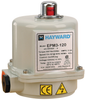
Description: wiring found in most actuation products, we're producing a higher quality, more reliable product that is easier to install, operate, and maintain. Superior Gear Design All EPM Series actuators employ an epicyclic gear design to provide tough, dependable torque transmission in a
- Actuator Torque: 135 to 13,500 In-lbs
- DC Voltage: 12 to 24 volts
- AC Voltage: 12 to 230 volts
- Actuation Time: 8 seconds
-
Supplier: Red Valve Company, Inc.
Description: rugged, no-hang-up, maintenance-free valve. Materials of Construction Ductile, steel, stainless steel bodies Bevel Gear 4:1, 8:1, 16:1, or 22:1 actuator ANSI B 16.5 Class 300 flanges Optional Class 150 flanges and metric flanges available
- Valve Size: 1 to 10 inch
- Pressure Rating: 720 psi
- Features: Bolt Flange, Other
- Primary Material: Ductile Iron, Rubber, Stainless Steel, Steel
-
Supplier: ProMation Engineering, Inc.
Description: actuator position. Other standard items include an anti-condensation heater, two auxiliary switches, ISO 5211 mounting, permanently lubricated locking gear train, and a clutchless manual handwheel. In addition to on/off control, the explosion proof actuators can have
- DC Voltage: 24 volts
- AC Voltage: 24 to 230 volts
- Features: Electric, Local Position Indication
- Location: Hazardous
-
Supplier: Indelac Controls, Inc.
Description: importance. L series actuators are equipped with hardened steel spur gears guaranteeing high efficiency; quiet operation and long trouble free life, and as all ICI actuators can with stand stall conditions without suffering gear failure. The heavy-duty sand-cast aluminum
- Supply Voltage: 12 to 460 volts
- Maximum Torque: 3,840 In-lbs
- Operating Temperature: -40 to 150 F
- Torque: 3,840 In-lbs
-
Supplier: Assured Automation
Description: The K4 Series is a compact industrial duty quarter turn electric actuator specifically designed for ball and butterfly valves. The K4 Series incorporates a self locking gear train, NEMA-4/4X weatherproof enclosure, visual position indicator, manual override and ISO 5211 mounting
- Actuator Torque: 608 to 5,208 In-lbs
- DC Voltage: 24 volts
- AC Voltage: 115 volts
- Operating Temperature: -4 to 131 F
-
Supplier: Baumer Ltd.
Description: Often format alignments are still manual what means a big potential for improvement. Baumer developed an ultra-flexible shaft positioning system offering a wide selection of modular configurations for your individual choice of the required level of automation. Multicon and MulticonDrive
- Supply Voltage: 24 volts
- Maximum Torque: 0.79646017699115 In-lbs
- Operating Temperature: 5 to 104 F
- Rotation Angle: 45°
-
Supplier: Red Valve Company, Inc.
Description: Gate Valves can be fitted with a variety of actuators, including standard handwheel, bevel gear, pneumatic actuators, hydraulic actuators, electric actuators and chainwheel actuators. Other options include limit switches, solenoid valves and bonnets.
- Valve Size: 2 to 24 inch
- Pressure Rating: 150 psi
- Primary Material: Cast Iron, Stainless Steel
- Actuation: Electric, Manual / Hand, Pneumatic
-
Supplier: Venture Mfg. Co.
Description: Venture’s very versatile 800 Series Acme Screw actuators combine an Acme screw with a DC motor gearbox providing a rugged and reliable ready to install linear drive system. Suitable for many industrial applications, such as; Solar Tracking, Ventilation, Commercial Satellite tracking,
- Stroke or X-Axis Travel: 12 to 52 inch
- Rated Force: 1,500 lbs
- Motor Voltage: 12 to 120 volts
- Mounting Type: Clevis or Eye, Flange, Trunnion
-
Supplier: Tru-Flo Valves & Automation
Description: Self-locking gear train–no brake required Visual position indication Working temperature of -14°F–160°F Stainless steel fasteners Manual override with hand wheel standard on most models Standard two auxiliary limit switch
- Features: Electric
-
Supplier: Venture Mfg. Co.
Description: Venture’s extremely versatile 850 Series Ball Screw actuator combine a highly efficient long life ballscrew with a DC motor gearbox providing a high performance ready to install linear drive system. Suitable for virtually any industrial application you can imagine, such as; Solar Tracking,
- Stroke or X-Axis Travel: 12 to 40 inch
- Rated Force: 4,000 lbs
- Motor Voltage: 12 to 120 volts
- Drive Type: Ball Screw, Gear Drive
-
Supplier: Indelac Controls, Inc.
Description: The R Series compact rotary electric actuator was specifically designed for small ball valves and dampers. This heavy duty reversing actuator develops 100 lb·in torque and rotates form 0 to 90 in 2.5 . The spur gear drive train has been designed for severe applications and as in
- Supply Voltage: 12 to 230 volts
- Maximum Torque: 100 In-lbs
- Operating Temperature: -40 to 150 F
- Torque: 100 In-lbs












Find Suppliers by Category Top
Featured Products Top
-
 Custom micro linear actuators built to your exact specifications. We can offer customizations including: Stroke, Gear Ratio, Cables/Connectors, Lubricants, Voltage, Custom End Tips and more. (read more)
Browse Linear Actuators Datasheets for Actuonix Motion Devices -
P8 Micro Linear Servo As small as the PQ12, but available with a selection of stroke lengths, and higher force gear options. Consider the -ST option for applications requiring extended life, or very precise movements. (read more)
Browse Linear Actuators Datasheets for Actuonix Motion Devices -
is made with steel and techno-polymer gears, supported by hardened steel pinions and mounted on self-lubricating bushings for long, reliable service. VB015M actuators are dual voltage. A manual override is standard. Options include programmable positioner, rotary potentiometer and battery (read more)
Browse Electric Valve Actuators Datasheets for Bonomi North America, Inc. -
equipped with hardened steel spur gears guaranteeing high efficiency; quiet operation and long trouble free life, and as all ICI actuators can with stand stall conditions without suffering gear failure. The heavy-duty sand-cast aluminum enclosure meets NEMA 4 specifications and has a thermally (read more)
Browse Electric Rotary Actuators Datasheets for Indelac Controls, Inc. -
production early in 1996. ICI's K series rotary electric actuator is a machine that was designed to automate quarter turn equipment requiring up to 27300 lb-in (3085 Nm) torque. The K series actuators are equipped with a combination spur gear-worm/worm gear drive train providing efficient and quiet (read more)
Browse Electric Rotary Actuators Datasheets for Indelac Controls, Inc. -
or 300 lb-in of torque, these rugged actuators feature NEMA 4, 4X, 7 and 9-rated enclosures, corrosion-resistant construction and a durable spur gear drive designed to withstand stall conditions without gear failure. Built for flexibility, the SR & SX Series offers a wide range (read more)
Browse Electric Rotary Actuators Datasheets for Indelac Controls, Inc. -
contribute to the performance of the actuators by providing gear geometry optimized for planetary systems using zero helix angle gears to avoid unbalanced forces caused by helical gears. Our belt drive actuators offer different types of bearings support. Steel concave rollers (DBM) riding on chrome (read more)
Browse Linear Actuators Datasheets for Isotech, Inc. -
since 1991 and is well known for its dependability in harsh applications where reliability is of utmost importance. L series actuators are equipped with hardened steel spur gears guaranteeing high efficiency; quiet operation and long trouble free life, and as all ICI actuators can with stand stall (read more)
Browse Electric Rotary Actuators Datasheets for Indelac Controls, Inc. -
electric actuators for use throughout North America. Valbia electric actuators are built with water-tight cast aluminum or techno-polymer enclosures that can be used indoors or outdoors. They feature steel and techno-polymer gears with hardened steel pinions for long life (read more)
Browse Electric Valve Actuators Datasheets for Bonomi North America, Inc. -
manufactured since 1991 and is well known for its dependability in harsh applications where reliability is of utmost importance. L series actuators are equipped with hardened steel spur gears guaranteeing high efficiency, quiet operation and long trouble free life and, as in all ICI actuators, can (read more)
Browse Electric Rotary Actuators Datasheets for Indelac Controls, Inc.
Conduct Research Top
-
Load and Speed Characteristics of an Actuator
minute (RPM), gear ratio, and the amount of power supplied to the actuator, TiMOTION is able to control the load and speed capabilities of the actuator. These characteristics are all dependent upon each other in order to operate a quality and durable linear actuator.
-
What are Linear Actuators and How are they Sized?
on the application. The basic components of linear actuators consist of a motor, set of gears, and a screw.
-
How to Select a Stepper Linear Actuator
transmission mechanisms; this not only decreases the footprint of the motor, but also decreases the cost and effort of the inclusion of additional mechanical components like gears and belts. Here are seven key factors to consider when selecting a stepper linear actuator for your application.
-
Operating Principle of Inline Linear Actuators
The electric linear actuator works by driving a pair of screw nuts after the motor is decelerated by the gear, converting the rotational motion of the screw nut into the linear motion of the telescopic rod. The operation of the linear motor is to complete the telescopic action by switching
-
How Electric Linear Actuators Improve Automation Results?
VenturemfgcoActuators for Agriculture, Actuators for Wheelchairs, Electric Linear Actuator, Hospital Bed Actuator, Medical Actuatorsagriculture, electric linear actuators, food and beverage, medical. Linear actuators provide accurate motion control in diverse applications, such as test equipment
-
How Solenoid and Haptic Actuators are Transforming Automotive Safety Technologies
or give a pedal vibration at the perfect time to shift gear if driving manually. Rather than taking away control, as with self-driving technologies, these technologies promise to make driving more fun. As drive-by-wire systems become more common, haptic systems may also. The space that is no longer
-
New Spins on Bearing Technology (.pdf)
Nook Industries provides a complete selection of inch and metric Ball Screws, Roller Screws, Acme Screws, Lead Screws, End Bearing Supports, Precision Locknuts, Worm Gear Screw Jacks, Electric Actuators, HRC 60 Linear Shafting, Linear Bearings and Pillow Blocks to the Linear Motion Industry
-
A Finer Control of Linear Motion
Linear actuators essentially generate force and motion through a straight line. In a typical mechanical system, a device's output shaft would provide linear motion using a rotary motor through gears, a belt and pulley, or other mechanical components. Trouble is, these components must be coupled
-
Automated Systems and IP Ratings
Learn how the IP rating system is used to determine whether an actuator can be used in a certain environment or not. This article is geared towards beginners to automation and electric actuators, but contains useful information for anyone. This article reviews the system and the types of ingress
-
Automated (Robotic) Manual Transmissions
Driven by the need to provide the functions of an automatic transmission, along with weight reduction and higher efficiency, many manufacturers are considering conversion of traditional manual transmissions to robotically position gears either via program control or an operator on demand. Actuators
-
Harmonic Drives ROI
Harmonic Drive located in Peabody, MA is a leading manufacturer of precision gears, gearheads, servo actuators and motion control systems. The Pratt and Whitney Labmaster Universal has helped Harmonic Drive achieve the high precision they need. Accurate to 0.000002-inch (2 millionths of an inch
-
Screw Jack Technology Comparison
Screw Jacks provide a proven and reliable method of actuation. They convert rotary motion into linear motion and are used to lift and position loads of all sizes. Each screw jack includes a gear box with rotational input, thrust bearings, and an output lifting screw. The chart below compares
-
Traditional solenoid valves are simple to install but may not be the right solution for long term reliability or high flow applications
applications to provide vastly improved flow characteristics and consistent performance. Electric actuators consist of a motor, a gear train, cams and limit switches. The electric actuator requires two electrical input signals; one to open and another to close the valve. DynaQuip actuators are available
More Information Top
 Indicates content that may require registration and/or purchase.

-
Pump Handbook, Fourth Edition > SPEED-VARYING DEVICES
A manual gear actuator can be used to control speed.
-
53 year old Valves in Municipal System
• MG Manual Gear Actuators .
-
Maintenance Engineering Handbook, Seventh Edition > VALVES
On-off detent-type levers; 10-position lift or squeeze-type levers; manual worm gear actuators ; and electric, pneumatic, and hydraulic actuators are available.