
-
Supplier: GFS Chemicals, Inc.
Description: ITEM#:2647 CAS#:60177-39-1 F.W.: NFPA#:1-1-0 Specific Gravity: DOT:NR Descriptions: Strongly basic, macroreticular resin of moderately high porosity with benzyltrialkylammonium functionality. Useful in decolorizing and removal of organic materials. Specification TEST Properties No
- Features: Ion Exchange Resin
-
Supplier: Pfaltz & Bauer, Inc.
Description: AmberliteR 200 Ion Exchange Resin
-
Supplier: Pfaltz & Bauer, Inc.
Description: Amberlite IRA-68 Ion Exchange Resin
-
-
Supplier: Pfaltz & Bauer, Inc.
Description: Amberlyst (R) 15 Ion Exchange Resin
-
Supplier: Dupont Water Solutions
Description: AMBERSORB™ 560 Polymeric Adsorbent is an effective, new synthetic media adsorbent for treating 1,4-dioxane and other organic contaminants in groundwater and wastewater. It can also be used to remove various contaminants from vapor or atmospheric streams. AMBERSORB 560 is regenerable in situ
- Type: Adsorbent
- Form: Bulk / Raw Material
- Features: Other
- Application: Remediation / Restoration
-
Supplier: Pfaltz & Bauer, Inc.
Description: AmberliteR IRA-93 Ion Exchange Resin
-
Supplier: Scientific Polymer Products, Inc.
Description: Polystyrene, crosslinked, sulfonic acid, hydrogen ion form Catalog # : 723 CAS : 39389-20-3 Physical Form : Beads Swelling Factor : 60-70% for polar solvents Max Temp : 120C Moisture Content : <1% Misc : Macroreticulated spheres 16-50 mesh Exchange Capacity : 4.7meq/g dry resin
- Maximum Temperature: 248 F
- Filter Medium Material: Cation Exchange Resin
- Features: Ion Exchange Resin
-
Supplier: AGC Chemicals Americas, Inc.
Description: Since 1950, FORBLUE™ SELEMION™ ion exchange membranes have been available to dilute and concentrate ionic materials with electro/diffusion dialysis. Instead of conventional ion exchange resins that use a stack of ionic particles with binder resins to connect
- Geometry: Flat Sheet
-
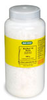
Supplier: Bio-Rad Laboratories, Inc.
Description: 500 g, analytical grade cation exchange resin, hydrogen form, macroporous, 100-200 dry mesh size, 75-150 µm wet bead size, >1,000,000 MW limit  AG, AG-MP, and Bio-Rex 5 Resins AG (analytical grade) resins — AG resins are extensively purified to remove both
- Filter Medium Material: Anion Exchange Resin
-
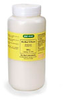
Supplier: Bio-Rad Laboratories, Inc.
Description: AG resins are primarily used for the separation of low molecular weight compounds such as inorganic ions, organic acids, nucleic acids, or carbohydrates. AG 50W resin, AG MP-50 macroporous resin, and biotechnology grade AG 50W all offer strong acid cation
- Filter Medium Material: Anion Exchange Resin
-
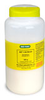
Supplier: Bio-Rad Laboratories, Inc.
Description: 500 g, anion exchange resin, chloride form, 4% crosslinkage, 200-400 dry mesh size, 45-75 µm wet bead size, ~1,400 MW limit  AG, AG-MP, and Bio-Rex 5 Resins AG (analytical grade) resins — AG resins are extensively purified to remove both organic and
- Filter Medium Material: Anion Exchange Resin
-
Supplier: Bio-Rad Laboratories, Inc.
Description: 500 g, analytical grade anion exchange resin, chloride form, 4% crosslinkage, 200-400 dry mesh size, 63-150 µm wet bead size, ~1,400 MW limit  AG, AG-MP, and Bio-Rex 5 Resins AG (analytical grade) resins — AG resins are extensively purified to remove both
- Filter Medium Material: Anion Exchange Resin
-
Supplier: Scientific Polymer Products, Inc.
Description: Polystyrene, crosslinked, tertiary amine, free base form Catalog # : 726 Physical Form : Beads pH Range : Unlimited Swelling Factor : 25% Max Temp : 100C Moisture Content : 53% Misc : Macroreticulated spheres 20-50 mesh; 0.41 to 0.51mm effective size Exchange Capacity : 4.2meq/g dry
- Maximum Temperature: 212 F
- Filter Medium Material: Anion Exchange Resin
- Features: Ion Exchange Resin
-
Supplier: ASTM International
Description: 1.1 This test method covers the determination of the performance of mixed bed ion exchange resin cartridges in the active form when used for deionization. The test can be used to determine the initial capacity of unused cartridges or the remaining capacity of used cartridges. In
-
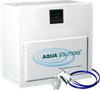
Supplier: Aqua Solutions, Inc.
Description: Reagent Grade Water Continuous recirculation ensures superior water quality at all times Highest flow rate (2-Liters per Minute) of any comparably sized system Highest ion exchange capacity (4,000 grains) of any comparable system Built-in activated carbon prefilter reduces particulates
- Maximum Liquid Flow: 0.528 GPM
- Maximum Pressure: 100 psi
- Features: Ion Exchange Resin, Other, System
-
Supplier: Cole-Parmer
Description: with any concentration of organic solvent; can be used up to 60°C and 5000 psi. Hamilton guarantees that the spherical media will not shrink or swell. PRP-X300 Ion Exclusion Columns contain a partially sulfonated poly (styrene-divinylbenzene) media. Exhibit a high degree of
- Stationary Phase/Separation Process: Ion Exclusion
-
Supplier: Kontek Ecology Systems Inc.
Description: ReKon ion exchange systems continuously meet and exceed your water quality expectations and stringent environmental discharge requirements, when incorporated within your wastewater treatment and recovery strategies. ReKon Ion Exchange Systems Feature: Premium proprietary
-
Supplier: Kontek Ecology Systems Inc.
Description: wastewater discharge polishing, or precious metal recovery DeCat Series for Selective Ion Exchange Selective ion exchange uses proprietary selective resins to remove specific ions from wastewater to reduce contamination levels or recover desired heavy
-
Supplier: Watts Premier
Description: Regular use with regular water softener salt promotes efficient performance. Compatibility: Water Softeners Features: Substances such as organics, silt, sand, oil, grease, iron and metal particles affect the performance of ion exchange systems. Proper care and cleaning of
-
Supplier: Eco-Tec, Inc.
Description: and continuously operates to remove dissolved aluminum from the tank. It does this using a simple process which involves passing the anodizing solution through a resin bed where the sulphuric acid and dissolved aluminum are separated. Periodically the resin is automatically
- Maximum Liquid Flow: 0.4843154286666667 to 7.264731429999999 GPM
- Application: Liquid
-
Supplier: AGC Chemicals Americas, Inc.
Description: paper, stone and tile protection, technical textiles and nonwovens production, exposure and resistance testing Flemion Ion Exchange Membranes: brine/membrane analysis, sample preparation, history and recordkeeping, total organic carbon (TOC) testing, induced couple plasma (ICP)
- Industry: Automotive, Chemical / Material Processing, Food / Beverage, Health Care / Medical, Nuclear / Utility, Piping / Pressure Vessel
- Test Methods: Chromatography (GC, HPLC, etc.), Infrared Spectroscopy (FTIR, etc.), Mechanical Testing, Microscopy / Metallography, Property Testing, Rheology, Thermal Analysis, UV / Vis Spectroscopy
- Capabilities: Environmental Exposure Testing, Environmental Testing and Analysis Services, Sunlight Exposure / Solar Simulation
- Features: North America, Northeast US Only, Other, United States Only
-
Supplier: AGC Chemicals Americas, Inc.
Description: paper, stone and tile protection, technical textiles and nonwovens production, exposure and resistance testing Flemion Ion Exchange Membranes: brine/membrane analysis, sample preparation, history and recordkeeping, total organic carbon (TOC) testing, induced couple plasma (ICP)
- Form: Bulk Solids / Granules
- Services Offered: Compounding, Formulation or Synthesis, Inspection & Analytical Testing, Research and Development
- Run / Batch Size: Laboratory / Bench, Pilot Scale
- Features: North America, Northeast US Only, United States Only








Find Suppliers by Category Top
Featured Products Top
-
 hydrogen product lineup is its line of FORBLUE S-SERIES fluorinated ion exchange membranes specifically designed for polymer electrolyte membrane (PEM) water electrolysis. These membranes are a key component in the production of green hydrogen, enabling superior voltage performance and stable, long (read more)
Browse Microporous Membranes Datasheets for AGC Chemicals Americas, Inc.
More Information Top
 Indicates content that may require registration and/or purchase.

-
Supplementary information on K-Basin sludges
The IX material is approximately 65 wt% organic ion exchange resin (OIER) beads and 35 wt% inorganic IX material (Schmidt 1998a).
-
http://www-pub.iaea.org/MTCD/publications/PDF/TRS408_scr.pdf
Nuclear power plant process water systems have typically used organic ion exchange resins to control system chemistry to minimize corrosion or the degradation of system components and to remove radioactive contaminants.
-
Gas Generation from K East Basin Sludges - Series II Testing
• Sludge that consisted primarily of organic ion exchange resin beads generated very little gas even after 950 hours at temperatures of 90°C and 95°C.
-
Alternatives for managing wastes from reactors and post-fission operations in the LWR fuel cycle. Volume 2. Alternatives for waste treatment
Combustible solid radioactive wastes Include a large variety of items such as paper, rags, plastic sheeting, protective clothing, gloves, rubber shoes, wood, organic ion exchange resins , filter aids, etc.
-
Proceedings of the fourth annual participants' information meeting, DOE Low-Level Waste Management Program
Simulated waste - evaporator concentrate (boric acid wastes) and organic Ion exchange resins (cation and anion resins).
-
105-K Basin Material Design Basis Feed Description for Spent Nuclear Fuel (SNF) Project Facilities VOL 2 Sludge
K West 105-KWBasin Organic ion exchange resin Polychlorinated biphenyl Particle Size Distribution Remote-Handled Transuranic Spent Nuclear Fuel Spent Nuclear Fuel Project Tech View Pit United StatesDepartment ofEnergy Unresolved Safety Question .
-
Sorption Characteristics of Aqueous Co(II) on Preformed Iron Ferrite Impregnated into Phenolsulphonic Formaldehyde Resin
One of the severest limitations of the organic resin is its poor thermal stability; for instance, the mechanical strength and removal capacity of ordinary organic ion exchange resins tend to decrease under high temperature conditions which are frequently encountered in processing liquid …
-
Hydrothermal Testing of K Basin Sludge and N Reactor Fuel at Sludge Treatment Project Operating Conditions
The presence of organic ion exchange resin (OIER) and polymer flocculent (constituents known to be in K Basin sludge) in the lower uranium-content sludge did not appear to have a significant impact on the physical behavior of the post-treated sludge.
-
http://www-pub.iaea.org/MTCD/publications/PDF/te_1336_web.pdf
Organic ion exchange resins in the bead form are highly resilient to mineralization by direct oxidation.
-
Radioactive Waste Engineering and Management
As ion exchangers, synthetic organic ion exchange resins and inorganic ion exchangers are available.