
-
Supplier: CoorsTek
Description: growth and arresting brittle failure. CoorsTek zirconias, including our high-performance Technox® zirconia brand, are ideal for extreme mechanical environments, particularly impact prone applications. Certain zirconia compositions provide enhanced fatigue loading resistance.
- Density: 5.719996389953226 g/cc
- Max Use / Curie Temperature: 500 to 1,000 C
- Thermal Conductivity: 2.2 W/m-K
- Coeff. of Thermal Expansion (CTE): 10.2 µm/m-C
-
Supplier: CoorsTek
Description: growth and arresting brittle failure. CoorsTek zirconias, including our high-performance Technox® zirconia brand, are ideal for extreme mechanical environments, particularly impact prone applications. Certain zirconia compositions provide enhanced fatigue loading resistance.
- Density: 5.5999964656884735 g/cc
- Max Use / Curie Temperature: 500 to 1,000 C
- Thermal Conductivity: 2.2 W/m-K
- Coeff. of Thermal Expansion (CTE): 10.2 µm/m-C
-
Supplier: CoorsTek
Description: Yttria (yttrium oxide, Y2O3) is a rare-earth ceramic which exhibits both exceptional plasma resistance and an aptitude for high-temperature applications. Yttria is often used to stabilize other ceramic compositions like zirconia. CoorsTek Exyria™ yttria can be formed into both solid parts and
- Density: 6.019996200615109 g/cc
- Max Use / Curie Temperature: 1,000 to 1,500 C
- Thermal Conductivity: 2.2 W/m-K
- Coeff. of Thermal Expansion (CTE): 10.3 µm/m-C
-
-
Supplier: San Jose Delta Associates, Inc.
Description: While the same design features common to alumina ceramics; blind holes, threads etc. are easily produced in Zirconia the grinding time required is about fifty percent more. The post-grinding surface finish is significantly better than a comparable feature in most aluminas. Zirconia is
- Density: 6.02 g/cc
- Max Use / Curie Temperature: 1,500 C
- Thermal Conductivity: 2.2 W/m-K
- Coeff. of Thermal Expansion (CTE): 10.3 µm/m-C
-
Supplier: Accuris
Description: Standard Specification for High-Purity Dense Magnesia Partially Stabilized Zirconia (Mg-PSZ) for Surgical Implant Applications
-
Supplier: 3X Ceramic Parts Company Limited
Description: result in excellent resistance to wear and corrosion. We have been offering a selection of partially stabilized zirconia, including Y-TZP( yttria-stabilized), MSZ ( magnesia stabilized ), CSZ- (ceria stabilized). Each stabilized zirconia
- Density: 5.99999621323765 g/cc
- MOR / Flexural Strength: 116,029.4714857576 psi
- Compressive / Crushing Strength: 290,073.678714394 psi
- Features: Specialty Ceramic
-
Supplier: ASTM International
Description: 1.1 This specification covers material requirements for high-purity, dense zirconium oxide partially stabilized by magnesium oxide (magnesia partially stabilized zirconia (Mg-PSZ)) for surgical implant applications. 1.2 This standard does not purport to address all
-
Description: conductivity. Magnesium Oxide Stabilized Zirconia Applications Magnesium stabilized zirconia has high wear and corrosion properties and can be used in valves, pumps and gaskets. Magnesium stabilized zirconia is also the material of choice for the chemical
- Density: 5.699996402575768 g/cc
- Thermal Conductivity: 2.2 W/m-K
- Coeff. of Thermal Expansion (CTE): 10.2 µm/m-C
- Shape / Form: Block
-
Supplier: Accuris
Description: Standard Specification for High-Purity Dense Magnesia Partially Stabilized Zirconia (Mg-PSZ) for Surgical Implant Applications - INCLUDES STANDARD + REDLINE (PDF)
-
Description: Zirconia tubes can be made from either partially stabilized zirconia or fully stabilized zirconia. PSZ is the yttria or magnesia partially stabilized zirconia, whereas FSZ is the yttria or ceria fully stabilized zirconia.
- Density: 5.949996244794003 to 5.99999621323765 g/cc
- Applications: Abrasive / Erosive Wear Protection, Chemical / Materials Processing, Corrosion Protection, Electrical / HV Parts, Refractory / High Temperature Materials, Wear Parts / Tooling
- Performance Features: Hard, Sintered / Fired
- Features: Specialty Ceramics
-
Description: the material can also be used in pump parts. There are several grades of Zirconia available, the most common of which are Yttria Partially Stabilized Zirconia (Y-PSZ) and Magnesia Partially Stabilized Zirconia (Mg-PSZ). Both of these materials offer
- Thermal Conductivity: 2.5 to 3 W/m-K
- Coeff. of Thermal Expansion (CTE): 11 µm/m-C
- Features: Specialty Ceramic
- Specialty Ceramic Type: Zirconia
-
Supplier: 3X Ceramic Parts Company Limited
Description: These outstanding characteristics result in excellent resistance to wear and corrosion. We have been offering a selection of partially stabilized zirconia, including Y-TZP( yttria-stabilized), MSZ ( magnesia stabilized ), CSZ- (ceria stabilized). Each
- Density: 5.99999621323765 g/cc
- Features: Specialty Ceramic
- Oxide Type: Zirconia
-
Description: the material can also be used in pump parts. There are several grades of Zirconia available, the most common of which are Yttria Partially Stabilized Zirconia (Y-PSZ) and Magnesia Partially Stabilized Zirconia (Mg-PSZ). Both of these materials offer
- Thermal Conductivity: 2.5 to 3 W/m-K
- Coeff. of Thermal Expansion (CTE): 11 µm/m-C
- Features: Specialty Ceramic
- Specialty Ceramic Type: Zirconia
-
Description: the material can also be used in pump parts. There are several grades of Zirconia available, the most common of which are Yttria Partially Stabilized Zirconia (Y-PSZ) and Magnesia Partially Stabilized Zirconia (Mg-PSZ). Both of these materials offer
- Thermal Conductivity: 2.5 to 3 W/m-K
- Coeff. of Thermal Expansion (CTE): 11 µm/m-C
- Features: Specialty Ceramic
- Specialty Ceramic Type: Zirconia
-
Description: Zirconia (Zro2) ceramic, also known as "ceramic steel," combines high hardness, wear and corrosion resistance, and one of the highest fracture toughness values among all ceramic materials. The most common grade of Zirconia is Yttria Partially Stabilized Zirconia
- Oxide Type: Zirconia
-
Description: Zirconia (Zro2) ceramic, also known as "ceramic steel," combines high hardness, wear and corrosion resistance, and one of the highest fracture toughness values among all ceramic materials. The most common grade of Zirconia is Yttria Partially Stabilized Zirconia
- Oxide Type: Zirconia
-
Description: Zirconia (Zro2) ceramic, also known as "ceramic steel," combines high hardness, wear and corrosion resistance, and one of the highest fracture toughness values among all ceramic materials. The most common grade of Zirconia is Yttria Partially Stabilized Zirconia
- Diameter / OD: 0.003149608 to 1.968505 inch
- Applications: Bearing / Power Transmission, Valves
- Ball Type: Ceramic Balls
- Features: Specialty / Other
-
Supplier: CoorsTek
Description: Magnesia partially stabilized YTZP: Yttria partially stabilized zirconia Dura-Z™ Zirconia Silicon Carbide (SiC) Direct-Sintered Reaction-Bonded Nitride-Bonded Other Silicon Carbide Materials CoorsTek tubes and rods are utilized in the following markets:
- Density: 2.8 to 6.02 g/cc
- Thermal Conductivity: 2.2 to 30 W/m-K
- MOR / Flexural Strength: 20,015.0838312932 to 130,533.155421477 psi
- Compressive / Crushing Strength: 79,770.2616464584 to 377,095.782328712 psi
-
Description: Zirconia (Zro2) ceramic, also known as "ceramic steel," combines high hardness, wear and corrosion resistance, and one of the highest fracture toughness values among all ceramic materials. The most common grade of Zirconia is Yttria Partially Stabilized Zirconia
- Shape / Form: Tube / Sheath - Immersion (Closed End)
- Oxide Type: Zirconia
-
Supplier: SAE International
Description: to develop and introduce alternative renewable fuel, to replace conventional petroleum-base fuels. Here, the diesel engine was insulated by Partially Stabilized Zirconia (PSZ) as ceramic material attaining an adiabatic condition. The cycle average gas temperature and metal
-
Supplier: SAE International
Description: within the engine cycle. Two different TBC materials, Yttria-Partially Stabilized Zirconia (Y-PSZ) and anodized aluminum, and different layer thicknesses have been simulated.





Find Suppliers by Category Top
Featured Products Top
-
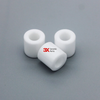
 technical ceramic material with exceptional strength, high toughness, and superb reliability. These outstanding characteristics result in excellent resistance to wear and corrosion. We have been offering a selection of partially stabilized zirconia, including Y-TZP( yttria-stabilized), MSZ (read more)
Browse Zirconium Oxide and Zirconia Ceramics Datasheets for 3X Ceramic Parts Company Limited -
technical ceramic material with exceptional strength, high toughness, and superb reliability. These outstanding characteristics result in excellent resistance to wear and corrosion. We have been offering a selection of partially stabilized zirconia, including Y-TZP( yttria-stabilized), MSZ (read more)
Browse Zirconium Oxide and Zirconia Ceramics Datasheets for 3X Ceramic Parts Company Limited
More Information Top
 Indicates content that may require registration and/or purchase.

-
Thermal Spray Fundamentals
Partially stabilized zirconia PTA .
-
Laser Surface Treatment of Bio-Implant Materials
CO2 Laser Modification of the Wettability Characteristics of Magnesia Partially Stabilised Zirconia 4.1 Introduction 4.2 Experimental Procedures 4.2.1 Material Specifications 4.2.2 CO2 Laser Experimental Arrangement 4.2.3 Morphological, Chemical and Phase Analysis Procedures 4.2 …
-
Transformation Toughening in Zirconia‐Containing Ceramics
At high pressures, it has been reported to adopt two distinguishable orthorhombic structures (space groups Pbca and Pnam), and a third orthorhombic form (space group Pbc21), closely related to the first of these, has been observed in some partially stabilized zirconias (PSZs).
-
Classic and Advanced Ceramics
… are low compared to metals and some engineering plastics, modern processing technologies – and, in particular, the development of particulate-reinforced advanced ceramics – have led to the creation of transformation-toughened ceramics such as partially stabilized zirconia and modern nanostructured ceramics …
-
Microwave‐Sintered MgO‐Doped Zirconia with Improved Mechanical and Tribological Properties
This paper reports the results of microwave sintering (without post‐sintering annealing) on the microstructure, phase assemblage, and properties of 8 mol% (PSZ— partially stabilized zirconia ), and 16 mol% (FSZ—fully stabilized zirconia) MgO‐alloyed zirconia.
-
Measurement of Phase Abundance in Magnesia‐Partially‐Stabilized Zirconia by Rietveld Analysis of X‐ray Diffraction Data
OME of the most desirable properties of zirconia-based ce- Sramic systems are found in alloys known as partially stabi- lized zirconia (PSZ)." .
-
Proceedings of the 1987 coatings for advanced heat engines workshop
The engine components evaluated in the ceramic insert concept (Phase 11) investigations were fabricated from monolithic partially stabilized zirconia (PSZ). its relatively low thermal conductivity and its reasonably close thermal expansion match to cast iron.
-
Non-fertile fuels development for plutonium and high-enriched uranium dispositioning in water cooled reactors
A potential improvement is based on replacing the calcia With yttria and reducing the yttria content to form a partially stabilized zirconia that may have a higher resistance to crackmg.
-
Crack growth in transforming ceramics under cyclic tensile loads
The mechanisms of stable growth of short fatigue cracks (crack length up to 1 mm) at room temperature in magnesia- partially stabilized zirconia subjected to cyclic tensile loads were investigated.
-
Items where Subject is "H Engineering > H680 Optoelectronic Engineering" - The Lincoln Repository
… power diode laser (HPDL) Interaction characteristics KrF excimer laser Laser Life characteristics Liquid Chemistry Liquid Immersion Marking Nd:YAG laser Open Thin Film Open Thin Film Liquid Immersion Ordinary Portland cement Ordinary Portland cement (OPC) Partially stabilised zirconia (PSZ) Plume Distortion Polymethyl …