
Products & Services
See also: Categories | Featured Products | Technical Articles | More Information-
Supplier: Transducer Techniques, LLC
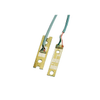
Description: TBS SERIES CAPACITY RANGES: .25, .50, 1, 2, 5, 10, 20, 40 lb The TBS Series thin beam force sensors many different parameters found in medical instrumentation, home appliances, process control, robotics, and automotive are exceptionally suited for small load measurements. They
- Force / Load Rating: 0.25 to 40 lbs
- Output: Analog Voltage
- Force Measured: Compression, Tension
- Device: Sensor / Transducer
-
Supplier: NOSHOK, Inc.
Description: Features & Benefits Thin film sensor is laser welded to the deformation body for superior strength and performance Extremely accurate - with the help of Finite Element Method Analysis, this sensor is able to reach accuracies from 0.2% to 1% Full Scale Custom-designed to customer
- Force / Load Rating: 1,000 to 100,000 lbs
- Accuracy: 0.2 to 1 ±% Full Scale
- Operating Temperature: -40 to 212 F
- Output: Analog Current, Analog Voltage
-
Supplier: Powell Electronics, Inc.
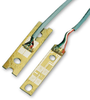
Description: Load Cells: thin beam
-
-
Supplier: DigiKey
Description: THIN BEAM LOAD CELL, COMPRESSION
-
Supplier: Tekscan, Inc.
Description: Tekscan's ELF force measurement system matches the market's need for an inexpensive load and force measurement system with Tekscan's ability to deliver innovative load and force measurement solutions. The system consists of data acquisition hardware, software, and FlexiForce®
- Operating Temperature: 14 to 131 F
- Features: Application Software Included, Data Acquisition Instrument / System, Other Input, Other Output, Stand Alone
- User Interface: Computer Programmable
- Application: Medical / Biomedical
-
Supplier: NOSHOK, Inc.
Description: to interface with most electrical systems 316 stainless steel construction on many versions provides corrosion-resistance and durability - ideal for harsh environments Sputtered thin film sensor for maximum repeatability and stability
- Force / Load Rating: 0 to 112,400 lbs
- Accuracy: 0.2 ±% Full Scale
- Output: Analog Current, Analog Voltage
- Package: Bolt, Rod End - Male
-
Supplier: tecsis LP
Description: In addition to our bonded foil strain gage capability, we also provide load cells and force transducers featuring welded thin film technology. The standardized thin film sensing elements are versatile enough to be applied to a variety of load cell configurations and make
- Force / Load Rating: 2,248 to 44,960 lbs
- Accuracy: 1 ±% Full Scale
- Operating Temperature: -4 to 176 F
- Output: Analog Current, Analog Voltage
-
Supplier: tecsis LP
Description: Swivel heads are important machine elements when the measuring conditions involve rotary motions, pivoting or tilting movements. The tecsis LP swivel head force transducer uses thin film technology and rugged stainless steel construction to perform in these unpredictable and demanding
- Force / Load Rating: 4,046.4 to 10,116 lbs
- Accuracy: 0.2 ±% Full Scale
- Operating Temperature: -4 to 176 F
- Output: Analog Current
-
Supplier: Tekscan, Inc.
Description: The Grip™ system measures and evaluates static and dynamic pressures from grasping objects. The Grip system uses a thin, high-resolution, tactile pressure sensor that can be used directly on a hand or built into a glove. The system provides detailed pressure profiles, forces,
- Pressure Range: 0 to 50 psi
- Thickness: 0.007 inch
- Imager/ Sensor Type: Active Pressure Sensor Arrays
- Features: Electronic/Digital Image, Flexible
-
Supplier: Festo Corporation
Description: Robust metal housing Thin film sensor
- Force / Load Rating: 0 to 899.2 lbs
- Operating Temperature: -4 to 176 F
- Output: Analog Current
- Device: Sensor Element / Chip
-
Supplier: tecsis LP
Description: The tecsis model F5301 load pin utilizes thin film technology for high accuracy and proven performance. The unit is available in ranges from 1,100 to 45,000 lbs (5 to 200 kN) and is ideal for dynamic or static measurements. Amplified output of 4-20 mA (2-wire) or 0-10 VDC (3-wire) is
- Force / Load Rating: 1,124 to 44,960 lbs
- Operating Temperature: -40 to 176 F
- Output: Analog Current, Analog Voltage
- Package: Load Pin
-
Supplier: Tekscan, Inc.
Description: Thin, circular, tactile potentiometer used to identify position, location, or adjust output. FlexiPot™ Ring sensors have a circular shape, a 3-pin male connector, and are designed for use with your own electronics. These sensors are a low powered position sensor with a
- Operating Temperature: -40 to 140 F
- Force Measured: Compression
- Output: Digital
- Device: Sensor / Transducer
-
Supplier: Tekscan, Inc.
Description: Our patented sensors are inserted into the patient's mouth when taking bite force readings. High resolution Sensels™ across the sensor's surface precisely analyze dental bite forces when using the T-Scan™ system. Boxes of sensors are available in 10 or 20 count.
- Force Measured: Compression
- Output: Digital
- Device: Sensor / Transducer
-
Supplier: OMEGA Engineering, Inc.
Description: When small load measurements are required, the OMEGA ® LCL Series thin beam load cells are exceptionally well suited. The LCL Series is designed to measure many different parameters found in medical instrumentation, home appliances, process control, robotics, automotive and many other high
- Force / Load Rating: 0.25 to 40 lbs
- Operating Temperature: -65 to 200 F
- Output: Analog Voltage
- Package: Cantilever
-
Supplier: FUTEK Advanced Sensor Technology, Inc.
Description: LLB390 , 1 lb , Ultra Thin Load Button w/ Mounting , 1000 Ohm , Material - 17-4 PH S.S. , 34 Awg 4 Conductor Braided Shielded Cable , 10 ft Long
- Force / Load Rating: 1 lbs
- Accuracy: -1 to 1 ±% Full Scale
- Operating Temperature: -60 to 200 F
- Output: Analog Voltage
-
Supplier: Kistler Group
Description: signal. A M6 or ¼–28" bolt is all that is needed. Available in both intrinsically or non-intrinsically safe versions, this very rugged sensor has a welded housing for IP65 protection with high temperature operation up to 165° C [330°F] The Piezotron ® AE-Sensor consists of the
- Frequency Range: 50,000 to 900,000 Hz
- Maximum Shock: 2,000 g
- Operating Temperature: -67 to 329 F
- Features: Other, Sensor / Transducer, Single Axis, Stud or Bolt-on
-
Supplier: tecsis LP
Description: Shackle Load Cells are designed for lifting and weighing in rugged or harsh environments. They provide a simple and reliable method of measuring a wide range of weights and loads. The shackle load cell consists of a shakle and a force transducer. Thin film sensors, produced by
- Force / Load Rating: 15,000 to 30,000 lbs
- Operating Temperature: -4 to 176 F
- Output: Analog Current, Analog Voltage
- Device: Sensor / Transducer
-
Supplier: NOSHOK, Inc.
Description: Conventional design features internal threads which allow force to be easily introduced via suitable swivel heads Factory internal calibration performed in tension and compression directions: 4...20 mA and 0...10 V; the zero signal is around 12 mA and 5 V Calibrations in the tension or
- Force / Load Rating: 0 to 11,240 lbs
- Accuracy: 0.2 ±% Full Scale
- Operating Temperature: -40 to 176 F
- Output: Analog Current, Analog Voltage
-
Supplier: Sunstone Engineering
Description: Seam sealers are used for lid placement and seam sealing applications to encase electronic components such as crystal devices, MEMS, sensors, optical devices, and other optoelectronic packaging applications. Similar to our other welding products, our seam sealer systems deliver an electric
- Features: Other
- Applications: Semiconductor Manufacturing
-
Supplier: Vincotech GmbH
Description: Current Synthesizing PFC + Booster + Inverter Integrated DC Link capacitors Kelvin Emitter for improved switching performance Temperature sensor Thin Al2O3 for easy thermal design Easy paralleling High speed switching Low switching losses CTI600 housing material Compact, baseplate-less
- Output Voltage: 1,200 volts
- Output Current: 40 amps
- Technology: IGBT
- Features: Other / Specialty Configuration, Other / Specialty Technology
-
Supplier: Vincotech GmbH
Description: Current Synthesizing PFC Integrated DC Link capacitors Kelvin Emitter for improved switching performance Temperature sensor Thin Al2O3 for easy thermal design High Blocking Voltage with low drain source on state resistance High speed SiC-MOSFET technology Resistant to Latch-up Convex
- Output Voltage: 1,200 volts
- Output Current: 30 amps
- Features: Other / Specialty Technology
- Configuration: Power Factor Correction (PFC)
-
Supplier: Vincotech GmbH
Description: Current Synthesizing PFC + Booster Integrated DC Link capacitors Kelvin Emitter for improved switching performance Temperature sensor Thin Al2O3 for easy thermal design High Blocking Voltage with low drain source on state resistance High speed SiC-MOSFET technology Resistant to
- Output Voltage: 1,200 volts
- Output Current: 80 amps
- Features: Other / Specialty Technology
- Configuration: Power Factor Correction (PFC)
-
Supplier: Kistler Group
Description: and the response signal measured with an accelerometer. The impulse force test method, yields extensive information about the frequency and attenuation behavior of the system under test. The stainless steel head of an impulse force hammer, is equipped with a quartz, low impedance
- Minimum Force: 0 lbs
- Maximum Force: 4,496 lbs
- Upper Limit of Frequency Range: 1 kHz
- Operating Temperature: -4 to 158 F
-
Supplier: Anton Paar
Description: materials (ZeroDur®) and the patented active top referencing. Two independent depth and load sensors: ultra-high resolution capacitive sensors for “True Depth” and “Load Control” modes. Ultra-high resolution and very low noise floor. Depth resolution: 0.001 nm, noise floor ≈ 0.1 nm
- Force / Load Capacity: 0.02248 lbs
- Stroke / Travel: 0.00393701 inch
- Features: Specialty / Other
-
Supplier: NETZSCH-Gerätebau GmbH
Description: electromagnetically in the TMA 402 Hyperion®. This guarantees a quick response time for experiments with a changing load, e.g. tests on creep behavior. A highly sensitive force sensor (digital resolution < 0.01 mN) continuously measures the force exerted via the push rod and
- Temperature Range: -150 to 1,550 C
- Remote Interface: Computer Interface
- Features: Cooling Available, Temperature Control
- User Interface: Digital Front Panel
-
Supplier: Richardson RFPD
Description: Topology Features Current Synthesizing PFC + Booster Integrated DC Link capacitors Kelvin Emitter for improved switching performance Temperature sensor Thin Al2O3 for easy thermal design Component Features High Blocking Voltage with low drain source on state resistance High speed
- Features: MOSFET, Other
-
Supplier: ValueTronics International, Inc.
Description: DC power supply Built-in System Features: Interfaces, input and output terminals Bias power supply −8 V to +8 V: Bias power supply for applying a bias voltage to a variety of sensors Display backlight brightness setting: 3-level setting, including OFF; Enables use in light-sensitive












Find Suppliers by Category Top
Featured Products Top
-
 . Accurately measuring and monitoring the movement of very thin, fast-moving coated metal foils presents specific challenges. Precision control and consistency of flatness and tension, for example, are essential to avoid the slightest component distortion, which can negatively impact battery performance (read more)
Browse Force and Load Sensors Datasheets for ABB Measurement & Analytics -
offer products from chips and components to complete sensor systems, supporting industries like industrial automation, medical technology, and automotive. Main Sensor Products: Optical sensors, pressure sensors, force sensors. 8. Proxitron (read more)
Browse Level Transmitters Datasheets for Holykell Technology Company Limited -
latest in laser and sensor technology allowing for fast and accurate measurements. Industry applications span across a wide range including, but not limited to: aerospace components, automotive parts, medical devices, thin film materials, roller bearings (tapered, cylindrical, spherical, needle (read more)
Browse Micrometers Datasheets for Pratt & Whitney Measurement Systems, Inc. -
being specifically designed for customers including Boeing, NASA, Lockheed Martin, General Electric, Raytheon, JPL, Bell Helicopter, Rolls Royce, Sikorsky, CAE, Bombardier, SpaceX, Aerojet, General Dynamics, and the U.S. Air Force (AFMETCAL). These include accessories for measuring features of (read more)
Browse Micrometers Datasheets for Pratt & Whitney Measurement Systems, Inc. -
latest in laser and sensor technology allowing for fast and accurate measurements. Industry applications span across a wide range including, but not limited to: aerospace components, automotive parts, medical devices, thin film materials, roller & ball bearings, transducers, optical (read more)
Browse Datasheets for Pratt & Whitney Measurement Systems, Inc. -
Gauge Block Calibration (A2LA accredited / ISO 17025/cert# 2629.01) Force System Calibration (A2LA accredited / ISO 17025/cert# 2629.01) Step Gages / Gauge Bars / Surveillance Masters (read more)
Browse Test Equipment and Instrument Repair Services Datasheets for Pratt & Whitney Measurement Systems, Inc. -
sensor technology allowing for fast and accurate measurements. Industry applications span across a wide range including, but not limited to: aerospace components, automotive parts, medical devices, thin film materials, roller bearings (tapered, cylindrical, spherical, needle), transducers, optical (read more)
Browse Bore and ID Gages Datasheets for Pratt & Whitney Measurement Systems, Inc. -
machines. Our instruments incorporate the latest in laser and sensor technology allowing for fast and accurate measurements. Industry applications span across a wide range including, but not limited to: aerospace components, automotive parts, medical devices, thin film materials, roller & ball (read more)
Browse Optical Micrometers and Laser Micrometers Datasheets for Pratt & Whitney Measurement Systems, Inc. -
to use. Features include laser interferometer, computer control, air bearings, bi-directional probes, constant measuring force, and flexible fixturing. These features offer guaranteed repeatability and operator independent reproducibility with unmatched speed. (read more)
Browse Dimensional Gages and Instruments Datasheets for Pratt & Whitney Measurement Systems, Inc. -
methods by maintaining constant force. It also greatly minimizes wear and tear to both the measuring standards and the instrument. Air bearings are also highly resistant to contamination and have inherent vibration-damping properties that increase stability and accuracy (read more)
Browse Dimensional Indicators and Comparators Datasheets for Pratt & Whitney Measurement Systems, Inc.
Conduct Research Top
-
How to Protect Flexible Force Sensors from Shear
Ultra-thin force sensors are a useful embedded component for integration into smart, force-sensitive devices. Their thin and flexible properties allow the ability to fit into tight spaces within a design. Depending on the expectations of your application, you may need to account for methods
-
Introduction to Piezoelectric Force Sensors
Low Impedance Voltage Mode (LIVM) force sensors contain thin piezoelectric crystals which generate analog voltage signals in response to applied dynamic forces. A built in IC chip amplifier converts the high impedance signal generated by the crystals to a low impedance voltage suitable
-
How to Use Force Sensors for Relative Measurement
For many devices or designs embedded with thin sensors like FlexiForce, the force sensor is used to correlate voltage output to an absolute unit of force (e.g., newton, kilogram, pound, etc.). This is considered an Absolute Measurement Application. These types of applications follow a typical
-
Mercury Fill Sensors
A transducer is an electronic device that converts energy from one form to another. In the case of a Dynisco pressure transducer, the process fluid exerts a pressure force on a thin flexible metal diaphragm at the tip of the sensor. This, in turn, stresses a small sensing device called a strain
-
How to attach FlexiForce sensors within a design
FlexiForce sensors are a design-engineer-friendly embedded technology due in large part to their thin and flexible form factors. This allows them to be embedded into tight space constraints that can be challenging for other force-sensing technologies. Naturally, when embedding FlexiForce sensors
-
MSilica Nanoparticles Treated by Cold Atmospheric-Pressure Plasmas Improve the Dielectric Performance of Organic-Inorganic Nanocomposites
chamber geometries by. imposing a dielectrophoresis (DEP) force on the beads. In cDEP the electrodes are not in. direct contact with the fluid sample but are instead capacitively coupled to the mixing. chamber through thin dielectric barriers, which eliminates many of the problems. encountered
More Information Top
 Indicates content that may require registration and/or purchase.

-
Fabrication of four-point biped robot foot module based on contact-resistance force sensor and its evaluation
The simple structure is devised and fabricated to assemble the thin force sensor rigidly.
-
An exoskeleton master hand for controlling DLR/HIT hand
originating from two directions, two thin force sensors (Tekscan Corporation Flexiforce B201) are located at the upper and lower part of the tip of master finger respectively.
-
An exoskeleton force feedback master finger distinguishing contact and non-contact mode
For sensing the force originating from two directions, two thin force sensors (Tekscan Corporation Flexiforce B201) are located at the upper and lower part of the master finger’s tip respectively.
-
Engineering Haptic Devices
Forces exerted by the user are recorded with thin force sensors and the actuator position is tracked magnetically.
-
On the Testing of the Dynamic Mechanical Properties of Soft Gelatins
Ultra- thin Force Sensor .
-
Advances in Intelligent Data Analysis XI
The sensor that we use for sleep measurement, Beddit, differs from other self- help devices in that the measurement is fully unobtrusive: the data is acquired with a thin force sensor placed under the mattress.
-
Palpation Training Device
The ultra- thin force sensor provided by Tekscan contained multiple force sensing points that enabled the system to confirm correct placement of the fingers, as well as the level of force applied by the fingers.
-
Tekscan Introduces Circuit Board for Easy Integration of Force Sensors
Following the increasing demand of flexible and thin force sensors , UBM Canon conducted a sensor survey in March among design engineers.
-
Robotic wheelchair control interface based on headrest pressure measurement
For sensing the pressure distribution, we used an array of 16 thin force sensors arranged in one single row and embedded into the middle of the wheelchair headrest.
-
Squeezing the chip: The buildup of compressive stress in a microprocessor chip by packaging and heat sink clamping
Figure 23 - Thin Force Sensor .