
-
Supplier: Georgia-Pacific Corporation
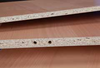
Description: Urea-formaldehyde resins are used in the production of composite panel products such as medium density fiberboard (MDF) and particleboard (PB). UF resins are currently used in combination with other resin systems and scavengers to meet reduced formaldehyde
- Chemical Family: All Aldehydes, Formaldehyde
- Trigger: Base
-
Supplier: Accuris
Description: STANDARD SPECIFICATION FOR UREA-FORMALDEHYDE RESIN ADHESIVES
-
Supplier: Accuris
Description: Standard Specification for Urea-Formaldehyde Resin Adhesives
-
-
Supplier: ASTM International
Description: This specification covers three types of urea-formaldehyde thermosetting resin adhesives suitable for use on wood, wood-based substrates, or plastic laminates. The requirements for the adhesive are based on tests of physical properties including viscosity, density, nonvolatile
-
Supplier: Adhesives.org
Description: This specification covers three types of urea-formaldehyde thermosetting resin adhesives suitable for use on wood, wood-based substrates, or plastic laminates. The requirements for the adhesive are based on tests of physical properties including viscosity, density, nonvolatile
-
Supplier: Accuris
Description: STANDARD SPECIFICATION FOR UREA-FORMALDEHYDE RESIN ADHESIVES - INCLUDES STANDARD + REDLINE (PDF)
-
Supplier: Accuris
Description: Standard Test Method for Nonvolatile Content of Urea-Formaldehyde Resin Solutions
-
Supplier: ASTM International
Description: 1.1 This test method covers the determination of the apparent nonvolatile content of urea-formaldehyde resin solutions intended for use as wood adhesives. Due to the chemical nature of such resins, the nonvolatile content determined varies markedly according to the type
-
Supplier: Georgia-Pacific Corporation
Description: our resources to develop products that will meet processing demands and end-users’ requirements. LEAF FREE™ patent-pending thermosetting resins feature formaldehyde-free chemistries to replace traditional phenol-formaldehyde (PF) insulation and urea-formaldehyde
-
Supplier: Georgia-Pacific Corporation
Description: requirements, LEAF C2 adhesives can be a urea-formaldehyde or melamine-urea-formaldehyde formulation. LEAF C2 resins have been used in a variety of manufacturing processes. They can also be used in combination with specialized scavenger and catalyst systems for
- Chemical Family: All Aldehydes, Formaldehyde
- Trigger: Base
-
Supplier: ASTM International
Description: 1.1 This specification covers compression molding thermosetting compounds consisting of a urea-formaldehyde resin binder intimately combined in the uncured or partially cured condition with fillers, pigments, and other chemical agents. 1.2 The values stated in SI units are to be
-
Description: the polycondensation of urea and melamine with formaldehyde and to furan resins resulting from the polycondensation of furfuryl alcohol with formaldehyde without further modification. Condensation resins (KCN procedure), including urea resins, furan
-
Supplier: CSA Group
Description: the polycondensation of urea and melamine with formaldehyde and to furan resins resulting from the polycondensation of furfuryl alcohol with formaldehyde without further modification. Condensation resins (KCN procedure), including urea resins, furan
-
Supplier: Georgia-Pacific Corporation
Description: Solutions of formaldehyde are used in the manufacture of synthetic resins due to their high reactivity with phenol, urea, melamine and other similar compounds. GP Chemicals produces formaldehyde (HCHO) solutions at concentrations ranging from 1% to 52%, in both
- Chemical Family: All Aldehydes, Formaldehyde
- Trigger: Base
-
Supplier: Celanese Corporation
Description: of formaldehyde are to produce amino resins (urea and melamine) and phenolic resins (resoles and novolacs) for wood-bonding applications. Other uses for these resins include adhesives for laminates, molding compounds, textile treatments, coatings resins,
- Form & Features: Liquid / Solution
-
Supplier: Georgia-Pacific Chemicals LLC
Description: Urea-formaldehyde and phenol-formaldehyde resins are used for grit adhesion to various substrates in coated abrasives, bonded abrasives and wheels, and scrub pads. They are formulated to provide grain bonding in various substrates and high water tolerance with a light
- Industry: Industrial
- Features: Liquid, Phenolics (Melamine, Furan), Thermoset
- Filler: Unfilled
-
Supplier: Georgia-Pacific Chemicals LLC
Description: LEAF® C2 resins are low-emission adhesives that can contribute to compliance with CARB Phase 2 and some green building standards. Depending on a manufacturer’s process and requirements, LEAF C2 adhesives can be a urea-formaldehyde or melamine-urea-formaldehyde
- Industry: Industrial
- Features: Liquid, Phenolics (Melamine, Furan), Thermoset
- Filler: Unfilled
-
Supplier: Georgia-Pacific Chemicals LLC
Description: LEAF® GB resins are unique formulations with no added urea-formaldehyde (NAUF). These adhesives may be melamine-formaldehyde or phenol-formaldehyde based and can be used in tandem with GP® scavenger systems. In addition to helping to meet CARB Phase 2 emission
- Industry: Industrial
- Features: Liquid, Phenolics (Melamine, Furan), Thermoset
- Filler: Unfilled
-
Supplier: Georgia-Pacific Chemicals LLC
Description: A variety of scavenger, buffering and catalyst technologies are employed with liquid urea-formaldehyde resins for composite panel production. Some of these products can aid in complying with: California Air Resource Board (CARB) Airborne Toxic Control Measure (ATCM) for
- Industry: Industrial
- Features: Liquid, Phenolics (Melamine, Furan), Thermoset
- Filler: Unfilled
-
Supplier: ASTM International
Description: 1.1 This guide covers test methods suitable for testing heat-reactive nitrogen resins, particularly urea-formaldehyde and melamine-formaldehyde resins. The test methods used are listed in Table 1.
-
Supplier: AENOR
Description: DETERMINATION OF WRINKLE-RESISTANT FINISH OF FORMALDEHYDE RESIN UREA, ON WOVEN FABRICS
-
Supplier: Gelest, Inc.
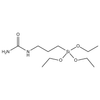
Description: Coupling agent for polyamides and urea-formaldehyde resins 50% in methanol
- Flash Point: 51.8 F
- Features: Metalloids (B, Si, Ge, etc.), Non-Metals (C, N, O, P, S)
-
Supplier: Johns Manville Corp.
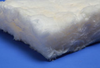
Description: And depending on your requirements, we have a selection of formaldehyde–free, acrylic, urea formaldehyde and other resin binders. The finished mat can then be custom slit to a width and wound to a diameter that works with your manufacturing process and/or your end
- Applications: Architectural / Construction, Battery / Fuel Cell, Industrial OEM
- Material: Glass / Fiberglass
- Features: Nonwoven Product, Other
- Type: Wet-laid / Air-laid Nonwoven
-
Supplier: U.S. Plastic Corporation
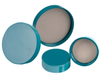
Description: cellulose filled urea-formaldehyde condensation resin. Compliant with 21 CFR 177.1900. Some uses for these F-217/PTFE lined caps include analytical lab samples, high purity chemicals, strong acids solvents, environmental samples, pharmaceuticals, and diagnostic reagents.









Find Suppliers by Category Top
More Information Top
 Indicates content that may require registration and/or purchase.

-
Formaldehyde (37% Solution)
Phenolic resins and urea formaldehyde resins are the largest use for formaldehyde in Finland, as their use in insulation is a major application.
-
Handbook of Paper and Pulp Chemicals
Uses: Cotton shrink- and crease-proofing; photographic developers; textile/ leather/paper finishes; permanent press fabrics; finishing, drying, sizing; in tanning; pesticide; first stage of urea formaldehyde resins ; inc. hardness and fire resist. in plywood; antiseptic; biocide, disinfectant for hospital use; preservative in paints …
-
Handbook of Textile Processing Chemicals
… rec. in post- cure finishes Use Level: 25% on wt. of reactant; up to 32% on wt. of melamine Freecat UTX-2 [Noveon] Chem. Descrip.: Alkanolamine hydrochloride catalyst Uses: Accelerator for use with melamine and urea formaldehyde resins , offering mild cure props …
-
Kanerva's Occupational Dermatology
1988) Occupational irritant contact dermatitis from fibreboard containing urea formaldehyde resin .
-
Phenolic Resins: A Century of Progress
These CARB proposals will involve some production modifications when using phenolic resins but is expected to result in additional phenolic resin opportunities by displacing possibly urea formaldehyde resin in particle board panels.
-
Advances on Material Science and Manufacturing Technologies
The internal bond strength (IB) of wheat-straw fiberboard could be significantly improved by adding poplar micro/nanofibril suspension to the urea formaldehyde resin adhesive(UF),when the adding amount of poplar micro/nanofibril suspension was 15wt percent, the IB of wheat-straw fiberboard …
-
Encyclopedic Dictionary of Polymers
See ▶ Catalyst and ▶ Urea Formaldehyde Resins .
-
Thermal behavior of modified urea–formaldehyde resins
Property of nano- SiO2/ urea formaldehyde resin .
-
Contact Dermatitis
Miscellaneous Cyanoguanidine (DICY) Di- and polyisocyanates Polymercaptans Polyphenols Phenolic novolaks Cresol novolaks Urea formaldehyde resins Melamine formaldehyde resins 1,3,5-Triglycidyl isocyanuratea Terephthalic acid diglycidylestera Trimellitic acid triglycidylestera .
-
Federal Register > Thursday, April 11, 2002 > [67 FR 17824] National Emission Standards for Hazardous Air Pollutants for Wet-Formed Fiberglass Mat Production
3) You must operate the wet-formed fiberglass mat production process so that the average urea formaldehyde resin solids application rate in any 3-hour block period does not exceed the average application rate achieved during your performance test and specified in …