
Complex Programmable Logic Devices (CPLD) Information
Last revised: February 26, 2025
Complex programmable logic devices (CPLDs) are integrated circuits (ICs) or chips that application designers configure to implement digital hardware such as mobile phones. CPLDs can handle significantly larger designs than simple programmable logic devices (SPLDs), but provide less logic than field programmable gate arrays (FPGAs).
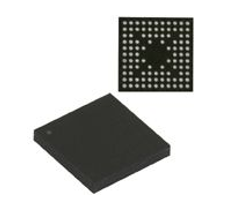
CPLDs contain several logic blocks, each of which includes eight to 16 macrocells. Because each logic block performs a specific function, all of the macrocells within a logic block are fully connected. Depending upon the application, however, logic blocks may or may not be connected to one another.
Most complex programmable logic devices contain macrocells with a sum-of-product combinatorial logic function and an optional flip-flop. Depending on the CPLD, the combinatorial logic function supports from four to sixteen product terms with wide fan-in. Complex programmable logic devices also vary in terms of logic gates and shift registers. For this reason, CPLDs with a large number of logic gates may be used in place of FPGAs. Another CPLD specification denotes the number of product terms that a macrocell can manage. Product terms are the product of digital signals that perform a specific logic function.
Packaging and Requirements
Complex programmable logic devices are available in many IC package types and logic families. CPLDs also vary in terms of:
- Supply voltage
- Operating current
- Standby current
- Power dissipation
In addition, CPLDs are available with different amounts of memory and different types of memory support. Typically, memory is expressed in bits or megabits. Memory support includes read-only memory (ROM), random access memory (RAM), and dual-port RAM. It also includes content addressable memory (CAM) as well as first-in, first-out (FIFO) memory and last-in, last-out (LIFO) memory.
Performance Specifications
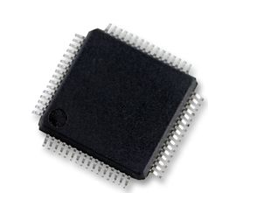
There are several performance specifications for complex programmable logic devices.
Internal frequency is the speed at which CPLDs can perform operations or transfer data internally.
The propagation delay is the time interval between the application of an input signal and the occurrence of the corresponding output in a logic circuit.
Speed grade indicates the delay in nanoseconds (ns) through a macrocell in the device. For example, a device with a speed grade of –10 has a delay of 10 ns through a macrocell. Devices with low speed grade numbers run faster than devices with high-speed grade numbers.
Optional Features
Some complex programmable logic devices include integrated phase-locked loops (PLLs) and delay-locked loops (DLLs) with clock-frequency-synthesis capabilities so that designers can use CPLDs for system-on-chip applications.
PLL and DLL clock multiplication also allows designers to generate a high-speed internal clock for sampling data in digital signal processing (DSP) applications. In addition, PLLs and DLLs provide greater control over the clock frequencies used in integrated designs. This is critical for system integration because different parts of a system operate at different clock frequencies.
Ideal Situations
Complex programmable logic devices feature predictable timing characteristics that make them ideal for critical, high-performance control applications. Typically, CPLDs have a shorter and more predictable delay than FPGAs and other programmable logic devices. Because they are inexpensive and require relatively small amounts of power, CPLDs are often used in cost-sensitive, battery-operated portable applications. CPLDs are also used in simple applications such as address decoding.
Standards
BS IEC 60748-2-12 — Semiconductor devices — integrated circuits part 2-12. digital integrated circuits — blank detail specification for programmable logic devices (PLDs).
IEC 60748-2-12 — Semiconductor devices — integrated circuits — part 2-12. digital integrated circuits — blank detail specification for programmable logic devices (PLDs).
Complex Programmable Logic Devices FAQs
How do CPLDs differ from FPGAs in terms of functionality and applications?
CPLDs (Complex Programmable Logic Devices) and FPGAs (Field-Programmable Gate Arrays) are both types of programmable logic devices, but they differ significantly in terms of functionality and applications. Here's a structured comparison based on the information available:
Functionality
Architecture
CPLDs: Consist of a network of programmable logic elements connected to create a larger system. They have a simpler architecture with function blocks, input/output blocks, and an interconnect matrix.
FPGAs: Have a more complex architecture similar to gate-array ASICs, consisting of configurable logic blocks (CLBs), I/O pads, and programmable interconnects.
Logic Density
CPLDs: Offer smaller amounts of logic, typically up to about 10,000 gates.
FPGAs: Provide much higher logic density, ranging from 1,200 to 20,000 equivalent gates, and can accommodate hundreds of thousands of gates.
Timing Characteristics
CPLDs: Known for very predictable timing characteristics, making them suitable for critical control applications.
FPGAs: Offer more flexibility but may require careful design to manage timing due to their complex interconnections.
Applications
CPLDs
Ideal for applications requiring predictable timing and low power consumption, such as cost-sensitive, battery-operated, portable devices like mobile phones and digital handheld assistants.
FPGAs
Used in a wide variety of applications, including data processing, storage, instrumentation, telecommunications, and digital signal processing.
Their flexibility and high logic density make them suitable for complex and high-performance applications.
What is the architecture of CPLDs?
CPLD Architecture
Basic Structure
CPLDs consist of a network of programmable logic elements that are connected to create a larger system. This structure is simpler compared to FPGAs, which have a more complex architecture.
Components
Function Blocks (FB): These are the core components where the logic operations are performed.
Input/Output Blocks (I/O): These manage the data entering and leaving the CPLD.
Interconnect Matrix: This is used to connect the function blocks and I/O blocks, allowing for the creation of complex logic functions.
Programming Technologies
CPLDs are programmed using elements specific to the technology of the manufacturer. The memory devices used for programming can be EPROM cells, EEPROM cells, or Flash EPROM cells.
Predictable Timing
One of the key features of CPLDs is their very predictable timing characteristics, which makes them suitable for critical control applications.
Logic Density
CPLDs offer smaller amounts of logic, typically up to about 10,000 gates, which is less than what FPGAs offer but sufficient for many applications that require predictable timing and low power consumption.
What are some specific applications where FPGAs are preferred over CPLDs?
FPGAs (Field-Programmable Gate Arrays) are preferred over CPLDs (Complex Programmable Logic Devices) in several specific applications due to their higher logic density, flexibility, and performance capabilities. Here are some applications where FPGAs are typically favored:
Specific Applications for FPGAs
Data Processing and Storage
FPGAs are used in applications that require high-speed data processing and storage capabilities. Their ability to handle complex algorithms and large data sets makes them suitable for these tasks.
Telecommunications
The flexibility and high-speed processing of FPGAs make them ideal for telecommunications applications, where they can be used for signal processing, data routing, and network management.
Digital Signal Processing (DSP)
FPGAs are well-suited for DSP applications due to their parallel processing capabilities, which allow them to efficiently handle complex mathematical computations required in audio, video, and communication systems.
Instrumentation
In instrumentation applications, FPGAs provide the necessary performance and configurability to implement custom measurement and control systems.
Networking
FPGAs are used in networking equipment to manage data traffic, perform packet processing, and implement custom network protocols due to their high throughput and low latency.
Prototyping ASICs
FPGAs are often used for prototyping Application-Specific Integrated Circuits (ASICs) because they allow designers to test and validate designs before committing to the expensive and time-consuming ASIC manufacturing process.
What are the differences in architecture between FPGAs and CPLDs?
Architectural Differences
Basic Structure
CPLDs: Consist of a network of programmable logic elements connected to create a larger system. They have a simpler architecture with function blocks (FB), input/output blocks (I/O), and an interconnect matrix.
FPGAs: Have a more complex architecture similar to gate-array ASICs. They consist of an array of configurable logic blocks (CLBs), I/O pads, and programmable interconnects.
Logic Density
CPLDs: Offer smaller amounts of logic, typically up to about 10,000 gates.
FPGAs: Provide much higher logic density, ranging from 1,200 to 20,000 equivalent gates, and can accommodate hundreds of thousands of gates.
Programming Technologies
CPLDs: Programmed using elements specific to the technology of the manufacturer, such as EPROM cells, EEPROM cells, or Flash EPROM cells.
FPGAs: Feature highly configurable macrocells and are programmed to form a logic system for specific applications. They offer flexibility in configuration and interconnection.
Timing Characteristics:
CPLDs: Known for very predictable timing characteristics, making them suitable for critical control applications.
FPGAs: Offer more flexibility but may require careful design to manage timing due to their complex interconnections.
Additional Components
CPLDs: Primarily consist of function blocks, I/O blocks, and an interconnect matrix.
FPGAs: Include additional components such as arithmetic logic units, memory, and decoders, which enhance their capability to handle complex computations.
What are the advantages of using FPGAs in telecommunications?
FPGAs (Field-Programmable Gate Arrays) offer several advantages in telecommunications, making them a preferred choice for many applications in this field. Here are some key advantages:
Advantages of FPGAs in Telecommunications
High-Speed Processing
FPGAs are capable of high-speed data processing due to their parallel, independent logic operations. This makes them ideal for handling the large volumes of data typically encountered in telecommunications.
Flexibility and Configurability
Unlike ASICs, which have a fixed hardware configuration, FPGAs can be reprogrammed to perform different functions. This flexibility allows them to adapt to changing requirements and standards in telecommunications.
Low Power Consumption
FPGAs are designed to operate with low power demands, which is crucial for telecommunications equipment that needs to be energy-efficient while maintaining high performance.
Parallel Processing Capabilities
The architecture of FPGAs supports parallel processing, which is beneficial for telecommunications applications that require simultaneous processing of multiple data streams.
Cost-Effectiveness for Prototyping
FPGAs can be used to prototype new telecommunications systems before committing to the more expensive and time-consuming process of designing and manufacturing ASICs.
What are the differences in power consumption between FPGAs and CPLDs?
CPLDs
CPLDs are known for their low power consumption, which makes them ideal for cost-sensitive, battery-operated, portable applications such as mobile phones and digital handheld assistants.
Their simpler architecture and smaller logic density contribute to their efficiency in power usage, making them suitable for applications where power conservation is critical.
FPGAs
FPGAs, while offering higher logic density and flexibility, generally consume more power compared to CPLDs. This is due to their complex architecture, which includes a large number of configurable logic blocks and interconnects.
Despite their higher power consumption, FPGAs are designed to operate with relatively low power demands for their capabilities, which is beneficial in high-performance applications like telecommunications and data processing.
Complex Programmable Logic Devices Media Gallery
References
GlobalSpec—Simple Programmable Logic Devices (SPLD) Information
GlobalSpec—Digital Principles & Logic Design
Image credits:
1-Source Electronic Components