Database Tuning: Principles, Experiments, and Troubleshooting Techniques

Learn to improve transferable skills that will facilitate in tuning many database systems on numerous hardware and operating systems.
 TABLE OF CONTENTS
 An index for a table is a data organization that enables certain queries to access one or more records of that table fast. Proper tuning of indexes is therefore essential to high performance. Improper selection of indexes can lead to the following mishaps:
Indexes that are maintained but never used
Files that are scanned in order to return a single record
Multitable joins that run on for hours because the wrong indexes are present (we have seen this)
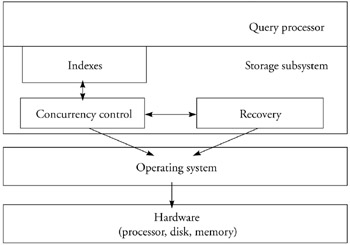
This chapter gives you guidance for choosing, maintaining,and using indexes. (Figure 3.1 shows the place of indexes in the architecture of a typical database system.) The hints apply directly to relational systems. If you use a nonrelational system, a VSAM-based, hierarchical, network-based, or object-oriented database system, then you will have to translate a few of the examples in your head, but you will find that the principles remain relevant.
The usefulness of an index depends on how queries use the index. For example, if there is an index on attribute A, but no query ever mentions A, then the index...