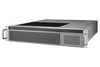
Nokia Network Security Solutions Handbook
Your complete guide to Nokia IP network security solutions.
 TABLE OF CONTENTS
 Nokia designed the IP series appliances with several goals in mind:
To provide a stable and high-speed routing platform for integration into enterprise networks
To provide a modern, stateful network firewall
To provide a secure platform "out of the box" so that administrators can rightfully spend their time looking after their networks and not have to worry about "hardening" their firewall's platform operating system
These design goals were combined to produce the Nokia IP-series appliance. In the following sections, we discuss the history of the IPSO operating system and the Voyager interface, tell you what they are based on, and describe how Nokia has improved them over the years. We also discuss the basic layout of the IPSO file system and discuss some of its features. Appendix A can be used as a reference for readers who have minimal or no UNIX background.
The version of IPSO that we cover in this book and introduce in this chapter is 3.6. This version has some new features compared with earlier releases that we discuss in detail in later chapters things such as VLAN-aware routing, initial configuration using DHCP, clustering, and CLISH, the command-line shell. This chapter concentrates on IPSO's security features and how the operating system is logically laid out.
The problem of a fast and efficient routing appliance was already solved when, in December 1997, Nokia bought Ipsilon Networks, a California-based company that developed and sold high-speed switching products. Ipsilon had also developed a Web-based management tool...