Solid/Liquid Separation: Equipment Selection and Process Design

The calculations presented in this section illustrate the level of detail that can be achieved when appropriate design equations and procedures are used to predict the performance of batch filters. Although the examples of the diaphragm filter press and the pressure Nutsche filter have been chosen for illustrative purposes, the methodologies can be readily adapted with the aid of the equations shown in Section 6.2 to analyse the performance of most other filters.
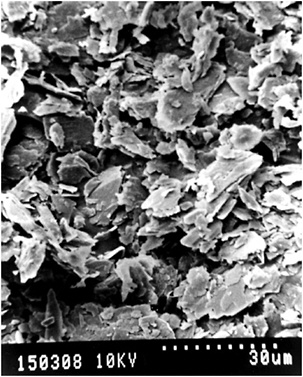
As part of a modification to a chemical plant it is proposed to install a filter to process an aqueous based slurry containing 8% w/w of clay-like solids (see Figure 6.11). A diaphragm filter press with a cloth area of 300 m 2 is available on site and is currently not used. To meet process requirements a sequential cycle comprising filtration, compression deliquoring (consolidation), displacement washing and gas deliquoring phases is envisaged. Following filtration, cake homogeneity is to be improved through consolidation with the diaphragms; the consolidation is to last for the same duration as cake formation. The resultant cakes need to be washed until 97% of the solute is recovered after which gas deliquoring reduces the moisture content to 25% for discharge.
It is proposed to deliver the feed to the press via a centrifugal pump whose characteristics are shown in Table 6.3. Filtration with the pump is to be...