The Technology of Audio and Video Streaming
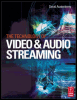
In this guide, the author demonstrates how to deploy the technology on your site, from video to audio capture through to the consumer's media player.
Streaming media is an exciting addition to the rich media producers toolbox. Just as the cinema and radio were ousted by television as the primary mass communication medium, streaming is set to transform the WorldWide Web. The original text-based standards of the Web have been stretched far beyond the original functionality of the core protocols to incorporate images and animation, yet video and audio are accepted as the most natural way to communicate. Through the experience of television, we have now come to expect video to be the primary vehicle for the dissemination of knowledge and entertainment. This has driven the continuing developments that now allow video to be delivered over the Internet as a live stream.
Streaming has been heralded by many as an alternative delivery channel to conventional radio and television video over IP. But that is a narrow view; streaming can be at its most compelling when its special strengths are exploited. As part of an interactive rich media presentation it becomes a whole new communication channel that can compete in its own right with print, radio, television and the text-based Web.
It has taken 500 years since Gutenberg introduced the printing press to reach the electronic book of today. In the short period of 10 years, we have developed on from the textual web page to rich media. Some of the main components of the illuminated manuscript still exist in the web page. The illustrated drop-capital (called a historiated initial) and the...

 TABLE OF CONTENTS