Voice Over WLANS

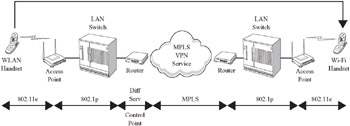
Layer 2 defines the functions of LAN protocols like Ethernet and Wi-Fi, and there are different QoS mechanisms defined for those two environments (see Figure 7-7):
IEEE 802.1p: The IEEE has developed a QoS mechanism for wired LANs in its 802.1p standard. Used in switched LAN networks, 802.1p inserts an additional field in the Ethernet header that includes a 12-bit virtual LAN identifier (802.1q), and a 3-bit priority indicator. With a 3-bit priority indicator, 802.1p can specify eight different priority levels. The idea is that a frame may be passed through several LAN switch modules on the way to its destination and each module can recognize and provide priority handling for voice frames.
IEEE 802.11e: While 802.1p provides priority handling through LAN switches, in a wireless LAN, users contend for access to a shared radio channel. The original 802.11 MAC s Distributed Control Function (DCF) described a wait-before-sending mechanism where all stations were provided equal access to the shared channel. The 802.11e standard (called Wi-Fi Multimedia or WMM Certified by the Wi-Fi Alliance) describes an Enhanced Distributed Control Function (EDCF) in which different wait-before-send intervals are used. High priority voice transmitters are assigned shorter waiting intervals and so get preferred access to the shared WLAN channel. We will look at 802.11e in detail in Chapter 11.