IPv6: The Next Generation Internet Protocol
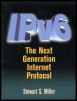
A practical, hands-on guide to the new version of the Internet Protocol, written for network administrators and managers who will work with IPv6.
 TABLE OF CONTENTS
 IPv4, was created for small networks of engineers and scientists who perform mostly file transfer operations. IPv6 is the next generation of that basic concept meant to permit the Internet to evolve to be a global, multimedia network.
Using the existing 4 byte addresses employed in IPv4, the Internet is estimated to run out of new addresses within the next decade or perhaps as soon as 1998. Yet, when you take into account the sizable installed base of IPv4 hosts and routers, it is important to create IPv6 in order to allow a steady migration from IPv4. IPv6 augments addresses to 16 bytes in order to permit for the enhancement of the Internet as it performs changes to increase efficiency for both hosts and routers connected to a large scale network. IPv6 also integrates increased functionality to yield security, multimedia support, as well as plug and play capability. This level of functionality is necessary to allow the Internet to grow even further.
IPv6 enhances IP addresses to 16 bytes from the current 4 bytes in IPv4. There are several benefits of larger addresses such as the ability to permit for increased growth of the Internet so as to enhance IP addresses to 16 bytes to make certain that the Internet won't be depleted of addresses in the long term.
There is an increased routing efficiency when dealing with longer IP addresses. It allows for assembling addresses via network hierarchies, access provider, geography, corporation, as well as...