IPv6: The Next Generation Internet Protocol
A practical, hands-on guide to the new version of the Internet Protocol, written for network administrators and managers who will work with IPv6.
 TABLE OF CONTENTS
 The primary concern today is with the future direction for the replacement for the existing version of the Internet Protocol (IPv4). When choosing the next generation of the Internet protocol it is important that the specifications take into account all proposals, selection criteria, and the overall decision process. This includes specific technical information of IPv6 including the next generation transition and address auto-configuration.
When discussing the true specification of the IPv6 protocol, it is important to take a detailed look into the addressing architecture of this next generation protocol. This chapter designates several Internet standards that track the IP protocol for the Internet community.
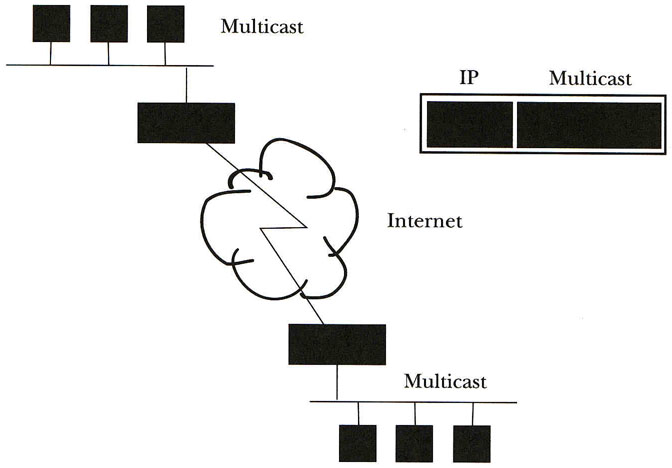
The IPv6 specification determines the addressing architecture of IPV6. This chapter incorporates the IPv6 addressing model, text representations of IPv6 addresses, definition of IPv6 unicast addresses, anycast addresses, multicast addresses (shown in Figure 4.1), and IPv6 nodes required addresses.
Anycast addresses identify a set of interfaces, usually belonging to various nodes. A packet transmitted to an anycast address is delivered to one of the interfaces specified by the address. This is usually the nearest interface, and is determined by how the router measures distance. This makes routing more efficient because the address itself can specify intermediate hops routed to a destination, rather than having the router determine the route.
Multicast addresses determine a set of interfaces which belong to various nodes. Packets sent to a multicast address are delivered to all