IPv6: The Next Generation Internet Protocol
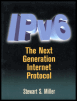
A practical, hands-on guide to the new version of the Internet Protocol, written for network administrators and managers who will work with IPv6.
 TABLE OF CONTENTS
 The chapter examines the frame format with respect to the transmission of IPv6 packets and the method of creating IPv6 link-local addresses over IPv4 networks. Then we will designate the content of the Source/Target Link-layer Address option used for Router Solicitation, Router Advertisement, Neighbor Solicitation, and Neighbor Advertisement messages. These events occur when the above messages are sent on an IPv4 network.
This chapter designates the frame format for transmission of IPv6 packets as well as the method of creating IPv6 link-local addresses over IPv4 networks. In addition it also determines the specific information regarding the Source/Target Link-layer Address option employed.
The mechanism for this method permits isolated IPv6 hosts, which exist on a physical link and have no directly connected IPv6 router, to be completely functional IPv6 hosts by employing an IPv4 network as its virtual local link. One or more IPv6 routers utilize the same method that needs to be linked to the same IPv4 network if IPv6 routing to other links is needed.
IPv6 hosts linked in this manner don't need IPv4 compatible addresses or configured tunnels. This allows IPv6 to gain a great deal of independence in the underlying links which can move over many hops of IPv4 subnets.
The default MTU size for IPv6 packets on an IPv4 network is 1480 octets. This size can be decreased by a Router Advertisement that has an MTU option that defines either a smaller MTU or by a manual configuration of each node.