Manufacturing Engineering Modular Series: Logistics and the Outbound Supply Chain

This publication explores the issues involved in distributing products from the manufacturer to the customer.
 TABLE OF CONTENTS
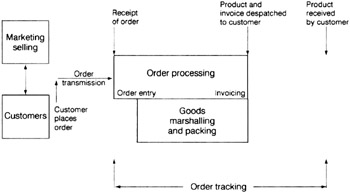
 Order processing is the administrative process of receiving orders from customers, who may be either end consumers or companies operating as the next process in the distribution network, and ensuring that the right goods are delivered on time and to the right place. It frequently represents the interface between, on the one hand, the marketing and selling functions of a company, which are concerned with promoting the products and obtaining the orders, and, on the other hand, the distribution function, which is responsible for delivering the product to the customer. It can be seen as the first stage of the distribution process, and its main purpose is to record all customer orders received by the company to ensure their correct delivery to the customer and to see that a timely and accurate invoice is raised and despatched. The order processing function is also concerned with tracking the progress of the order from receipt to delivery and for providing any necessary status information, both internally and to the customer (Figure 2.1).
To the extent that it captures and holds data on customer orders received, the order processing system is frequently used to provide important information on patterns of both customer buying and product demand and usage for the purpose of forecasting and business planning.
Recent advances in information and communications technology have had a significant impact on order processing systems and these in turn are affecting the way we do business.