Microsoft Exchange Server for Windows 2000: Planning, Design, and Implementation
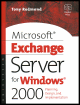
A comprehensive resource for implementors and managers of Exchange Server 2000 networks.
 TABLE OF CONTENTS
 Streamed data is commonly found in the form of audio or video files. Streamed files are normally very large and are designed for client access in a continuous stream. Even a DVD video, which allows much more selective sampling of a film than is normally available in a standard video format, breaks a film up into scenes, each of which may be hundreds of megabytes in size. Audio files are no different, especially if they are recorded at a high sample rate to achieve the best possible quality. If you use the "Record narration" feature of PowerPoint to record notes for a presentation, you'll be surprised at just how quickly your hard disk fills.
Even if we don't want to encourage users to send massive video attachments to each other, the simple fact is that they do. Every holiday, a new variation on the electronic greeting card is made available somewhere on the web, and ends up being mailed millions of times to different users. In the days of "green screen e-mail," we had to settle for cards composed of video escape character sequences. The escape characters instructed the terminal to display a variety of what passed for graphics characters in those days, and told the terminal the order in which the characters where to be displayed. With a lot of dedication and trial and error, people produced amazing effects, and the electronic card was born. Now you wouldn't be happy if you couldn't send a...