Microsoft Exchange Server for Windows 2000: Planning, Design, and Implementation
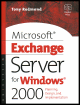
A comprehensive resource for implementors and managers of Exchange Server 2000 networks.
 TABLE OF CONTENTS
 Users are the most important part of any system, and perhaps especially so in the case of systems that automate common office tasks and enable better human interaction. Without users, there's simply no point to an electronic messaging server. In this chapter, we'll look at the challenges involved in day-to-day operation of an Exchange server, covering topics like setting up and managing the user community, groups, and so on.
Actually, setting out with a goal of "managing" users is probably the wrong attitude for a System Administrator to have. The people who connect to mail servers are consumers of a service. Like any other consumer, users have the right to expect that the service will be delivered in a reasonably predictable manner and that they won't go through too much pain to access and employ the service. Perhaps this chapter might be better titled "Working with Users and Clients," but maybe that concept would be rejected by many System Administrators? This would be an interesting debate over a bottle of wine.
Anyone who has ever been faced with the task of managing a mail server knows that people have to be registered before they can use the system. Exchange is no different in this respect. Users have to be given a mailbox and allocated space to hold their messages, but Exchange is a little different because a wide range of valid messaging destinations, including mailboxes, are registered together in a single directory. Some...