How to Cheat at Deploying and Securing RFID

For security professionals needing to get up and running fast with the topic of RFID, this guide offers the perfect approach to learning all that you need to adopt this security method.
 TABLE OF CONTENTS
 RFID begins where barcode technology ends. A so-called smart label combines a \ barcode with an RFID tag. Smart labels have the intelligence and functionality of a tag and the printing convenience of a barcode label. Therefore, by using smart labels, corporations can leverage their existing labeling infrastructure to incorporate RFID.
Smart labels are created by RFID printers, which are peripheral devices, and they are applied to the items to be tracked by using another peripheral device called an automatic label applicator. The third kind of peripheral or ancillary device used in RFID networks is called a feedback system, which helps build effective, robust, and automatic RFID networks.
So, the core issue in this chapter is the role of peripheral devices in RFID. To understand this issue, we will explore three avenues: RFID printers, RFID label applicators, and RFID feedback devices.
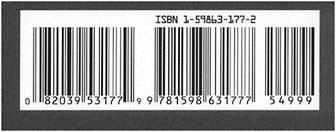
Upon the arrival of RFID, the industry was using the barcode technology to identify items. A barcode (also written as bar code) is a machine-readable representation of information printed on a surface in a visual format. Almost everything that you buy from retailers these days has a barcode printed on it, which helps manufacturers and retailers keep track of inventory. Barcodes can be read by optical scanners, also called barcode readers. These codes serve as product fingerprints made of machine-readable, parallel bars that store binary code, as shown in Figure 9.1.