Make or Break Issues in IT Management: A Guide to 21st Century Effectiveness
Covers all aspects of IT project management such as the way to achieve maximum benefits from the investment.
 TABLE OF CONTENTS
 There are a number of high-level business models that may be regarded as generic. These represent the different ways a business can look to being funded and how they will produce the required return in order to be seen as successful.
The following are seven of the more frequently encountered business models:
Traditional trading model or the classic profit
Classic cost reduction
New trading model or the new economy
Investor funded deficit model or the begging bowl
Stock market funded deficit model or the casino
Sleight of hand model or the Mr Mistoffelees
The high stakes model or the maverick
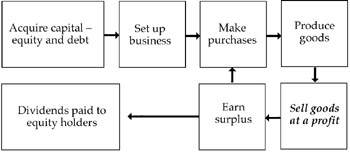
The traditional trading, or for that matter manufacturing business model, sometimes referred to as the classic profit model is the normal way in which most businesses operate. This is not a new approach to thinking about how business functions. Its roots go back into antiquity. Here the organization raises funds from both equity and loans or debt and uses this money to fund the purchase or production of goods or services. The goods and/or services are sold at a higher price than was paid to acquire or produce them. This revenue can thus pay all the costs involved as well as result in a surplus or a profit, which is used to fund further development of the business.
The process underpinning this classic business model is shown in Figure 11.2.