In this chapter we review some of the basic principles used in MPEG coding. We use this chapter to introduce some of the terminology used throughout the book, but our treatment here is necessarily brief. Readers who have no familiarity with data compression will probably want to supplement the treatment here with texts such as [RJ91], [BK95], [Say96], [Hof97] and [PM93].
We first present a very high-level view of a coding system, showing how the system can be divided into modeling and entropy coding sections. Then, we discuss the very important topics of entropy coding and coding models, in that order. Finally, we discuss the specifics of the MPEG-1 coding techniques and present block diagrams for MPEG-1 encoders and decoders. Note that our use of the term system in this chapter is unrelated to the MPEG system layer.
5.1 Coding system structure
The high-level coding system diagram sketched in Figure 5.1 illustrates the structure of a typical encoder and decoder system. The analog to digital conversion (A/D) determines the basic resolution and precision of the input data, and thus is a very important step in reducing the almost unlimited data that potentially is available from the original scene to a manageable level. However, data reduction does not necessarily stop once the digitization is completed.
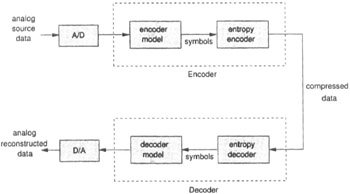 Figure 5.1: Overview of a compression system.
 Compression systems that do no further data reduction once the picture is digitized are lossless systems; these lossless compression systems rarely compress natural image data by more than...
Copyright Chapman & Hall 1996 under license agreement with Books24x7


 TABLE OF CONTENTS