Digital channels and packet networks can be modelled as a discrete two-state Elliot-Gilbert model, as shown in Figure E.1.
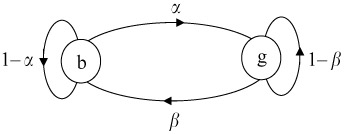 Figure E.1: An Elliot-Gilbert two-level error model
 When the model is at the bad state, b, a bit is corrupted or a packet is received erroneously, and can be regarded as lost. The model is run for every bit (or packet) to be transmitted, and the average number of times that the model stays at the bad position is the average bit error rate, or packet loss rate, P. Consequently, the average number of times it stays at the good state is 1 - P. In the following, we show how the average bit error or packet loss rate is related to the transition probabilities ? and ?. We analyse on packet loss rate, and the same procedure can be used for the bit error rate. The model has also been accepted by the ITU-T for the evaluation of ATM networks. [1]
Calculation of mean packet loss rate
At each run of the model, a packet is lost in two ways. First, before the run it was at the bad state, but after the run it is also at the bad state. Second, it was in a good state, but after the run is at the bad state. Thus the probability of being at the bad
state (loss), P, is:
P = P(1 - ?)+(1 - P) ?
and rearranging the equation, the...
Copyright The Institution of Electical Engineers 2003 under license agreement with Books24x7


 TABLE OF CONTENTS