The Committed Enterprise: How to Make Vision and Values Work

This guide describes how to build unstoppable organizations, whether businesses or charities, hospitals or orchestras, by managing vision and values scientifically yet creatively.
 TABLE OF CONTENTS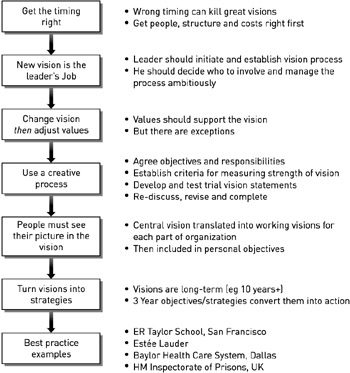
A new vision can absorb a vast amount of energy in the short term, and payout is longer term. For a company struggling with immediate problems, like incompetent managers or unnecessary costs, a new vision is probably the last thing needed. That's why on taking over the leadership of IBM in 1993, after record-breaking losses of $8 billion, new chairman Lou Gerstner said:
"There's been a lot of speculation on when I will deliver a vision. The last thing IBM needs right now is a vision." [1]
Gerstner wasn't denigrating visions. Other things had to be put right first, before a vision could work. Things like costs, productivity, structure and dedication to serving customers. Three years later, Gerstner unveiled a new vision:
"So it's with an enormous sense of irony, I say this: What IBM needs right now is a vision." [2]
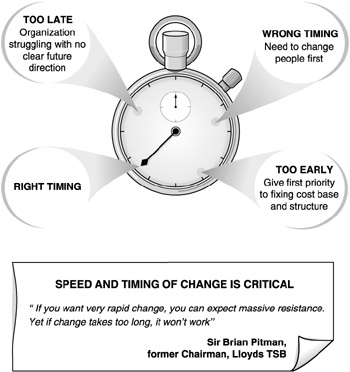
He understood the importance of timing. 'Do it now' is often a recipe for failure in developing a new vision. [3] Chart 6.1 illustrates right and wrong timing.
Another reason for not rushing into a new vision is that it is a creative process. The answers are not obvious, and take time to work out.
"You can't impose and have to be inclusive. It's dangerous to go into a darkened room - it's best to go and wander about until your eyes become accustomed to it and you begin to see things. You can...