The Committed Enterprise: How to Make Vision and Values Work

This guide describes how to build unstoppable organizations, whether businesses or charities, hospitals or orchestras, by managing vision and values scientifically yet creatively.
 TABLE OF CONTENTS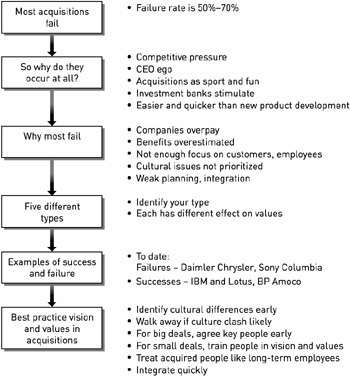
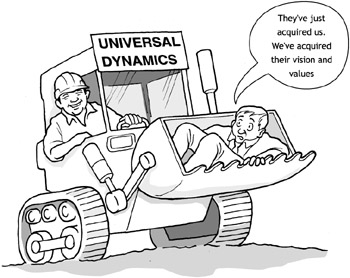
Your organization has spent decades building up and refining its vision and values. It's one of the few to follow all seven best practices. Customer loyalty has never been higher. Employees are highly motivated. And finance providers are very satisfied. Then suddenly ... clunk!
Company B, a larger rival, has made a hostile bid. After months of haggling, you are acquired. Company B's main rationale is cost reduction. It reckons that 10 000 jobs can be 'saved', and moves rapidly to integrate. Many of your friends and colleagues disappear. The best ones move out fast, and others are made redundant. Your customers complain about poor service and communication. Operationally, Company B is very efficient, but its outlook is short-term, and it has no interest in vision and values (see Chart 13.1).
So, was all the effort Company A devoted to building commitment through vision and values a waste of time? No. It resulted in the profitable growth, loyal customer base and high calibre workforce that led Company B to pay a high price. Company B, though is in danger of destroying these assets through clumsy short-term management.
Acquisitions are usually disruptive. They often involve a change in vision for the new combined enterprise. They can erode deeply held values. And when vision and values clash, both companies become unhappy places to work in or do business with.
This chapter will examine why acquisitions take place at all, why most...