Competitive Engineering: A Handbook for Systems Engineering, Requirements Engineering, and Software Engineering Using Planguage

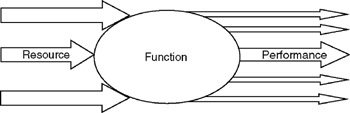
Performance describes the system benefits: how good the system is and how it affects the external world. Performance attributes state the actual and/or potential benefits and effects experienced by stakeholders in their environments.
Performance attributes are the output attributes; they state the effectiveness of a system. By contrast, the input (or fuel ) attributes are the resources/costs of developing and/or maintaining a system that exhibits those performance attributes. The performance to cost ratio for a system is a measure of its efficiency.
Performance attributes are scalar. As discussed in Chapter 2, there are three basic types:
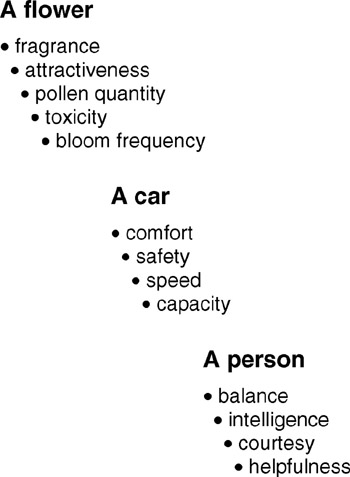
Quality: The quality attributes specify how well the system performs. The term quality is used here in the ordinary widest sense of the word. It is by no means limited to the narrow defect free notion that some people mean when using it. How many qualities can you list of a great car, a dream house, an excellent employee, a great personal computer or a good wine? We include all such ideas in our broad concept of quality.
Resource Savings: These specify how much resource is required to be saved compared to the resource usage/consumption by some reference or benchmark system. Achieving specific savings is frequently a driver for system development; for example, cutting the financial cost...