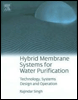
Hybrid Membrane Systems for Water Purification: Technology, Systems Design and Operation
The design of a hybrid membrane water system entails a comprehensive design of the feed water treatment system, the design of the membrane array based on optimum product water recovery and solute rejection, membrane feed water pressure, process control, and post-treatment for higher purity product. Membrane system design, therefore, is an iterative procedure encompassing membrane selection (size of membrane element and type of membrane), membrane array (number of stages and passes, and number of elements) design and product quality calculations until the desired quality is obtained. In the case of RO and NF systems, membrane manufacturers have generated computer programs for designing their membrane-based systems. In the case of UF and MF systems, however, pilot data is required to design a membrane system.
The RO and NF membrane processes were discussed in detail in Chapter 1. RO membranes are well suited for rejecting dissolved ions and most organics (some organics such as ethanol and acetone have very low rejections of 45-55%). The rate of water transport through a membrane depends on membrane properties (polymeric, chemical, morphological), water temperature, and the difference in applied pressure across the membrane, less is the difference in osmotic pressure between the concentrated and dilute solutions. Osmotic pressure is proportional to the solution concentration and temperature, and depends on the type of ionic species present. For solutions of predominantly sodium chloride at 25 C, a rule of thumb is that the osmotic pressure is 0.7 bar per 1000...