Quantitative Methods in Project Management
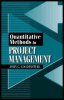
This book combines theoretical and practical applications and takes project managers through the most important quantitative methods, integrates them, and illustrates interrelationships.
 TABLE OF CONTENTS
 Every individual endeavors to employ his capital so that its produce may be of greatest value.
Adam Smith
The Wealth of Nations, 1776
Most project managers keep track of two financial measures for their project: the dollar amount budgeted and the dollar amount spent. If the project manager spends less than budgeted, then very often the project is considered a success, at least financially:
If: $Budget - $Spent ? $0, Then: OK; Else: Corrective action required
However, the two measures of budget and actual expenditures taken together as one pair of financial metrics do not provide a measure of value obtained and delivered for the actual expenditures. The fact is that all too often the money is spent and there is too little to show for it. Thus, in this chapter we will "follow the money" a different way and introduce the concept of "earned value," which often draws a different conclusion about project financial success:
If: $Value delivered - $Spent ? $0, Then: OK, Else: Corrective action required Before getting to the earned value concept, however, we will revisit the P&L (profit and loss) statement discussed in Chapter 5 to understand the various expense items that might show up on an earned value report in the categories of $Spent and $Value delivered.
The P&L expense statement is one of the three most important financial statements that the controller will provide to the project manager. The other two financial statements that are useful...