Voice over IP: Systems and Solutions

Provides an extensive look at Voice over Internet Protocol (VoIP) and its effects on the communications industry.
 TABLE OF CONTENTS
 Q G Collier
As previously described in Chapter 1, the operation of VoIP networks, such as that shown in Fig 9.1, requires both signalling messages and media data to be sent between the constituent elements involved in the system. For a pure VoIP solution, both of these types of data will be transmitted in the form of the data payload of IP packets. These data packets contain the actual signalling information required to flow between the terminals and call servers to establish and control both calls and media streams. They also transport the actual media information directly between the media end-points. In either case, the data packets need to have defined points of origination and destination to enable them to be correctly routed across the data network. These identities are therefore an integral element of how VoIP works and are one manifestation of the subject of numbering, naming and addressing related issues that are the topic of this chapter.
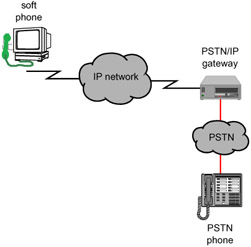
In the case of a hybrid network environment that includes connectivity with the existing PSTN, however, the signalling and media streams will also need to flow through an appropriate gateway device and within the PSTN switching elements themselves. Among other things this creates two additional areas of complexity. Firstly, from the view of placing a call from an IP network into the PSTN, the call signalling must also ultimately provide information that enables a call to be successfully...